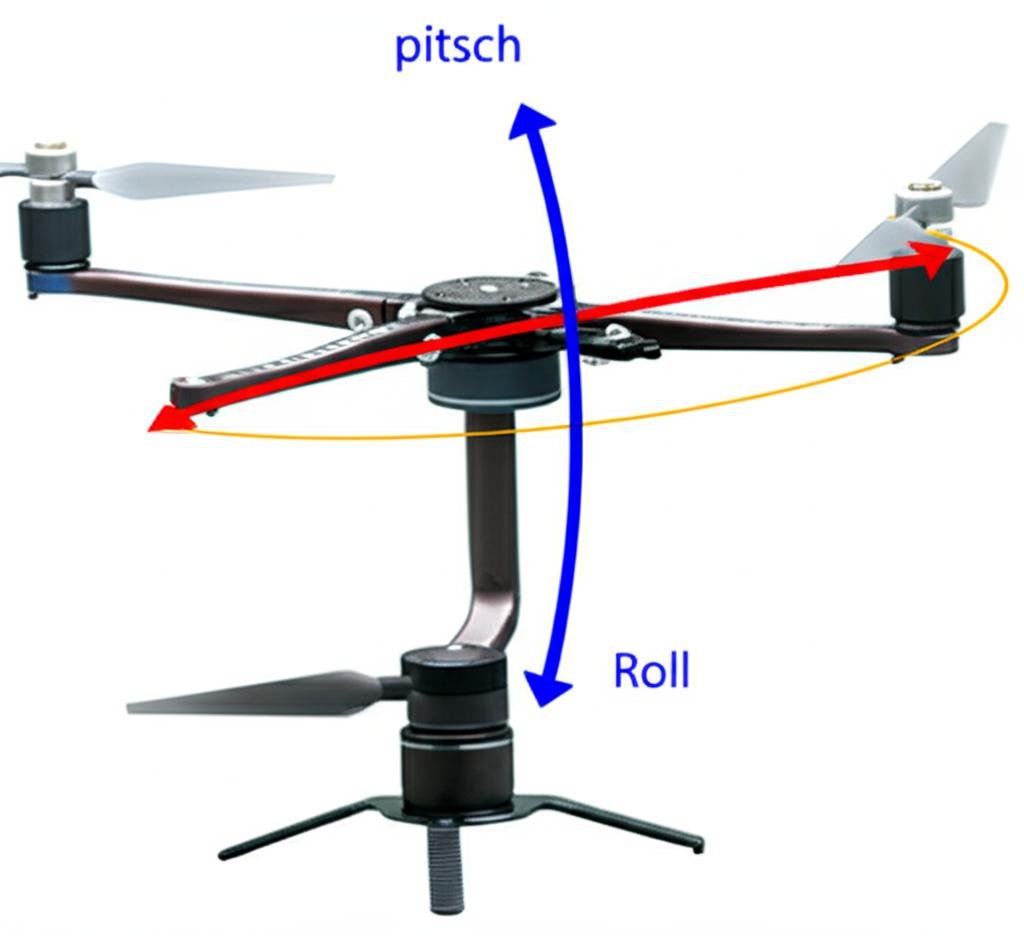
Gimbal motors may or may not have built-in encoders, depending on the design and application. Encoders provide feedback for precise movement, but some systems rely on external encoders or alternative feedback methods. Understanding this difference is key for stability, accuracy, and cost-efficiency in projects like drones, industrial robots, and camera stabilizers.
This is a comprehensive guide about do gimbal motors have built in encoders.
Key Takeaways
- Not all gimbal motors include built-in encoders: Some use open-loop control (no feedback) while others integrate closed-loop feedback with internal encoders.
- Encoders improve precision: They enable real-time position/speed adjustments, reducing jitter and overshooting in dynamic environments.
- Encoder types matter: Optical, magnetic, and Hall-effect encoders each trade-offs in durability, resolution, and cost.
- External encoders are common: Many high-end gimbals pair motors with separate encoders for modularity and upgradeability.
- Cost vs. performance: Built-in encoders increase motor cost but simplify integration; external setups offer flexibility.
- Applications vary: Drones often prioritize compact designs (sometimes omitting encoders), while industrial rigs demand them for heavy loads.
—
[FEATURED_IMAGE_PLACEHOLDER]
—
### MAIN CONTENT
#### Introduction: Why Gimbal Motors Need Feedback Systems
Imagine a drone filming a wildfire—tiny trembles from wind or motor noise could ruin footage. That’s where gimbal motors shine, but only if they *know* exactly how to move. The secret? Feedback mechanisms like encoders. But do these motors always come with them? Not necessarily! While some gimbal motors pack built-in encoders, others rely on external sensors or clever software tricks. This article breaks down why encoders matter, which ones to choose, and how they impact your projects—whether you’re building a handheld stabilizer or a robotic arm.
#### 1. What Are Encoders, and Why Do Gimbal Motors Use Them?
Encoders are tiny sensors that measure a motor’s rotation speed and position. Think of them as a GPS for your motor:
– Position feedback: Tells the system “I’m at 45 degrees” instead of just “spin faster.”
– Speed control: Prevents jerky movements by adjusting power in real time.
How Encoders Work in Closed-Loop Systems
In a closed-loop system (with encoders):
1. The controller sends a command (e.g., “tilt left 30°”).
2. The motor spins, and the encoder tracks its actual position.
3. If the motor overshoots, the controller corrects instantly.
Without encoders (open-loop), motors guess their position, leading to drift or instability—like driving blindfolded.
#### 2. Do All Gimbal Motors Have Built-In Encoders?
Short answer: No. Here’s the breakdown:
– Budget/DIY kits: Often skip encoders to cut costs (common in consumer drones).
– Prosumer/gimbals: May use external encoders (e.g., T200 series from DJI).
– Industrial motors: Almost always include built-in encoders for heavy-duty reliability.
Why Some Motors Omit Encoders
– Space constraints: Smaller drones sacrifice encoders for size savings.
– Software tricks: PID controllers can simulate feedback without hardware, but this isn’t foolproof.
– Cost: A $5 encoder adds $10–$20 per motor—a dealbreaker for mass-market products.
#### 3. Types of Encoders Used in Gimbal Systems
Not all encoders are created equal. Here’s a quick comparison:
| Type | Pros | Cons |
|---|---|---|
| Optical Encoders | High resolution, accurate | Fragile, sensitive to dust |
| Magnetic Encoders | Durable, weather-resistant | |
| Hall-Effect Encoders | Simple, low-cost |
Practical Example
A DJI Ronin-M uses optical encoders for cinematic shots, while a low-cost hobbyist gimbal might opt for Hall-effect encoders due to budget limits.
#### 4. External Encoders: The Modular Advantage
Many pro gimbals pair motors with standalone encoders (e.g., Dynamixel AX-12A servos). Benefits:
– Upgradeability: Swap out encoders later without replacing motors.
– Customization: Mix-and-match parts from different brands.
– Diagnostics: Faulty encoders can be identified and replaced individually.
When to Choose External Encoders
– Long-term projects needing scalability.
– Industrial settings where maintenance is frequent.
– High-load applications (e.g., robotic arms handling heavy payloads).
#### 5. Encoderless Gimbals: Is It Really Possible?
Yes—but with caveats. Some systems use:
– IMU (Inertial Measurement Unit) Fusion: Combines accelerometer/gyro data to estimate position.
– Predictive Algorithms: Machine learning can compensate for minor errors over time.
Limitations
– Drift: Errors accumulate over time (like a compass needle wobbling).
– Power spikes: Sudden movements may cause overshooting.
– Not ideal for precision: Avoid for scientific-grade stabilization.
#### 6. How to Pick the Right Encoder Setup
Follow this checklist:
- Accuracy needs: Cinematic shots? Opt for optical encoders. Outdoor drones? Magnetic ones handle humidity better.
- Budget: External encoders add ~$15–$50 per motor.
- Maintenance: Industrial projects prefer modular systems.
- Motor compatibility: Check datasheets (e.g., TB6600 drivers support Hall-effect encoders).
#### Conclusion: Balancing Cost, Performance, and Reliability
Gimbal motors *can* operate without encoders, but adding feedback pays off in stability, longevity, and user experience. For hobbyists, a basic IMU-based gimbal might suffice. Professionals should invest in closed-loop systems with high-resolution encoders. Remember: The best choice depends on your project’s demands—whether it’s a $200 action cam or a $50K robotic telescope. Happy stabilizing!
—
### QUICK Q&A
Question 1?
Can I retrofit an encoder onto a non-encoded gimbal motor? Yes, but ensure compatibility with your driver board (e.g., TB6600 supports 17-bit encoders).
Question 2?
Are Hall-effect encoders waterproof? Some models (like those in Dynamixel servos) are rated IP65, but check specs for your environment.
Question 3?
Do brushless motors need encoders? Brushless motors *can* run without encoders (open-loop), but closed-loop setups prevent runaway failures.
Question 4?
What’s the cheapest way to stabilize a DIY gimbal? Use a 3-axis servo kit (like SG90) with a cheap IMU module ($20–$50 total).
Question 5?
How do I troubleshoot encoder drift? Recalibrate using a known reference point or replace the encoder if signals drop out.
—
### FAQS
Question?
Answer: Encoders measure motor position/speed, enabling closed-loop control for smoother motion. Without them, gimbals rely on open-loop systems, risking drift or instability.
Question?
Answer: Optical encoders offer higher precision but break easily; magnetic ones are tougher but less accurate. Hall-effect encoders are simple but limited to step counting.
Question?
Answer: Most industrial gimbals (e.g., for CNC machines) use built-in encoders, while consumer drones may omit them for cost savings.
Question?
Answer: Yes, but expect trade-offs. External encoders add complexity but allow upgrades; built-in ones simplify wiring.
Question?
Answer: Look for “closed-loop” in product specs, or check if the motor datasheet mentions encoder interfaces like quadrature outputs.
Question?
Answer: No, but advanced algorithms (e.g., Kalman filters) can approximate feedback—not as reliable as physical encoders for critical tasks.
Quick Answers to Common Questions
What is do gimbal motors have built in encoders?
do gimbal motors have built in encoders refers to essential knowledge and techniques.
Frequently Asked Questions
What is do gimbal motors have built in encoders?
do gimbal motors have built in encoders is an important topic with many practical applications.