So, you’ve got your hands on the incredible Sony A7S II – a true low-light beast and a video powerhouse. But let’s be real, even with its fantastic sensor, handheld footage can still look a bit… shaky. That’s where a good gimbal comes into play! A reliable camera stabilizer is your secret weapon for transforming jittery clips into buttery-smooth, cinematic masterpieces.
Finding the best gimbal for Sony A7S II means looking for something that can handle its weight, offer intuitive controls, and provide rock-solid stabilization. We’ve dug deep to bring you a list of top contenders, along with some essential accessories that will elevate your A7S II gimbal setup to the next level. Let’s dive in!
DJI RS 3 Mini, 3-Axis Gimbal Stabilizer for Cameras
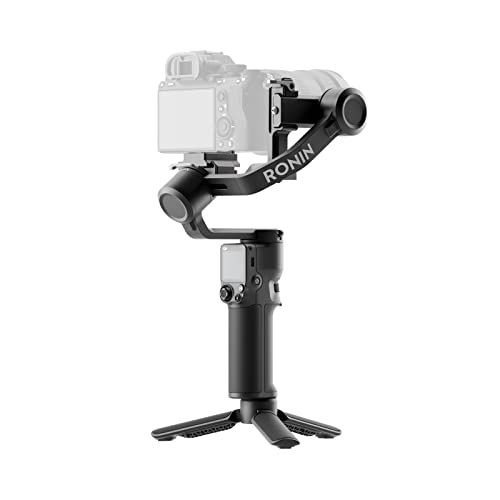
The DJI RS 3 Mini punches well above its weight, offering a fantastic blend of portability and performance. It’s an absolute dream for run-and-gun filmmakers or anyone who values a lightweight setup without sacrificing professional-grade stabilization. Its compact design makes it incredibly easy to pack and carry, yet it still boasts strong motors capable of handling your Sony A7S II with various lenses. This gimbal truly shines for those who need a travel-friendly solution that delivers consistently smooth footage.
Key Features:
– 795g (1.75lbs) Lightweight and Portable
– Wide-Ranging Compatibility: Load capacity up to 2 kg (4.4 lbs)
– Bluetooth Shutter Control for seamless camera operation
– 3rd-Gen RS Stabilization Algorithm for pro-level stability
– Native Vertical Shooting for social media content creation
– 1.4″ Full-Color Touchscreen with intuitive UI design
– Requires DJI Ronin app for activation and full functionality
Pros:
– Incredibly lightweight and compact for easy travel.
– Excellent stabilization performance for its size.
– Supports vertical shooting without extra accessories.
– Good payload capacity for the A7S II and many lenses.
Cons:
– Requires the DJI Ronin app for full functionality, which can be an extra step.
– Some users might prefer larger gimbals for heavier, more complex setups.
User Impressions:
Users consistently praise the RS 3 Mini for its portability and impressive stabilization. Many are surprised by how much power is packed into such a small form factor, making it a favorite for solo creators and travelers. The ease of setting up and using the touchscreen interface is also a common highlight.
ZHIYUN CINEPEER WEEBILL 3E 3-Axis Gimbal Stabilizer for Cameras

The Zhiyun Cinepeer Weebill 3E is another powerhouse designed to provide exceptional stability while keeping things lightweight and manageable. What truly sets this gimbal apart is its thoughtful ergonomic design, aiming to reduce physical fatigue during long shooting sessions. Its “2.5 Sling Mode” (though some parts are optional) can significantly improve comfort, making it a great choice for events, vlogging, or any scenario requiring extended use. It’s a solid contender for the best gimbal for Sony A7S II if comfort and endurance are high on your list.
Key Features:
– Native Vertical Shooting with quick-mount system
– Bluetooth Shutter Control for wireless camera operation
– Built-in 2600mAh batteries with 14W fast charging (2h 46m charge time)
– Weighs only 1.05 kg (A4-sized), lightweight and portable
– Comfortable handle design to reduce fatigue
– 3kg (6.6 lbs) payload capacity
Pros:
– High payload capacity handles the A7S II with ease, plus heavier lenses.
– Excellent battery life with fast charging.
– Ergonomic design aims to reduce user fatigue during long shoots.
– Native vertical shooting is a convenient feature for content creators.
Cons:
– Some comfort features (like the wrist rest) might require separate purchases.
– Learning curve for new users, as with most professional gimbals.
User Impressions:
Filmmakers often commend the Weebill 3E for its robust build and the ability to carry heavier camera setups without strain. The long battery life is a significant plus for all-day shoots, and the general consensus points to it being a very capable and user-friendly gimbal once mastered.
DJI RS 4 Mini, Gimbal Stabilizer for Cameras

The DJI RS 4 Mini takes the mini-gimbal concept and refines it further, offering even more intelligent features and quicker setup times. If speed and smart tracking are paramount for your A7S II workflow, this is a serious contender. Its automatic axis locks are a game-changer for fast-paced environments, ensuring you’re always ready to capture the moment. With Teflon-enhanced balancing and responsive follow modes, it makes achieving dynamic, smooth footage incredibly efficient. This is arguably the most advanced “mini” gimbal for Sony A7S II users who prioritize cutting-edge tech.
Key Features:
– Ready in 1 second with auto axis locks
– Intelligent Tracking Module to keep subjects framed
– Teflon Enhanced Balancing for smoother adjustments
– Fast Vertical Switch (10 seconds) for mobile-friendly content
– Responsive Follow Mode for instant reaction to hand movements
– Supports up to 2kg/4.4lbs payload for mirrorless cameras and smartphones
– Includes a starter kit with gimbal, tripod, and accessories
Pros:
– Ultra-fast setup and transitions with auto axis locks and vertical switch.
– Intelligent tracking module is fantastic for solo creators.
– Improved balancing experience with Teflon coating.
– Highly responsive follow modes for dynamic shots.
Cons:
– DJI Ronin app removed from Google Play; requires direct download from DJI’s website.
– Payload capacity is identical to the RS 3 Mini, so not an upgrade there.
User Impressions:
Reviewers love the speed and efficiency of the RS 4 Mini, especially the auto axis locks and quick vertical switch. The intelligent tracking feature is a big hit, simplifying complex shots for many users. It’s seen as an excellent evolution of the mini gimbal concept, delivering professional results with minimal fuss.
Essential Accessories for Your Sony A7S II Gimbal Setup
While the gimbals listed above are stellar, some accessories can make your life a whole lot easier and enhance your shooting experience. These might not be gimbals themselves, but they’re invaluable additions when setting up your best gimbal for Sony A7S II workflow.
NICEYRIG Cage for Sony Alpha A7RIV A7SIII A7RIII A7III

A camera cage isn’t a gimbal, but it’s an absolute must-have if you’re serious about rigging your Sony A7S II for professional video work, especially when using a gimbal. This particular Niceyrig cage is custom-fit for Sony Alpha cameras, including the A7S II. It provides vital protection, but more importantly, it offers a plethora of mounting points (1/4” & 3/8” threaded holes, NATO rail, ARRI Rosette) for attaching external monitors, microphones, lights, and, yes, your gimbal’s quick-release plate more securely. It ensures full access to your camera’s buttons and battery, making it incredibly practical.
Key Features:
– Dedicated for Sony A7, A1, and A9 Series (including A7S II)
– Full access to camera buttons, interfaces, and battery compartment
– Compact and solid structure, perfect for gimbal stabilizers
– Features standard ARRI Rosette and NATO rail for accessories
– Multiple 1/4″ & 3/8″ threaded holes for extension possibilities
– Made of sturdy and lightweight aluminum alloy
Pros:
– Provides excellent protection for your camera.
– Adds numerous mounting options for accessories, crucial for video rigs.
– Maintains full access to camera controls and battery.
– Enhances stability when mounting to gimbals.
Cons:
– Adds a small amount of weight and bulk to the camera.
– An additional purchase on top of the gimbal itself.
User Impressions:
Users appreciate the snug fit and robust build quality of this cage. It’s often cited as an essential piece of kit for anyone using their Sony A7S II for serious video production, providing peace of mind and expandability without hindering camera operation.
Eonvic NP-FW50 Dummy Battery to DJI Ronin-S Gimbal Power

This isn’t a gimbal either, but it’s a game-changer for extending your Sony A7S II’s battery life when paired with a DJI Ronin-S (or other gimbals offering power output). The Sony A7S II’s native battery life can sometimes feel short, especially during long takes. This dummy battery cable connects directly to your gimbal’s power output, providing continuous power to your camera. No more swapping batteries mid-shoot, and it helps maintain the balance of your gimbal as the battery weight doesn’t change. It’s an indispensable accessory for uninterrupted shooting.
Key Features:
– Power Supply Adapter Cable for DJI Ronin-S Gimbal Stabilizer
– Powers Sony A7 A7R A7S A7II A7RII A7SII A6300/A6400/A6500 Mirrorless Cameras
– Input: 12V, Output: 7.2V
– Cable length: 30cm
– Tested for reliability before shipping
Pros:
– Significantly extends camera run-time by drawing power from the gimbal.
– Eliminates the need to constantly change camera batteries.
– Maintains gimbal balance by avoiding battery swaps.
– Simple plug-and-play solution.
Cons:
– Only compatible with gimbals that offer a 12V power output (like the Ronin-S).
– Adds one more cable to manage on your rig.
User Impressions:
This dummy battery cable receives high praise for its practical utility. Users often call it a “must-have” for extended shoots, especially for events or interviews, as it alleviates battery anxiety and streamlines their workflow on a gimbal.
Wrapping Up: Choosing Your Ideal Setup
Selecting the best gimbal for Sony A7S II truly depends on your specific shooting style and needs. If portability and quick setup are your priority, the DJI RS 3 Mini or RS 4 Mini are fantastic choices. If you need a bit more payload capacity and appreciate ergonomic design for longer shoots, the Zhiyun Cinepeer Weebill 3E could be your perfect match.
And don’t forget those crucial accessories! A good camera cage like the NICEYRIG can provide essential protection and expandability, while a dummy battery cable like the Eonvic can save your bacon on long shooting days. Pair your chosen gimbal with these thoughtful additions, and you’ll be capturing incredibly smooth, professional-grade footage with your Sony A7S II in no time!
FAQ Section
Q1: Why do I need a gimbal for my Sony A7S II?
A1: While the Sony A7S II has in-body image stabilization (IBIS), a dedicated gimbal provides superior, cinematic-level smoothness, especially for dynamic movements like walking, running, or complex tracking shots. It virtually eliminates micro-jitters and creates a truly professional, floating camera look.
Q2: What is “payload capacity” and why is it important for a gimbal?
A2: Payload capacity refers to the maximum weight a gimbal can effectively stabilize. It’s crucial because your camera (Sony A7S II) plus the lens, and any accessories like microphones or external monitors, must not exceed this limit. Overloading a gimbal can lead to poor stabilization, motor strain, and reduced battery life.
Q3: Can these gimbals handle larger lenses with the Sony A7S II?
A3: The gimbals reviewed (DJI RS 3 Mini, RS 4 Mini, Zhiyun Cinepeer Weebill 3E) have payload capacities ranging from 2 kg to 3 kg (4.4 lbs to 6.6 lbs). The Sony A7S II itself is relatively light. Most standard prime lenses and even some mid-range zoom lenses will fit comfortably within these limits. Always check the combined weight of your camera and lens.
Q4: How important is Bluetooth Shutter Control on a gimbal?
A4: Bluetooth Shutter Control is incredibly convenient! It allows you to start/stop recording or snap photos directly from the gimbal’s handle, without touching the camera. This minimizes camera shake during operation and streamlines your workflow, especially useful when your camera is high up or in an awkward position.
Q5: What’s the benefit of “Native Vertical Shooting” for my A7S II?
A5: Native vertical shooting allows you to quickly reconfigure your camera on the gimbal to shoot in portrait orientation, without needing extra accessories or complex rebalancing. This is perfect for creating content specifically designed for social media platforms like TikTok, Instagram Reels, or YouTube Shorts, which are primarily consumed vertically.
Q6: How do I balance my Sony A7S II on a gimbal?
A6: Balancing is a critical first step. It involves adjusting the camera’s position on each of the gimbal’s axes (tilt, roll, pan) until it remains level and still when the motors are off. This reduces strain on the motors and ensures optimal performance. Each gimbal comes with detailed instructions, and there are many online tutorials specific to the A7S II that can guide you through the process.
Q7: Are the accessories like the camera cage and dummy battery truly necessary?
A7: While not strictly necessary to operate a gimbal, a camera cage significantly enhances your rigging capabilities, providing secure mounting points for essential accessories. A dummy battery is invaluable for extending your A7S II’s run-time, especially if your gimbal can provide power, preventing interruptions during crucial shoots. They both greatly improve the overall professional video workflow.