Ever wonder how professional videographers get those buttery-smooth, cinematic shots that just glide across the screen? The secret often lies in a powerful tool: a camera gimbal stabilizer. Gone are the days of shaky, amateur-looking footage, even if you’re filming on the go or in dynamic situations. If you’re serious about elevating your video content, investing in the best gimbal stabilizer for camera is a game-changer.
Whether you’re a seasoned filmmaker, a vlogger, a content creator, or just someone who loves capturing life’s moments with unshakeable clarity, a good gimbal can transform your handheld footage. It counteracts unwanted movements, giving you incredibly stable and professional-looking results. But with so many options out there, how do you pick the right one?
Fear not! We’ve done the heavy lifting for you. We’re diving deep into some of the top contenders on the market, ranging from compact smartphone stabilizers to robust mirrorless camera gimbals. By the end of this guide, you’ll be well-equipped to choose the perfect camera support gear for your needs.
Let’s explore the best gimbal stabilizer for camera options available today!
Our Top Picks for the Best Gimbal Stabilizer for Camera
1. DJI RS 3 Mini, 3-Axis Gimbal Stabilizer for Cameras
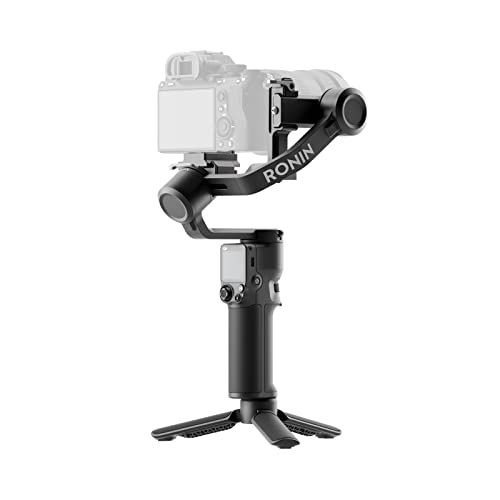
The DJI RS 3 Mini truly stands out as a marvel of engineering, proving that great things come in small packages. Weighing less than a bottle of water, this ultra-compact gimbal doesn’t compromise on performance. It’s perfect for creators who need a highly portable solution without sacrificing the ability to handle a decent range of mirrorless cameras and lenses, making it an excellent choice for travel vlogging and run-and-gun shooting.
Key Features:
– 795g (1.75lbs) Lightweight and Portable
– Wide-Ranging Compatibility: Up to 2 kg (4.4 lbs) payload
– Bluetooth Shutter Control for easy camera operation
– 3rd-Gen RS Stabilization Algorithm for pro-level image stabilization
– Native Vertical Shooting for social media content
– 1.4″ Full-Color Touchscreen with intuitive UI
– Requires DJI Ronin app for activation and full functionality
Pros:
– Extremely lightweight and highly portable for travel
– Surprisingly strong payload capacity for its size
– Excellent stabilization for smooth, professional footage
– Easy to switch to native vertical shooting
– Convenient touchscreen for settings adjustments
Cons:
– Requires the DJI Ronin app for full functionality, which needs to be downloaded directly from DJI for Android users
– May not support the heaviest camera setups
User Impressions:
Users are consistently impressed by the RS 3 Mini’s balance of portability and power. Many highlight its exceptional stabilization capabilities and the ease with which they can create dynamic shots on the go. It’s often praised as the perfect lightweight companion for mirrorless camera users.
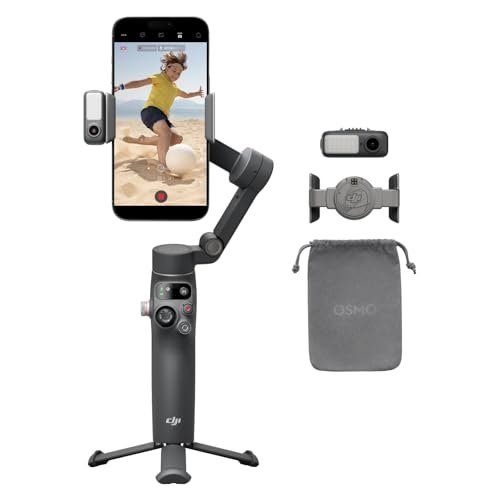
2. DJI Osmo Mobile 7P Gimbal Stabilizer for iPhone, Android

For smartphone videographers looking to seriously up their game, the DJI Osmo Mobile 7P is a standout. What sets this phone gimbal apart is its innovative Multifunctional Module, which cleverly integrates intelligent tracking, a mic receiver (for DJI Mic 2/Mini), and lighting features all into one compact unit. This means you’re not just getting a stabilizer; you’re getting an all-in-one mobile content creation powerhouse.
Key Features:
– Multifunctional Module: Intelligent tracking, DJI Mic 2/Mini reception, lighting
– Robust 3-axis gimbal stabilization for seamless stability
– ShotGuides and One-Tap Edit with DJI Mimo app
– Quick power-on and magnetic smartphone mounting
– Built-in extension rod and tripod for versatile shooting
– Max operating time of 10 hours
– Dual-Lens Enhanced Tracking for smarter, steadier subject tracking
Pros:
– All-in-one module simplifies setup and enhances creative possibilities
– Exceptional 3-axis stabilization for incredibly smooth phone footage
– Intelligent tracking keeps subjects perfectly framed
– Quick and easy setup for instant filming
– Long battery life supports extended shoots
Cons:
– DJI Mimo app needs to be downloaded directly from DJI’s website for Android users
– Primarily designed for smartphones, not compatible with larger cameras
User Impressions:
Users absolutely rave about the Osmo Mobile 7P’s smart features, especially the multifunctional module and advanced tracking. It’s considered a must-have for vloggers and social media creators who want professional results without the hassle of multiple accessories.
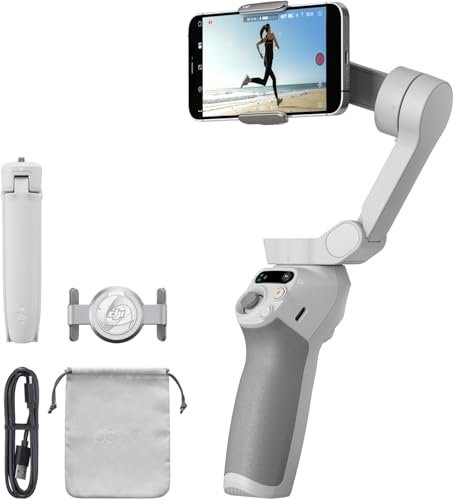
3. DJI Osmo Mobile SE, 3-Axis Phone Gimbal

The DJI Osmo Mobile SE brings professional-level smartphone stabilization to everyone with its portable, foldable design and incredibly quick magnetic clamp system. Its upgraded ActiveTrack 6.0 technology is truly impressive, effortlessly keeping even energetic subjects in frame. If you’re looking for a user-friendly and reliable phone gimbal, this is a fantastic entry point.
Key Features:
– Portable, Foldable, and Magnetically Quick mounting
– ActiveTrack 6.0 for enhanced subject tracking
– Remote Control With Apple Watch for convenient operation
– Effortless Editing with DJI Mimo’s ShotGuides and LightCut templates
– Smooth 3-axis stabilization with next-gen control algorithm
– Quick Landscape and Portrait mode switching
– New Status Panel for easy monitoring of battery and mode
– Ergonomic, stain-resistant, non-slip grip
Pros:
– Super fast and easy setup with magnetic phone clamp
– Highly effective and reliable ActiveTrack 6.0
– Convenient remote control via Apple Watch
– Excellent built-in editing assistance
– Delivers consistently smooth footage
– Durable and comfortable design
Cons:
– Exclusively for smartphones, not interchangeable lens cameras
– Requires compatibility check for specific phone models
User Impressions:
Customers love the Osmo Mobile SE for its simplicity and effective stabilization. The magnetic clamp and ActiveTrack are frequently cited as game-changers for casual users and aspiring content creators, making professional-looking videos accessible.
4. DJI RS 4 Mini, Gimbal Stabilizer for Cameras

The DJI RS 4 Mini takes the user experience up a notch with its focus on speed and efficiency. Its auto-axis locks mean you’re ready to shoot in just one second – no more fiddling around! Combined with its incredibly fast vertical switch, this gimbal is built for creators who need to capture fleeting moments and adapt quickly to different content formats, especially for mobile-first audiences.
Key Features:
– Ready in 1 second with auto axis locks
– Intelligent Tracking Module to keep subjects framed
– Teflon Enhanced Balancing for smoother adjustments
– Fast Vertical Switch (in 10 seconds)
– Responsive Follow Mode for instant reactions to hand movements
– Handles cameras and smartphones (up to 2kg/4.4lbs payload)
– Starter kit includes gimbal, tripod, and essential accessories
Pros:
– Blazing fast setup and transition times
– Highly responsive and intuitive to operate
– Versatile, supporting both mirrorless cameras and smartphones
– Smooth balancing process
– Ideal for dynamic and quickly changing shooting scenarios
Cons:
– DJI Ronin app download required from DJI’s official website for Android users
– While versatile, the ‘mini’ size might still have limits for very large camera bodies
User Impressions:
Reviewers praise the RS 4 Mini for its speed and user-friendly design. The auto-axis locks are a particular favorite, saving valuable setup time. It’s considered a fantastic option for creators who need to be agile and produce content for various platforms quickly.
5. hohem iSteady X3 SE Gimbal Stabilizer for iPhone, Phone

The hohem iSteady X3 SE is a fantastic option for smartphone users seeking excellent stabilization combined with unparalleled convenience. Its standout feature is the detachable magnetic remote controller, giving you the freedom to control your shots from up to 32 feet away – perfect for group photos, vlogging yourself, or creative angles. Plus, with an impressive 11-hour battery life, you can film all day without worry.
Key Features:
– Detachable Remote Controller (up to 32.81 feet range)
– Advanced iSteady 8.0 Technology (3-axis stabilization)
– Portable and Foldable Design (weighs 0.79 lbs)
– Hohem Joy App with AI tracking, gesture control, creative templates
– 11-Hour Long Battery Life on a 2-hour charge
– Beginner-Friendly Stabilizer
– High Payload Capacity (0.66 lbs for smartphones)
– Quick Horizontal and Vertical Screen Switching
Pros:
– Remote control offers immense flexibility for solo shooting
– Excellent stabilization for smooth, professional phone footage
– Extremely portable and easy to carry
– Very long battery life for extended use
– User-friendly for beginners
Cons:
– Exclusively for smartphones
– App features might have a slight learning curve for some users
User Impressions:
Users frequently highlight the iSteady X3 SE’s long battery life and the convenience of its detachable remote. It’s often recommended for travelers and vloggers who need a reliable, easy-to-use, and feature-rich phone stabilizer that lasts all day.
6. DJI Ronin-SC, 3-Axis Camera Stabilizer
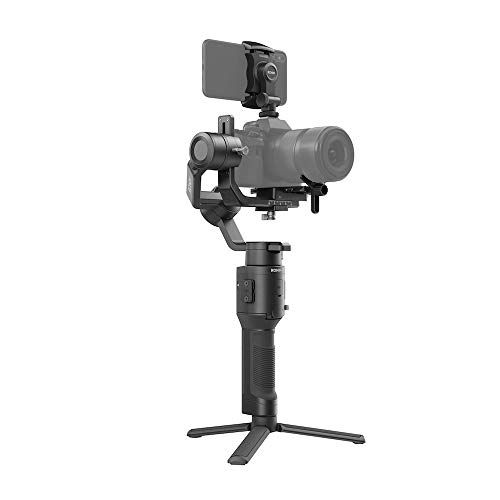
The DJI Ronin-SC is a powerful and versatile 3-axis camera stabilizer designed specifically for mirrorless cameras, opening up a world of possibilities for filmmakers and content creators. Its ability to deliver dynamic stability, even in fast-paced or action-packed scenes, ensures that your footage remains perfectly smooth and professional. This gimbal is a go-to for serious videographers looking for robust performance in a compact form.
Key Features:
– Lightweight and Compact design for portability
– Tracks the Action seamlessly with the Ronin app
– Dynamic Stability for perfectly stable shots in action-packed scenes
– Suite of Automated Features to unleash creativity
– Easy to Handle with accessible buttons and ergonomic, slip-resistant grip
– Supports up to 2kg (4.4lbs) payload
Pros:
– Excellent dynamic stabilization for challenging shots
– Intuitive integration with the Ronin app for precise control
– Automated features help achieve complex movements
– Comfortable to hold for extended shooting periods
– Ideal for mirrorless camera users seeking professional results
Cons:
– Older model compared to the newer RS series
– Payload limit may exclude some heavier full-frame DSLR setups
User Impressions:
Filmmakers often praise the Ronin-SC for its solid build quality and reliable performance. Its dynamic stability is a consistent highlight, allowing users to capture fluid shots even in challenging environments. It’s considered a workhorse for professional-level mirrorless videography.
7. 3 Axis Gimbal Stabilizer for Gopro Hero 13/12/11/10/9 (Hohem iSteady Pro 4)

Action camera enthusiasts, rejoice! This 3-axis gimbal stabilizer, often known as the Hohem iSteady Pro 4, is purpose-built to perfectly complement your GoPro Hero or other action cameras. Its standout feature is the 5.0 iSteady Tech, which delivers hyper-smooth footage no matter how intense the action. Coupled with IPX4 water resistance, this means you can capture dynamic moments during running, skating, vlogging, or holiday adventures without a hitch.
Key Features:
– 5.0 iSteady Tech for hyper smooth 3-axis stabilization
– Quick Release Clip Design for hassle-free mounting
– App Control Modes & One Click Videography via Bluetooth
– IPX4 Water Resistant for protection against splashes
– Long Battery Life (3600mAh for 14 hours continuous shooting)
– Wide Compatibility with most action cameras (GoPro, OSMO action, Sony RX0, etc.)
– 3 ¼” screw hole on bottom for tripod or accessories
Pros:
– Exceptional stabilization specifically for action cameras
– Quick and easy mounting and unmounting
– Water-resistant design for adventurous shoots
– Impressive 14-hour battery life for all-day filming
– Broad compatibility with popular action camera brands
Cons:
– Not compatible with GoPro Hero 7 White and Silver models’ Bluetooth
– Solely for action cameras, not for phones or mirrorless cameras
User Impressions:
Users engaged in action sports and outdoor activities love this gimbal for its ruggedness and dedicated action camera design. The quick-release clip and long battery life are particularly appreciated, making it a reliable tool for capturing fast-paced adventures.
8. ZHIYUN CINEPEER WEEBILL 3E 3-Axis Gimbal Stabilizer for Cameras

The ZHIYUN CINEPEER WEEBILL 3E offers professional-grade stabilization in a remarkably compact and ergonomic design. Its key differentiator is the native vertical shooting quick-mount system, allowing you to seamlessly switch to vertical content creation without extra accessories or disassembling parts. This efficiency, combined with its robust 3kg payload capacity, makes it a versatile choice for a wide range of mirrorless setups.
Key Features:
– Native Vertical Shooting with quick-mount system
– Clear paper-based manuals for easy understanding
– Bluetooth Shutter Control for wireless camera operation
– Built-in 2600mAh batteries with 14W fast charging (2h 46m charge time)
– 2.5 Sling Mode (with optional accessories) to reduce physical fatigue
– Small but Strong: 1.05 kg weight, 3kg (6.6 lbs) payload capacity
– Comfortable handle design for long-term shooting
Pros:
– Effortless transition to vertical shooting
– Strong payload capacity for its compact size
– Comfortable ergonomic grip reduces fatigue
– Fast charging capability
– Bluetooth control simplifies camera operation
Cons:
– Sling mode grip and wrist rest kit are not included and must be purchased separately
– Might have a slight learning curve for first-time gimbal users
User Impressions:
Videographers value the Weebill 3E for its ergonomic design, which makes long shooting sessions far more comfortable. The native vertical shooting is a big hit, saving time and hassle for creators focused on social media platforms.
9. FeiyuTech SCORP-C Gimbal Stabilizer for Cameras DSLR and Mirrorless

The FeiyuTech SCORP-C is a robust and highly versatile gimbal stabilizer for camera professionals and enthusiasts using DSLR and mirrorless cameras. Its standout design feature is the integrated hanging handle, which allows for effortless switching between upright and underslung shooting angles, giving you complete control and creative freedom. With thoughtful design elements like motor locks and Arca Quick Release Plate, it prioritizes quick setup and precise adjustments.
Key Features:
– Wide compatibility with mainstream mirrorless and DSLR camera & lens combos
– Integrated hanging handle for versatile shooting (upright/underslung)
– Tilted handle holding for ergonomic comfort
– Integral folding aileron bracket means no tripod required
– Considerate design: Three-axis motor lock, five-way center of gravity adjustment, memory slider, Arca Quick Release Plate
– Powerful key for easy mode switching (professional mode)
– Complex shots easily achieved: AB Trajectory Memory, Flash Mode, Panoramic Photography, Time-lapse, Space Mode, Vertical-shooting Mode
– 2500mAh Efficient Battery: 10-13 Hour maximum runtime with 18W fast charging
Pros:
– Highly compatible with a broad range of cameras
– Versatile integrated handle design for unique shooting angles
– Smart design features speed up balancing and setup
– Excellent battery life with fast charging
– Wide array of advanced shooting modes for creative expression
Cons:
– Might be heavier or bulkier than mini gimbals
– Some advanced features may require a learning curve to master fully
User Impressions:
Filmmakers appreciate the SCORP-C’s robust build and its ability to handle a wide range of cameras. The integrated handle and quick setup features are frequently praised for making diverse shooting scenarios more efficient and comfortable.
10. Zeadio Video Action Stabilizing Handle Grip Handheld
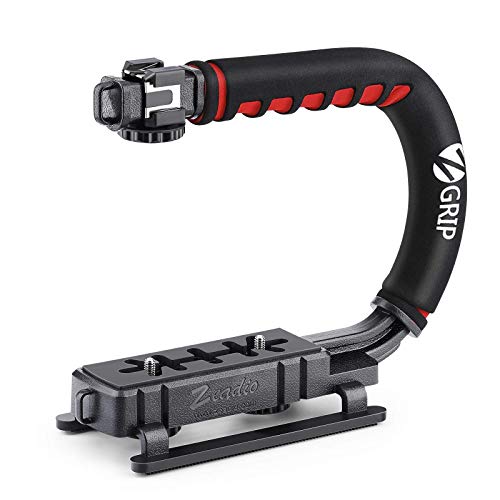
While not a motorized gimbal stabilizer in the traditional sense, the Zeadio Video Action Stabilizing Handle Grip offers a simple, effective, and extremely budget-friendly solution for achieving smoother, low-angle footage. This handheld grip is ideal for situations where a motorized gimbal might be overkill or out of budget, especially for action cameras or compact cameras. It helps alleviate shaky hands and provides a stable platform for moving shots, making it a great entry-point for better video.
Key Features:
– Ideal filming accessory for various events
– Moving Low Angle Filming capability
– Wide Compatibility with all Cameras and Camcorders (1/4-20 thread)
– Enhances Stability for extreme sports situations
– Lightweight and Comfortable with cushioned NBR padded handle
Pros:
– Very affordable way to improve handheld stability
– Excellent for achieving unique low-angle shots
– Universal compatibility with standard camera mounts
– Lightweight and comfortable for extended use
– Good for action sports where active gimbals might be cumbersome
Cons:
– NOT a motorized gimbal stabilizer; provides passive stability only
– Will not eliminate all shakes like an electronic gimbal
– Lacks advanced features and shooting modes of motorized units
User Impressions:
Users who understand its purpose (a passive grip, not a motorized gimbal) are very satisfied with the Zeadio handle. It’s highly valued for its simplicity, affordability, and effectiveness in providing basic handheld stabilization, particularly for action camera users and casual videographers.
What to Look for in the Best Gimbal Stabilizer for Camera
Choosing the best gimbal stabilizer for camera use means considering a few key factors to match your specific needs:
- Compatibility & Payload Capacity: This is crucial! Ensure the gimbal can comfortably support your camera and lens combination. Check the maximum payload capacity against your camera’s weight (including lens, battery, and any accessories).
- Type of Camera: Are you stabilizing a smartphone, an action camera, a mirrorless camera, or a DSLR? Gimbals are often optimized for specific camera types.
- Portability & Weight: If you’re a travel vlogger or shoot on the go, a lightweight and foldable gimbal will be a huge plus.
- Battery Life: Longer battery life means more shooting time. Check the advertised hours and charging time.
- Stabilization Axes: Most modern gimbals are 3-axis, offering stabilization across pan, tilt, and roll. This provides the smoothest footage.
- Ease of Use & Balancing: Some gimbals are quicker to balance and set up than others. Look for features like quick-release plates and auto-locking mechanisms.
- Features & Modes: Consider advanced features like intelligent tracking (ActiveTrack), multiple follow modes, time-lapse, panorama, and app integration.
- Build Quality & Ergonomics: A well-built gimbal will last longer, and a comfortable grip is essential for extended shooting sessions.
- Budget: Gimbals range from entry-level phone stabilizers to professional cinema camera rigs. Determine your budget and what features are most important within that range.
Frequently Asked Questions (FAQ)
Q1: What is a gimbal stabilizer and why do I need one for my camera?
A gimbal stabilizer is a device that uses motors and sensors to keep your camera level and steady, even when you’re moving. It counteracts unwanted shakes and vibrations, resulting in incredibly smooth, professional-looking footage. You need one to eliminate shaky video, achieve cinematic shots, and greatly enhance the production quality of your content, whether it’s for vlogging, filmmaking, or capturing special moments.
Q2: What’s the difference between a 2-axis and a 3-axis gimbal?
A 2-axis gimbal stabilizes on two axes (usually tilt and roll), while a 3-axis gimbal stabilizes on three axes (pan, tilt, and roll). A 3-axis gimbal offers superior stabilization by eliminating movement in all directions, providing much smoother and more professional footage compared to a 2-axis one. Most modern gimbals are 3-axis.
Q3: Can I use a phone gimbal with a mirrorless camera or DSLR?
No, generally you cannot. Phone gimbals are designed for the lighter weight and specific dimensions of smartphones. Mirrorless cameras and DSLRs are much heavier and require gimbals with higher payload capacities and different mounting systems. Using a phone gimbal with a heavier camera could damage the gimbal or result in poor stabilization.
Q4: How do I balance my camera on a gimbal stabilizer?
Balancing a camera on a gimbal involves adjusting the camera’s position on each axis until it remains level without motor assistance. This usually involves sliding the camera on a quick-release plate and adjusting the arms of the gimbal. Most gimbals come with detailed instructions or app-based tutorials for proper balancing. A well-balanced camera ensures optimal performance and prevents motor strain.
Q5: How important is battery life in a gimbal?
Battery life is very important, especially for long shooting sessions, events, or travel. A longer battery life means you can film for extended periods without needing to recharge or carry extra power banks. Look for gimbals with at least 8-10 hours of operation if you plan on shooting all day.
Q6: Are gimbals hard to learn and use?
Modern gimbals, especially those designed for consumers, have become much easier to learn and use. Features like auto-axis locks, intuitive touchscreens, and accompanying smartphone apps with tutorials (like ShotGuides from DJI) simplify the setup and shooting process. While there’s a slight learning curve to master advanced movements, basic stabilization is often very straightforward.
Q7: What is ‘ActiveTrack’ or ‘Intelligent Tracking’ on a gimbal?
ActiveTrack (or Intelligent Tracking) is a feature, commonly found in DJI gimbals, that allows the gimbal to automatically track a designated subject. You simply select a person, animal, or object on the screen, and the gimbal will keep them in the frame as they move. This is incredibly useful for solo content creators, vlogging, or dynamic shots where keeping the subject centered is key.
Q8: Can a gimbal replace a tripod?
No, a gimbal cannot fully replace a tripod. A gimbal is designed for dynamic, moving shots, providing stabilization while you’re in motion. A tripod, on the other hand, provides a static, perfectly still base for your camera, essential for long exposures, stable interviews, or fixed wide shots. They serve different purposes, though some gimbals come with small built-in tripods for setting them down or basic stationary shots.
Conclusion
Finding the best gimbal stabilizer for camera work can truly transform your video quality from shaky home movies to professional-grade productions. Whether you’re capturing family memories, creating engaging vlogs, or shooting a short film, there’s a gimbal out there perfectly suited to your gear and creative ambitions.
From the ultra-portable DJI RS 3 Mini to the versatile FeiyuTech SCORP-C, each option on our list brings unique strengths to the table. Consider your camera type, your shooting style, and the features that matter most to you. With the right gimbal in hand, you’ll be able to achieve those smooth, captivating shots you’ve always dreamed of, making your content stand out in a crowded digital world. Happy filming!