So, you’ve got your hands on the incredible Sony A7S III – a true powerhouse for videographers, known for its stunning low-light performance and fantastic 4K capabilities. But let’s be real, even the steadiest hands can’t beat the buttery-smooth footage a good gimbal provides. If you’re looking to elevate your videography and capture truly cinematic shots, finding the best gimbal for Sony A7S III is a game-changer.
A high-quality camera stabilizer isn’t just an accessory; it’s an investment that unlocks the full potential of your A7S III, turning shaky handheld clips into professional-grade productions. But with so many options out there, how do you pick the right one?
We’ve done the legwork for you, diving deep into the world of camera stabilization and complementary gear. In this guide, we’ll explore top-notch gimbals that pair perfectly with your Sony A7S III, alongside other essential accessories that can drastically improve your workflow and final output.
Let’s jump right in and find the gear that’ll help you capture those epic shots!
Our Top Picks for Your Sony A7S III
Here’s a breakdown of the gimbals and crucial accessories that will make your A7S III shine.
DJI RS 3 Mini, 3-Axis Gimbal Stabilizer for Cameras
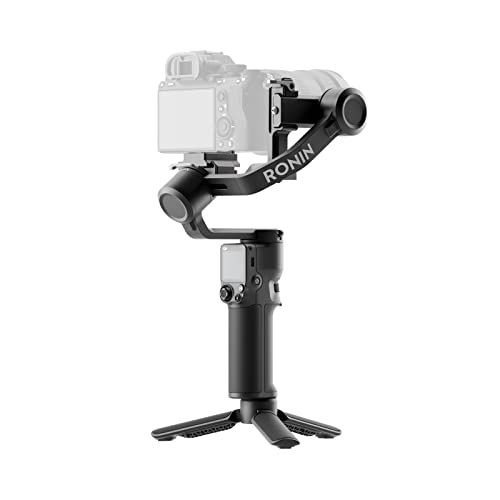
When it comes to portable and powerful stabilization, the DJI RS 3 Mini truly stands out. This compact gimbal stabilizer is a dream for run-and-gun filmmakers or anyone who values a lightweight setup without sacrificing performance. Despite its diminutive size, it packs a punch with strong motors, ensuring your Sony A7S III stays incredibly steady, even when you’re moving fast. It’s all about making pro-level video stabilization accessible and convenient, whether you’re traveling light or needing agile control for quick shoots.
-
Key Features:
- 795g (1.75lbs) Lightweight and Portable for extended shooting.
- Wide-Ranging Compatibility with a load capacity of up to 2 kg (4.4 lbs).
- Bluetooth Shutter Control for seamless photo and video recording.
- 3rd-Gen RS Stabilization Algorithm for pro-level image stabilization.
- Native Vertical Shooting for social media content.
- 1.4″ Full-Color Touchscreen with intuitive UI design.
- Requires DJI Ronin app for activation and full functionality.
-
Pros:
- Extremely lightweight and travel-friendly.
- Excellent stabilization performance for its size.
- Intuitive touchscreen and easy controls.
- Great for quick setups and native vertical shooting.
- Strong enough to handle the A7S III with many popular lenses.
-
Cons:
- Lower payload capacity than some larger gimbals (though still good for A7S III).
- Initial setup requires DJI Ronin app.
-
User Impressions: Users frequently praise the RS 3 Mini for its portability and impressive stabilization, especially for a “mini” gimbal. Many are surprised by how well it handles heavier mirrorless cameras like the A7S III, making it a favorite for on-the-go content creators who need reliable, smooth footage without the bulk.
FeiyuTech SCORP-C [Official] Camera Stabilizer 3-Axis
![FeiyuTech SCORP-C [Official] Camera Stabilizer 3-Axis...](https://m.media-amazon.com/images/I/41cuk84JumL._SL500_.jpg)
The FeiyuTech SCORP-C is a robust 3-axis camera stabilizer designed to be a significant upgrade, offering enhanced payload capacity and an integrated handle grip for improved ergonomics. It’s built to accommodate a wide range of mainstream mirrorless and DSLR camera setups, making it a strong contender for your Sony A7S III. Its multi-functional knob ring also allows for precise control over camera focus and gimbal axes, giving you more creative freedom during shoots. If you’re looking for a reliable and adaptable best gimbal for Sony A7S III that can grow with your lens collection, the SCORP-C deserves a close look.
-
Key Features:
- Upgraded payload capacity to 5.51 lbs for wider camera compatibility.
- Integrated handle grip for better ergonomics and handling.
- Multi-Functional Knob Ring to control camera focus and gimbal axis.
- Broad compatibility list including Sony A7S III, FX3, A7 IV, and more.
- Designed as an upgraded version of the popular AK2000C.
-
Pros:
- High payload capacity handles larger lenses with the A7S III.
- Integrated handle design improves comfort and control.
- Versatile knob for precise camera and gimbal adjustments.
- Good value for its feature set and build quality.
-
Cons:
- Can be bulkier than mini gimbals.
- Learning curve for some advanced functions might take time.
-
User Impressions: Many users appreciate the SCORP-C’s solid build and its ability to handle heavier camera setups. The integrated handle is a big hit, offering a more stable and comfortable grip for extended shooting. Users also highlight its precise controls and the flexibility it offers for various shooting scenarios.
Andoer Camera Rig Stabilizer Aluminum Alloy for Sony A7IV/

While not a gimbal itself, this Andoer Camera Rig Stabilizer is an incredibly valuable accessory for any serious Sony A7S III shooter, especially those using gimbals. Think of it as the ultimate protective armor and mounting platform for your camera. Designed specifically for Sony A7 series cameras, this lightweight yet robust aluminum alloy cage provides comprehensive protection while opening up a world of accessory mounting possibilities. It’s perfect for building out your camera rig with external monitors, microphones, lights, and more – all before you even mount it to a gimbal, streamlining your setup significantly.
-
Key Features:
- Professional Camera Cage Kit with top handle, wooden side grip, and cold shoe mount.
- Specifically designed for Sony A7IV/A7III/A7II/A7R III/A7R II/A7S II (including A7S III compatibility).
- Abundant Accessory Mounting Options: multiple 1/4 inch thread holes and dual cold shoe mounts.
- User-friendly Design: No obstruction to battery compartment or functional parts.
- Sturdy and Portable: Made from robust aluminum alloy, lightweight for easy carry.
- Wide Compatibility: Mounts field monitors, flash, LED lights, microphones, and more.
-
Pros:
- Excellent protection for your A7S III.
- Massively expands mounting options for accessories.
- Improves ergonomics and handheld comfort.
- Sturdy and durable construction.
- Essential for professional video production setups.
-
Cons:
- Adds some bulk and weight to the camera.
- Requires additional accessories to fully utilize its potential.
-
User Impressions: Owners love how this cage transforms their A7S III into a versatile, protected production rig. The ample mounting points and ergonomic grips are frequently praised, making it easier to attach necessary gear and shoot comfortably for longer periods. It’s often seen as a fundamental building block for any serious videographer’s kit.
Sony NEW Alpha 7S III Full-frame Interchangeable Lens Camera

It wouldn’t be a discussion about the best gimbal for Sony A7S III without dedicating a moment to the camera itself! The Sony Alpha 7S III is a true marvel, purpose-built for video professionals and hybrid shooters who demand exceptional performance in challenging conditions. Its 12.1MP Exmor R sensor is optimized for 4K video, delivering unparalleled low-light sensitivity and a vast dynamic range. This camera is why you need a great gimbal – to perfectly complement its cinematic capabilities and ensure every frame is as smooth and stunning as possible.
-
Key Features:
- 12.1MP Exmor R sensor, optimized for 4K, sensitivity, and speed.
- New BIONZ XR processing engine delivers 8x more processing power.
- Low noise images with ISO up to 409,600 and 15+ stop dynamic range.
- Up to 4K 120p 10-bit 4:2:2 and full pixel readout in all recording modes.
- Supports XAVC S, XAVC HS, and XAVC S-I codecs.
- S-Cinetone picture profile for cinematic look, tone, and color.
- Bluetooth version 5.0.
-
Pros:
- Unmatched low-light performance.
- Incredible 4K video quality at high frame rates.
- Excellent dynamic range for grading flexibility.
- Reliable autofocus system.
- S-Cinetone profile provides beautiful straight-out-of-camera footage.
-
Cons:
- High price point.
- 12.1MP may be limiting for still photographers needing high resolution.
-
User Impressions: The A7S III consistently receives rave reviews for its video capabilities, especially in low light. Users highlight its impressive dynamic range, internal 10-bit 4:2:2 recording, and the flexibility it offers for professional workflows. It’s often hailed as one of the best mirrorless cameras for serious videographers.
Sony a7 III (ILCEM3K/B) Full-frame Mirrorless Camera

While the Sony A7S III is the star for serious video, the Sony a7 III remains an incredibly popular and capable full-frame mirrorless camera, often used by creators who also seek a high-quality gimbal for their setups. With its advanced 24.2MP back-illuminated sensor and impressive 15-stop dynamic range, the a7 III delivers stunning still images and robust video performance. For many, it’s a fantastic hybrid camera that benefits immensely from the stability a gimbal provides, allowing for fluid motion shots even with its excellent in-body stabilization. If you own an a7 III and want to upgrade your video game, a gimbal is a wise investment.
-
Key Features:
- Advanced 24.2MP BSI Full-frame Image Sensor w/ 1.8X readout speed.
- 15-stop dynamic range, 14-bit uncompressed RAW, ISO 50 to 204,800.
- Up to 10fps Silent or Mechanical Shutter with AE/AF tracking.
- 693 phase-detection / 425 contrast AF points w/ 93% image coverage.
- Includes SEL2870 lens in the kit.
-
Pros:
- Excellent image quality for both photos and video.
- Impressive dynamic range and low-light performance.
- Fast and accurate autofocus system.
- Strong battery life.
- More affordable than the A7S III, offering great value.
-
Cons:
- Video features are not as advanced as the A7S III (e.g., no 4K 120p, 10-bit internal).
- Older menu system compared to newer Sony models.
-
User Impressions: The A7 III is widely praised as a fantastic all-rounder. Users love its image quality, autofocus performance, and battery life. Many who use it for video quickly realize the value of pairing it with a gimbal to achieve professional-looking, stable footage, complementing its already strong capabilities.
Conclusion: Elevating Your A7S III Footage
Choosing the best gimbal for Sony A7S III isn’t just about picking a device; it’s about unlocking new creative possibilities for your videography. Both the DJI RS 3 Mini and the FeiyuTech SCORP-C offer excellent stabilization solutions, each with its own strengths – portability versus payload capacity and ergonomics.
Beyond the gimbal, consider the other essential gear discussed. A robust camera cage like the Andoer ensures your A7S III is protected and ready for all your accessories, whether mounted to a gimbal or handheld. And of course, understanding the incredible capabilities of your A7S III (or even the versatile a7 III) itself helps you truly leverage your new stabilization tools.
With the right gimbal and a thoughtful array of accessories, your Sony A7S III will transform from an amazing camera into a complete cinematic powerhouse, ready to capture breathtakingly smooth and professional-grade footage. Happy shooting!
Frequently Asked Questions (FAQ)
Q1: Why do I need a gimbal for my Sony A7S III if it has in-body image stabilization (IBIS)?
A1: While the A7S III’s IBIS is excellent, it primarily corrects for small, high-frequency jitters from handheld use. A 3-axis gimbal provides much more comprehensive stabilization, compensating for larger movements, tilts, and pans, resulting in cinematic, floating camera shots that IBIS alone cannot achieve. It’s crucial for smooth tracking shots, walking, or any dynamic camera movement.
Q2: What payload capacity should I look for in a gimbal for the Sony A7S III?
A2: The Sony A7S III body weighs about 699g (1.5 lbs). You need to add the weight of your lens, battery, and any small accessories (like a microphone or monitor). Aim for a gimbal with a minimum payload capacity of 2 kg (4.4 lbs) to comfortably handle the A7S III with a standard lens. If you plan to use heavier, professional lenses, look for gimbals with capacities closer to 3 kg (6.6 lbs) or more.
Q3: Is the DJI RS 3 Mini powerful enough for the Sony A7S III?
A3: Yes, the DJI RS 3 Mini, with its 2 kg (4.4 lbs) payload capacity, is generally powerful enough for the Sony A7S III with many popular prime lenses and lighter zoom lenses. It’s an excellent choice if portability is your top priority. However, for very heavy telephoto or cinema lenses, you might need a larger gimbal.
Q4: Can I mount a camera cage on my Sony A7S III and then use it with a gimbal?
A4: Absolutely! In fact, using a camera cage with your A7S III is highly recommended when using a gimbal. A cage provides mounting points for accessories like monitors, wireless video transmitters, or microphones, keeping your setup clean and organized. It also adds protection and allows for easier balancing on the gimbal, especially with a quick-release plate.
Q5: What’s the difference between the Sony A7S III and the A7 III for video stabilization?
A5: Both cameras have in-body image stabilization. However, the A7S III is optimized for professional video, offering superior low-light performance, internal 10-bit 4:2:2 recording, and 4K 120p. The A7 III is a fantastic hybrid camera but has more limited video features (e.g., 8-bit recording, no 4K 120p). Both benefit greatly from a gimbal to achieve professional smoothness, but the A7S III’s higher video quality makes the stabilization even more impactful.
Q6: What LSI keywords are important when searching for gimbals for the A7S III?
A6: When looking for the best gimbal for Sony A7S III, consider using terms like “camera stabilizer,” “video stabilization,” “mirrorless camera gimbal,” “payload capacity,” “run-and-gun setup,” “cinematic footage,” “battery life,” “quick release plate,” “Bluetooth control,” and “follow focus.” These terms help narrow down your search and find more relevant results.
Q7: How important is battery life on a gimbal?
A7: Battery life is very important, especially for longer shoots or events. A good gimbal should offer at least 8-12 hours of operating time to ensure you don’t run out of power mid-shoot. Some gimbals even offer power output ports to charge your camera, which is a huge bonus for extended recording sessions with your A7S III.