If you’re a proud owner of a Sony A7 series camera, you already know its incredible power for capturing stunning photos and videos. But let’s be real: handheld footage can often look shaky, no matter how steady your hands are. That’s where a good gimbal comes in! A gimbal stabilizer can transform your wobbly shots into silky-smooth, cinematic masterpieces, truly unlocking the full potential of your Sony A7.
Choosing the best gimbal for Sony A7 isn’t always straightforward, though. With so many options on the market, from ultra-light travel companions to heavy-duty workhorses, finding the perfect match for your shooting style and gear can feel a bit overwhelming. But don’t fret! We’ve done the legwork for you.
In this comprehensive guide, we’ll dive deep into some of the top gimbal stabilizers compatible with your Sony A7, breaking down their features, pros, and cons. Whether you’re a vlogger, a wedding filmmaker, or just someone looking to elevate their home videos, you’re sure to find a fantastic option here. Let’s get your Sony A7 ready for some serious smooth action!
Our Top Picks for the Best Gimbal for Sony A7
Here’s our detailed look at the contenders that can give your Sony A7 the stability it deserves.
1. DJI RS 3 Mini
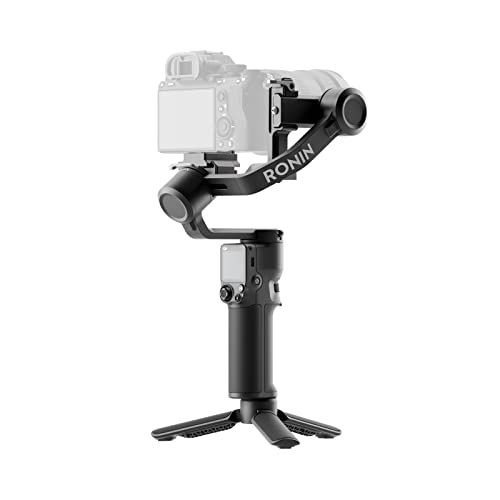
The DJI RS 3 Mini truly lives up to its name, offering an incredibly lightweight and portable solution without sacrificing stabilization power. It’s designed for creators who need professional-grade smoothness on the go. Don’t let its compact size fool you; this little powerhouse can handle a surprisingly wide range of camera and lens combinations, making it a perfect fit for many Sony A7 setups. Its native vertical shooting capability is a huge bonus for social media content creators, letting you switch between landscape and portrait modes effortlessly.
-
Key Features:
- 795g (1.75lbs) Lightweight and Portable
- Load capacity up to 2 kg (4.4 lbs)
- Bluetooth Shutter Control for easy camera operation
- 3rd-Gen RS Stabilization Algorithm for pro-level smoothness
- Native Vertical Shooting without extra accessories
- 1.4″ Full-Color Touchscreen with intuitive UI
- Requires DJI Ronin app for activation and full functionality
-
Pros:
- Extremely compact and travel-friendly
- Excellent stabilization performance for its size
- Quick and easy setup for vertical shooting
- Good payload capacity for many mirrorless setups
-
Cons:
- May not handle the heaviest Sony A7 setups with large cine lenses
- Requires a mobile app for initial setup and firmware updates
-
User Impressions: Users rave about the RS 3 Mini’s portability and how it delivers surprisingly professional results for such a small device. It’s often highlighted as a game-changer for solo creators and vloggers who prioritize lightweight gear without compromising on smooth footage.
2. FeiyuTech SCORP-C Gimbal Stabilizer for Cameras DSLR and Mirrorless

The FeiyuTech SCORP-C stands out with its integrated hanging handle and thoughtful design, making it incredibly versatile for various shooting angles – whether you’re shooting upright or in an underslung position. It boasts a clever ergonomic design that’s comfortable to hold for extended periods, and you can even set it down anywhere thanks to its integral folding aileron bracket. This gimbal is packed with features designed to simplify complex shots and offers wide compatibility, including various Sony Alpha models.
-
Key Features:
- Wide compatibility with mainstream mirrorless and DSLR cameras (including Sony α7 series)
- Integrated hanging handle and tilted handle for versatile shooting
- Built-in folding aileron bracket for setting down anywhere
- Three-axis motor lock for easy balancing and transport
- Five-way center of gravity adjustment and memory slider
- Arca Quick Release Plate for fast setup
- Advanced features like AB Trajectory Memory, Flash Mode, Panoramic, Time-lapse, and Vertical-shooting
- 2500mAh battery with 10-13 hour runtime and 18W fast charging
-
Pros:
- Highly versatile handling options for different shooting scenarios
- Thoughtful design features for quick setup and transport
- Long battery life with fast charging
- Advanced shooting modes for creative control
-
Cons:
- May have a steeper learning curve for beginners due to many features
- Can be a bit larger than ultra-compact options
-
User Impressions: Users appreciate the SCORP-C’s robust build and its ability to handle a wide range of cameras. The ergonomic handles and integrated stand are frequently praised, making it a solid choice for those looking for professional features and comfortable handling.
3. FeiyuTech SCORP-C [Official] Camera Stabilizer 3-Axis (Upgraded Version)
![FeiyuTech SCORP-C [Official] Camera Stabilizer 3-Axis...](https://m.media-amazon.com/images/I/41cuk84JumL._SL500_.jpg)
This official FeiyuTech SCORP-C is an upgraded iteration, building upon the success of previous models like the AK2000C. The most significant improvement here is its enhanced payload capacity, now supporting up to 5.51 lbs, making it even more compatible with a broader range of Sony A7 cameras and heavier lenses. It retains the popular integrated handle grip and introduces a multi-functional knob ring, allowing precise control over camera focus and gimbal axis movements directly from the handle.
-
Key Features:
- Upgraded maximum payload to 5.51 lbs (from 4.85 lbs on AK2000C)
- Integrated handle grip (no longer an optional accessory)
- Multi-functional knob ring for controlling camera focus and gimbal axis
- Extensive compatibility with mainstream mirrorless and DSLR cameras, including numerous Sony A7 and ZV models
-
Pros:
- Higher payload supports a wider variety of pro lenses
- Integrated handle design is convenient and sturdy
- Intuitive knob for quick adjustments during shooting
- Excellent compatibility list for Sony cameras
-
Cons:
- While upgraded, still shares some characteristics with the non-upgraded version if payload isn’t a primary concern.
-
User Impressions: Customers are very pleased with the increased payload, noting that it provides more flexibility for heavier Sony setups. The integrated handle and the responsive control knob are also frequently highlighted as major improvements for a smoother workflow.
4. ZHIYUN CINEPEER WEEBILL 3E 3-Axis Gimbal Stabilizer for Cameras

The ZHIYUN CINEPEER WEEBILL 3E brings professional-grade stabilization in a remarkably small and lightweight package. Weighing just 1.05 kg and roughly the size of an A4 paper, it’s designed for maximum portability without compromising on performance. What truly sets it apart is its native vertical shooting capability, allowing you to seamlessly transition to social media-friendly formats without extra attachments. Its ergonomic handle design ensures comfort during extended shooting sessions, reducing physical fatigue.
-
Key Features:
- Native Vertical Shooting for quick content creation
- Bluetooth Shutter Control for wireless camera operation
- Built-in 2600mAh batteries with 14W fast charging
- 2.5 Sling Mode (requires optional wrist rest and telescopic sling handle)
- Weighs only 1.05 kg (A4-sized)
- 3kg (6.6 lbs) payload capacity
-
Pros:
- Extremely portable and compact
- Effortless switch to vertical shooting
- Good battery life with fast charging
- Comfortable design for long shoots
-
Cons:
- Sling mode accessories are sold separately
- Some users might prefer a more robust build for heavier professional use, though it handles 3kg well.
-
User Impressions: Users love the Weebill 3E’s balance of portability and power. Its native vertical shooting is a huge hit for content creators, and the comfortable grip makes it a pleasure to use for longer shoots. It’s often recommended for vloggers and independent filmmakers.
5. AODELAN Wireless Shooting Grip Tripod with Remote Control
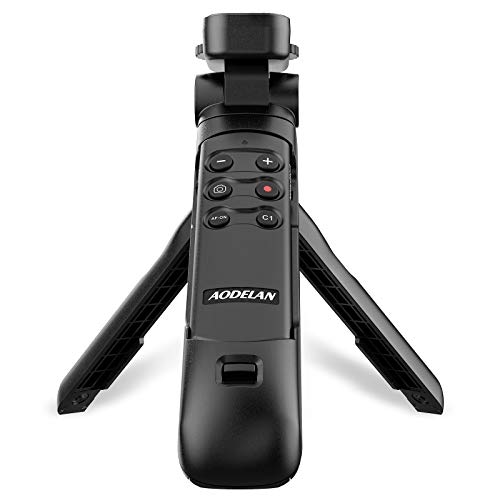
While not a full 3-axis gimbal in the traditional sense, the AODELAN Wireless Shooting Grip Tripod is an incredibly handy accessory that offers a different kind of stability and control for your Sony A7. It functions both as a compact shooting grip and a tabletop tripod, making it perfect for vlogging, live streaming, and selfies. Its standout feature is the detachable remote control, giving you wireless command over photo, video, focus, and zoom functions directly from the grip, which is a huge convenience for solo shooters.
-
Key Features:
- Dual function: handheld shooting grip and tabletop tripod
- Supports cameras up to 1 kg (2.2 lb)
- Lightweight and easy to carry
- Detachable wireless remote control (10m/32.8ft range)
- Remote controls still images, video, focus, and zoom
- Non-slip pad for stable tripod support
- Compatible with various Sony Alpha and ZV models (a6100, a6400, a6600, a7 III, a7R III, a7R IV, a9, a9 II, RX series, ZV series)
-
Pros:
- Extremely versatile for vlogging and casual use
- Integrated remote control enhances usability
- Ultra-portable and easy to set up
- Great for static shots and basic handheld stability
-
Cons:
- Does not provide active 3-axis stabilization like a gimbal
- Limited payload capacity, not suitable for heavy lens setups
-
User Impressions: Users highly recommend this grip for its convenience and portability. It’s considered an essential accessory for vloggers and anyone looking for basic camera support and remote control on the go, especially for Sony’s compact mirrorless cameras.
6. Sony a7 III ILCE7M3/B Full-Frame Mirrorless Camera

While this isn’t a gimbal itself, the Sony a7 III is the very camera that many of the gimbals on this list are designed to stabilize. It’s an absolute powerhouse and often considered one of the best cameras for video in its class, making it an ideal partner for any high-quality gimbal. Its advanced full-frame sensor, robust autofocus system, and excellent low-light performance ensure that when paired with a good gimbal, your footage will look nothing short of spectacular. It also features in-body image stabilization (IBIS), which complements a gimbal for incredibly smooth results.
-
Key Features:
- Advanced 24.2MP BSI full-frame image sensor with 1.8X readout speed
- 15-stop dynamic range and 14-bit uncompressed RAW
- ISO 50 to 204,800 for exceptional low-light performance
- Up to 10fps silent or mechanical shutter with AE/AF tracking
- 693 phase-detection / 425 contrast AF points with 93% image coverage
- Excellent battery life (approx. 610-710 shots, 200-210 min video)
- Compatible with a wide range of Sony E-mount lenses
-
Pros:
- Outstanding image and video quality
- Reliable and fast autofocus system
- Good battery life for extended shoots
- In-body image stabilization enhances handheld shooting (even without a gimbal)
-
Cons:
- Is a camera, not a gimbal, so it doesn’t provide the dynamic stabilization needed for motion shots on its own.
- Requires a separate gimbal for truly cinematic, flowing movements.
-
User Impressions: The Sony a7 III is widely regarded as one of the best hybrid cameras available, celebrated for its versatility in both photography and videography. Users often pair it with gimbals to maximize its video capabilities, praising the sharpness, dynamic range, and low-light performance it delivers.
7. ZHIYUN CINEPEER Weebill 3E[Official], 3-Axis Lightweight Gimbal Stabilizer
![ZHIYUN CINEPEER Weebill 3E[Official], 3-Axis Lightweight...](https://m.media-amazon.com/images/I/41+kdEh7b2L._SL500_.jpg)
As we’ve seen, the ZHIYUN CINEPEER Weebill 3E is an impressive gimbal, and this official listing reiterates its core strengths, making it a strong contender for your Sony A7. Its lightweight design (just 1.05 kg) combined with a robust 3 kg (6.6 lbs) payload makes it an ideal choice for mirrorless and even some DSLR cameras. The standout feature remains its native vertical shooting capability, which simplifies creating content for platforms like TikTok and Instagram Reels. With its long battery life and ergonomic design, it’s built for creators on the go.
-
Key Features:
- 3 kg (6.6 lbs) payload capacity despite being lightweight (1.05 kg)
- A4 paper-sized design for extreme portability
- Native Vertical Shooting without needing additional accessories
- Bluetooth Shutter Control for wireless camera operation
- 16H Max Battery Life with 14W PD fast charging (2 hours 46 minutes charge time)
- 2.5 Sling Mode for reduced fatigue (grip and wrist rest sold separately)
- Wide compatibility with major mirrorless and DSLR cameras
-
Pros:
- Excellent weight-to-payload ratio
- Perfect for social media content with native vertical mode
- Long-lasting battery supports all-day shooting
- Ergonomic design for comfortable handling
-
Cons:
- Optional sling accessories need to be purchased separately
- Specific control cables for Canon, Sony, and other brands (besides Panasonic) are needed, which is an extra purchase for some.
-
User Impressions: Users frequently commend the Weebill 3E for its ergonomic design and the comfort it provides during long shooting sessions. Its ability to seamlessly switch to vertical mode is a standout feature for modern content creators, making it a highly practical choice.
8. Sony a7 III Mirrorless Full Frame Camera with 28-70mm Lens Kit & DJI RS 4 Gimbal Stabilizer Bundle
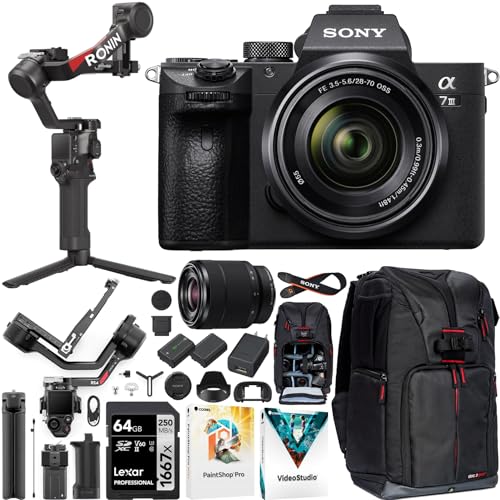
This incredible bundle offers a complete professional video setup, pairing the highly acclaimed Sony a7 III mirrorless camera (with a versatile 28-70mm kit lens) with the powerful DJI RS 4 Gimbal Stabilizer. If you’re looking to dive into serious filmmaking or vlogging with your Sony A7 and need the ultimate in camera stabilization, this package is designed to get you started immediately with top-tier gear. The a7 III’s exceptional image quality and IBIS, combined with the DJI RS 4’s advanced stabilization, promise incredibly smooth and cinematic results.
-
Key Features (Camera – Sony a7 III):
- 24.2MP Back-Illuminated 35mm Full-frame CMOS Image Sensor
- 5-axis in-body image stabilization
- Fast Hybrid AF with 693 phase-detection and 425 contrast-detection AF points
- 4K HDR Movie Shooting with full pixel readout
- Sensitivity range up to ISO 51200 (expandable to 204800 for stills)
- 15-stop dynamic range, 14-bit uncompressed RAW
-
Key Features (Gimbal – DJI RS 4):
- BG21 Battery Grip for extended power
- Quick-Release Plate for fast camera mounting
- Extended Grip/Tripod for versatile handling
- Lens-Fastening Support for secure setups
- Multi-Camera Control Cable (USB-C) for seamless camera-gimbal integration
-
Pros:
- Complete, professional-grade camera and gimbal setup in one purchase
- Combines excellent camera performance with industry-leading stabilization
- Ready for immediate high-quality video production
- Bundled accessories enhance usability and workflow
-
Cons:
- Significant upfront investment due to being a complete bundle
- Specific features of the RS 4 are not fully detailed in the provided list (but it’s a known high-end gimbal).
-
User Impressions: Customers who opt for this bundle are typically serious about their content creation and appreciate the convenience of acquiring a high-performance camera and a top-tier gimbal together. The synergy between the a7 III and the DJI RS 4 is often highlighted as a perfect match for professional-looking footage.
9. Zhiyun Weebill S Gimbal Stabilizer for Mirrorless and DSLR Cameras
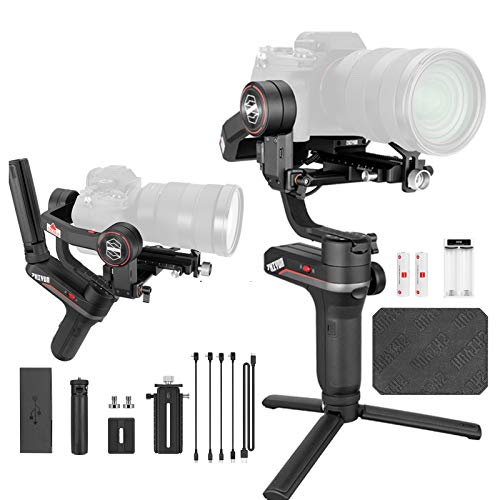
The Zhiyun Weebill S is renowned for its supreme power and compact design, making it an excellent choice for a wide array of mirrorless and DSLR cameras, including demanding setups like the Sony A7 III with a 24-70mm F2.8 lens. Despite its impressive payload capacity of up to 3KG (6.6 lbs), it maintains an ultra-lightweight form factor, weighing only 895g – about the size of an A4 paper. Its innovative three-axis lock and quick-release system ensure rapid setup and transport, while the intuitive OLED display keeps all essential settings at your fingertips.
-
Key Features:
- Supreme power with a max payload of 3KG (6.6 lbs)
- Lightweight and compact at 895g, A4 paper-sized design
- Three-Axis Lock for easy storage and balancing
- Two-in-one quick release plates for fast transitions
- OLED Display for instant access to gimbal settings (motor strength, follow speed, etc.)
- 14-hour runtime with interchangeable batteries
- Can charge your camera in real-time
-
Pros:
- Excellent payload-to-weight ratio for professional setups
- Highly portable and easy to pack
- Quick setup and breakdown with axis locks and quick release
- Intuitive OLED screen for on-the-fly adjustments
- Long battery life and camera charging capability
-
Cons:
- Can require careful balancing with heavier setups to achieve optimal performance
- The “A4 paper” footprint, while compact, is still larger than mini-gimbals.
-
User Impressions: This gimbal is a firm favorite among many video creators using Sony A7 cameras. Users consistently praise its ability to handle heavier lenses with ease while remaining remarkably portable. The quick-release plates and axis locks are often cited as major workflow enhancements.
10. FeiyuTech G6 Max 3-Axis Handheld Gimbal Stabilizer

The FeiyuTech G6 Max truly lives up to its “all-in-one” moniker. It’s designed to be incredibly versatile, handling not just mirrorless cameras (up to 1.2kg with short lenses), but also smartphones, sports cameras, and even pocket vlog cameras. This makes it an ideal choice for creators who use multiple devices and want a single, compact gimbal solution. Despite its enhanced compatibility and increased payload (up to 1.2kg), it’s surprisingly small – about half the size of an A4 paper. The upgraded “Magic Focus Ring” 2.0 and larger OLED screen enhance user experience and control.
-
Key Features:
- All-in-One compatibility for mirrorless (up to 1.2kg), smartphones, sports cameras, and pocket cameras
- Compact size (half A4 paper) with a 1.2Kg (2.65lb) payload
- Motor locks on all 3 axes for easy balancing and transport
- New Quick Release System for rapid camera attachment/detachment
- Improved “Magic Focus Ring” 2.0 for precise control over zoom, focus, and gimbal parameters
- Larger OLED Screen (200% bigger) displaying extensive information and settings
- Supports “Inception,” “Instant Vertical Photography,” and “Motion Time-lapse” modes
-
Pros:
- Exceptional versatility for multi-device creators
- Extremely portable and compact design
- Physical motor locks simplify setup and packing
- Intuitive and enhanced control via the Magic Focus Ring and OLED screen
-
Cons:
- Lower payload limit compared to dedicated mirrorless gimbals, might not suit larger Sony A7 + pro lens combos.
- Best for lighter Sony A7 setups or when pairing with compact lenses.
-
User Impressions: This gimbal is highly praised for its universal compatibility and ultra-compact form factor. Users find it incredibly convenient for travel and situations where they might switch between their Sony A7 (with a compact lens) and other devices like a smartphone or action camera. The improved controls are a definite plus.
Finding Your Perfect Match
Choosing the best gimbal for Sony A7 really boils down to your specific needs and shooting style. Are you a solo vlogger who needs ultimate portability, or a professional videographer working with heavier lenses? Do you prioritize quick setup or advanced cinematic features?
- For ultimate portability and social media content, the DJI RS 3 Mini or ZHIYUN CINEPEER WEEBILL 3E are fantastic choices.
- If you need a robust all-rounder with excellent payload and versatile handling, the FeiyuTech SCORP-C (Upgraded Version) or Zhiyun Weebill S are strong contenders.
- For multi-device creators who value extreme versatility in a compact form, the FeiyuTech G6 Max is hard to beat.
- And if you’re starting from scratch and want a high-performance camera and gimbal together, the Sony a7 III + DJI RS 4 Bundle is an unbeatable option.
No matter which one you choose, investing in a quality gimbal will dramatically elevate your video production, giving your Sony A7 the stable platform it needs to capture truly stunning, smooth footage.
Frequently Asked Questions (FAQ)
Q1: Why do I need a gimbal for my Sony A7 if it already has in-body image stabilization (IBIS)?
A: While your Sony A7’s IBIS is great for reducing minor shakes and vibrations, a 3-axis gimbal provides a much higher level of stabilization, especially for dynamic movements like walking, running, or panning. IBIS compensates for camera body movement, but a gimbal actively counteracts rotational movements across three axes, giving you that super smooth, cinematic “floating” look that IBIS alone cannot achieve. They complement each other for ultimate stability.
Q2: What payload capacity do I need for a gimbal compatible with my Sony A7?
A: The required payload capacity depends on your specific Sony A7 model and, more importantly, the lenses you plan to use. Sony A7 series cameras typically weigh between 0.5-0.7 kg (1.1-1.5 lbs). Lenses can add anywhere from 0.3 kg to over 1 kg (0.6-2.2 lbs). To be safe, look for a gimbal with a minimum payload of 2 kg (4.4 lbs) to comfortably handle most common A7 setups. If you use heavier professional lenses (like f/2.8 zooms), opt for gimbals with 3 kg (6.6 lbs) or more payload.
Q3: How do I properly balance my Sony A7 on a gimbal?
A: Balancing is crucial for optimal performance and battery life. Here’s a general process:
1. Unlock all axes: Release the tilt, roll, and pan locks.
2. Mount your camera: Attach your Sony A7 (with the lens you’ll be using) to the quick-release plate and secure it to the gimbal.
3. Balance the Tilt Axis (vertical): Adjust the horizontal arm until the camera doesn’t tip forward or backward.
4. Balance the Roll Axis (sideways): Adjust the vertical arm until the camera doesn’t lean left or right.
5. Balance the Pan Axis (horizontal rotation): Adjust the bottom arm until the gimbal stays still when you rotate it horizontally.
6. Fine-tune: Make small adjustments until the camera stays perfectly still in any position without motor power. Refer to your gimbal’s specific manual for detailed instructions.
Q4: Are gimbals difficult to learn and use?
A: Modern gimbals have become much more user-friendly with auto-tune features and simpler balancing processes. While there’s a small learning curve for balancing and understanding different modes (like follow mode, pan follow, lock mode), most users can pick up the basics fairly quickly. Practice is key to mastering smooth movements and utilizing all the creative features.
Q5: Can I control my Sony A7’s settings (like record, focus) directly from the gimbal?
A: Many modern gimbals offer multi-camera control cables or Bluetooth connectivity that allow you to control basic camera functions like start/stop recording, taking photos, and sometimes even focus or zoom directly from the gimbal’s handle. Always check the gimbal’s compatibility list to ensure it supports your specific Sony A7 model’s control features.
Q6: What’s “native vertical shooting” on a gimbal and why is it useful?
A: Native vertical shooting means the gimbal is designed to easily switch your camera to a vertical (portrait) orientation without needing to rebalance or add bulky accessories. This is incredibly useful for creating content specifically for social media platforms like TikTok, Instagram Reels, and YouTube Shorts, where vertical video is the preferred format. It saves time and hassle when transitioning between different content types.
Q7: How important is battery life and fast charging for a gimbal?
A: Very important, especially for longer shoots or professional work. A gimbal’s battery powers the motors and electronics, and running out of juice mid-shoot can be a huge problem. Look for gimbals with a battery life of at least 8-10 hours, and fast charging capabilities mean you can quickly top up the battery during short breaks, ensuring you’re always ready to capture the next moment.