So, you’re the proud owner of a Canon C70 – a true cinematic powerhouse, compact yet incredibly capable. But even with its impressive internal stabilization, you know that to truly unlock its full potential for buttery-smooth, professional-grade footage, a good gimbal is non-negotiable. Whether you’re chasing action, gliding through a scene, or capturing dynamic handheld shots, the right stabilizer can transform your work.
Finding the best gimbal for Canon C70 involves considering payload, features, and ease of use. This isn’t just about throwing your camera on any stabilizer; it’s about finding a reliable partner that can handle the C70’s weight and form factor, integrate seamlessly into your workflow, and help you achieve those breathtaking, fluid cinematic shots. We’ve rounded up some of the top contenders, plus a few essential accessories, to help you make the best choice for your C70 rig.
Let’s dive in and find the perfect match for your filmmaking needs!
DJI RS 3 Mini, 3-Axis Gimbal Stabilizer for Cameras
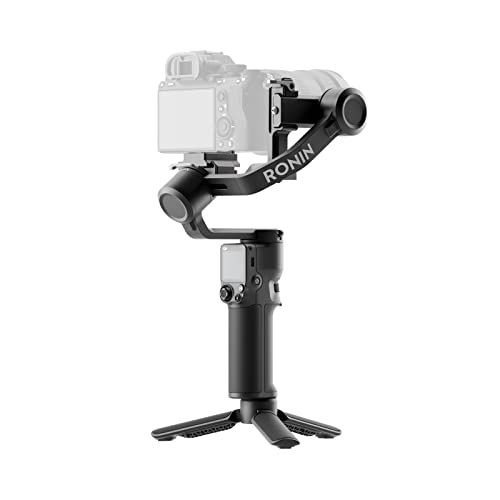
If portability is high on your list without sacrificing performance, the DJI RS 3 Mini might just be your new best friend. This ultra-compact gimbal stabilizer defies its size, offering remarkable stability and a surprisingly robust payload capacity that can comfortably handle many mirrorless camera setups, and even lighter Canon C70 configurations. It’s designed for creators who are always on the go, making it super easy to pack and deploy for quick, dynamic shots without the bulk of larger rigs. Despite its ‘mini’ designation, it packs a punch with DJI’s renowned stabilization technology, ensuring your C70 footage stays incredibly smooth.
-
Key Features:
- 795g (1.75lbs) Lightweight and Portable design, ideal for travel.
- Wide-Ranging Compatibility with a load capacity up to 2 kg (4.4 lbs).
- Bluetooth Shutter Control for easy camera operation.
- 3rd-Gen RS Stabilization Algorithm for pro-level image stabilization.
- Native Vertical Shooting capability for social media content.
- 1.4″ Full-Color Touchscreen with an intuitive UI.
- Requires DJI Ronin app for activation and full functionality.
-
Pros:
- Extremely portable and lightweight, reducing fatigue.
- Excellent stabilization for its size.
- Convenient vertical shooting mode.
- Bluetooth control simplifies operation.
-
Cons:
- Limited payload capacity for heavier C70 setups (e.g., with large lenses or many accessories).
- Requires app for full functionality and activation.
-
User Impressions: Users love the RS 3 Mini for its “grab-and-go” convenience and impressive stability, especially for content creators. Many highlight its ease of use for smaller cameras and its surprisingly good performance for its footprint. While it won’t handle a fully kitted-out C70, for a stripped-down setup, it’s a fan favorite.
DJI RS 3 Pro, 3-Axis Gimbal for DSLR and Cameras

For professional filmmakers and the Canon C70, the DJI RS 3 Pro is a serious contender. This isn’t just a gimbal; it’s a robust, feature-rich ecosystem designed to support heavier camera setups like the C70 with larger lenses. What truly makes the RS 3 Pro stand out is its ability to handle a substantial payload (up to 4.5 kg / 10 lbs) while offering automated axis locks for lightning-fast setup and breakdown. Its extended carbon fiber arms provide ample space for balancing your C70, ensuring smooth operation even with a 24-70mm F2.8 lens. This is the best gimbal for Canon C70 users who demand uncompromising stability, professional connectivity, and the ability to integrate with larger production workflows.
-
Key Features:
- Automated Axis Locks for quick setup and storage.
- Extended Carbon Fiber Axis Arms, providing sufficient leveling space for pro cameras like the Canon C70 with large lenses.
- 4.5 kg (10lbs) Tested Payload capacity.
- Long-Range O3 Pro Video Transmission [2] (up to 6km/20,000ft) with ultra-low latency.
- Dynamic & Versatile Solution with extensive ports and DJI RS SDK protocol.
- Combo includes Ronin Image Transmitter, Focus Motor (2022), and more.
-
Pros:
- High payload capacity perfectly suited for the C70 and heavier lenses.
- Automated locks significantly speed up workflow.
- Excellent for complex professional setups with its versatile connectivity.
- Superior image transmission capabilities.
-
Cons:
- Larger and heavier than its ‘mini’ counterpart, less portable for run-and-gun.
- Higher price point reflects its professional capabilities.
-
User Impressions: Professionals consistently praise the RS 3 Pro for its rock-solid stability, impressive payload, and smart features like the auto-locks. Filmmakers often highlight its ability to handle cinema cameras like the C70 effortlessly, making it a reliable workhorse for serious productions. The ecosystem of accessories and integration capabilities are also highly valued.
Canon EOS C70 Cinema Camera (Body Only), 4K Super 35mm

While not a gimbal itself, the Canon EOS C70 is the star of the show here – the incredible cinema camera you’re looking to stabilize! It’s important to understand its features, especially those that complement a gimbal setup. The C70 is Canon’s compact powerhouse, bridging the gap between cinema and mirrorless cameras. Its 4K Super 35mm Dual Gain Output sensor delivers stunning image quality, while its Dual Pixel CMOS AF with face and eye detection is a game-changer for maintaining sharp focus, even when the camera is in motion on a gimbal. Its adaptable design, including EF lens compatibility with an adapter, makes it a versatile tool that truly benefits from external stabilization for the ultimate smooth shot.
-
Key Features:
- Canon’s next-generation 4K Super 35mm Dual Gain Output sensor.
- EF lens compatibility with EF-EOS R 0.71x adapter.
- DIG!C DV7 image processing and 16+ stops of total dynamic range.
- Pioneering Dual Pixel CMOS Autofocus technology for precise focusing.
- Multiple recording options: Dual SD card slots, 4K/HD, XF-AVC/MP4.
- EOS iTR AF X with advanced face and eye detection.
- Enhanced Image Stabilization (Coordinated Control with RF lenses and electronic IS).
- Vertical Shooting Support with built-in tripod hole.
- Direct Touch Control on a fully rotatable LCD screen.
- Approved for use in Netflix productions.
-
Pros:
- Exceptional image quality and dynamic range.
- Industry-leading autofocus performance, crucial for gimbal work.
- Compact cinema camera form factor.
- Versatile recording options and lens compatibility.
-
Cons:
- Body-only purchase, lenses and accessories add significant cost.
- While it has internal stabilization, it still benefits greatly from a mechanical gimbal for extreme smoothness.
-
User Impressions: Users rave about the C70’s image quality, its compact size, and especially its autofocus system, which is frequently cited as a major advantage for run-and-gun shooting and gimbal work. Filmmakers appreciate its versatility and how it punches above its weight in terms of cinematic output for its form factor.
ZHIYUN CINEPEER Weebill 3E[Official], 3-Axis Lightweight…
![ZHIYUN CINEPEER Weebill 3E[Official], 3-Axis Lightweight...](https://m.media-amazon.com/images/I/41+kdEh7b2L._SL500_.jpg)
The ZHIYUN CINEPEER Weebill 3E is another strong contender for the Canon C70, especially if you’re looking for a balance between payload capacity and a truly comfortable, lightweight design. Weighing in at just 1.05 kg (2.3 lbs) while supporting up to 3 kg (6.6 lbs), it hits a sweet spot for many C70 setups. What sets the Weebill 3E apart is its ergonomic design, including a comfortable handle that aims to reduce fatigue during extended shoots. It’s also praised for its native vertical shooting mode, allowing quick transitions for social media content creation.
-
Key Features:
- 3 kg (6.6 lbs) Payload with a lightweight 1.05 kg (2.3 lbs) design.
- A4 paper-sized (12 × 8 × 3 in) for portability.
- More comfortable handle design to reduce fatigue.
- Native Vertical Shooting without additional accessories.
- Bluetooth Shutter Control for wireless camera operation.
- 16H Max Battery Life, supporting 14W PD fast charging.
- 2.5 Sling Mode (requires separate purchase of sling grip and wrist rest).
- Wide-axis arm compatible with major mirrorless/DSLR cameras and lenses.
-
Pros:
- Excellent balance of payload and lightweight design.
- Ergonomic design for comfortable long-term use.
- Long battery life for all-day shooting.
- Quick and easy vertical shooting.
-
Cons:
- Sling grip and wrist rest (for Sling Mode) are sold separately.
- May require purchasing additional control cables for Canon (only Panasonic included).
-
User Impressions: Users appreciate the Weebill 3E for its robust build quality combined with its portability. Many highlight the comfortable grip and the extended battery life as key benefits for all-day shooting. Its ability to handle many popular camera setups, including the C70 with standard lenses, makes it a popular choice for indie filmmakers and content creators.
ZHIYUN CINEPEER WEEBILL 3E 3-Axis Gimbal Stabilizer for…

As a slight variant or re-listing of the same excellent model, the ZHIYUN CINEPEER Weebill 3E reinforces its position as a solid choice for the Canon C70. This gimbal stabilizer continues to impress with its focus on user experience, offering a streamlined approach to dynamic shooting. Its emphasis on quick vertical shooting conversions and intuitive Bluetooth control makes it a highly efficient tool for modern content creation. The compact, A4-sized form factor ensures it won’t weigh you down, while its 3kg payload capacity provides ample support for your C70 setup.
-
Key Features:
- Native Vertical Shooting system for efficient conversion.
- Paper-based manuals for clear, concise guidance.
- Bluetooth Shutter Control for wireless camera operation and auto-pairing.
- Built-in 2600mAh batteries with 14W fast charging (2h 46m charge time).
- 2.5 Sling Mode (grip and wrist rest sold separately).
- Small But Strong: 1.05 kg (2.3 lbs) weight, A4-sized, 3kg (6.6 lbs) payload.
- Comfortable handle design for reduced fatigue.
-
Pros:
- Highly portable and lightweight for its capacity.
- Efficient vertical shooting capabilities.
- User-friendly Bluetooth control.
- Ergonomic design enhances comfort during long shoots.
-
Cons:
- Sling accessories (grip, wrist rest) are not included in the standard package.
- As with the other Weebill 3E listing, control cables for Canon cameras might need to be purchased separately.
-
User Impressions: Feedback for this iteration of the Weebill 3E mirrors the positive reception of its counterpart, with users frequently commending its ease of setup, reliable performance for smooth footage, and exceptional battery life. It’s often cited as a versatile and dependable option for those seeking a portable yet powerful gimbal for cameras like the Canon C70.
HangTon HDMI 8K 4K30p Cable for ATOMOS Portkeys SmallHD…

While not a gimbal itself, an HDMI cable is an absolutely essential accessory for many professional Canon C70 gimbal setups. When your C70 is mounted on a gimbal, you’ll often need an external monitor to properly frame and expose your shots, especially if the camera’s LCD is obstructed or you need a larger, brighter view. This HangTon HDMI cable is designed specifically for camera-to-monitor connections on rigs, offering high-speed 8K and 4K support in a flexible, coiled form factor. Its short, coiled design is perfect for gimbal use, preventing cable tangles and strain while still reaching your monitor mounted on the gimbal or a cage.
-
Key Features:
- HDMI 2.1 high-speed cable for camera to monitor.
- Supports 8K/30P, 8K/60p, 4K/30p, 4K/50P, 4K/60P, 4K/120Hz, etc.
- Compatible with Canon C70, plus a wide range of other cameras and monitors (Atomos, SmallHD, Blackmagic, Portkeys, Feelworld).
- Ultra-durable, thin, flexible, soft, spiral coiled, and red braided sheath cable.
- Coiled length 50 cm (20 inches), extended to 100 cm (3.28 feet).
- Standard full-size HDMI 2.1 Type A to Type A connectors.
-
Pros:
- High data rate support (8K/4K) for modern monitors.
- Coiled design prevents tangles and keeps the rig tidy.
- Durable and flexible for continuous movement on a gimbal.
- Wide compatibility with popular camera and monitor brands.
-
Cons:
- Specific length might not suit all unique rig configurations.
- Only HDMI Type A to Type A, may need adapters for other port types (though C70 is Type A).
-
User Impressions: Users value this cable for its reliability, durability, and the convenient coiled design, which is a major plus for clean cable management on camera rigs and gimbals. Filmmakers appreciate that it handles high resolutions without signal degradation, making it a dependable link between their C70 and external display.
SmallRig Camera Cage Handheld Kit for EOS C70 for Canon…

To truly maximize the versatility of your Canon C70, especially when pairing it with the best gimbal for Canon C70, a robust camera cage is indispensable. The SmallRig Camera Cage Handheld Kit provides protection, ergonomic handling, and crucial mounting points for accessories like external monitors, wireless video transmitters, or microphones – all items frequently used on a gimbal setup. This kit ensures that your C70 is securely mounted and balanced on your chosen gimbal, while also providing quick-release compatibility with popular stabilizer systems like DJI RS 2/RSC 2. It’s an investment that significantly enhances your C70’s functionality and safety.
-
Key Features:
- Handheld kit includes top handle, HDMI cable clamp, and a half cage (top plate, side plate, baseplate, extended baseplate).
- Multiple Mounting Options: 1/4″ and 3/8″ threaded holes, ARRI locating holes, NATO rail, built-in cold shoes.
- Full Access to Camera buttons and controls.
- Top plate compatible with original handle kit and microphone holder.
- Cable clamp prevents accidental disconnection of HDMI.
- Multi-scene Shooting: quick switch among handheld, stabilizer (DJI RS 2/RSC 2), and tripod shooting.
- Allen wrench included for easy access.
-
Pros:
- Provides excellent protection and ergonomic handling for the C70.
- Vast array of mounting points for accessories, essential for a full rig.
- Ensures secure and stable mounting on gimbals.
- Quick-release system simplifies transitions between different setups.
-
Cons:
- Adds slight weight and bulk to the camera.
- Detachable extended baseplate needs removal before attaching to certain stabilizers.
-
User Impressions: SmallRig is known for its quality, and this C70 cage lives up to the reputation. Users consistently praise its solid build, precise fit, and the sheer number of mounting options it provides. Filmmakers find it essential for building out their C70 rigs, particularly for gimbal work, noting how it improves stability, cable management, and overall workflow.
Frequently Asked Questions
Q1: Why do I need a gimbal for my Canon C70 if it has internal image stabilization (EIS)?
A: While the Canon C70 has excellent electronic image stabilization (EIS) and coordinated control with RF lenses, a mechanical gimbal offers superior stability and removes vibrations across all three axes (pan, tilt, roll). This results in incredibly smooth, fluid motion that EIS alone cannot achieve, especially for complex camera movements like tracking shots, dollies, or cranes. It’s about taking your cinematic shots to the next level.
Q2: What payload capacity do I need for a gimbal to support the Canon C70?
A: The Canon C70 body itself is relatively lightweight (around 2.6 lbs / 1.17 kg). However, you must account for your lens, battery, external monitor, wireless transmitter, and any other accessories. For a typical C70 setup with a pro zoom lens, you’ll likely need a gimbal with a payload capacity of at least 6-10 lbs (approx. 2.7-4.5 kg). Always calculate your total camera rig weight to ensure compatibility.
Q3: How do I balance my Canon C70 on a gimbal?
A: Balancing involves adjusting the camera’s position on each of the gimbal’s axes (tilt, roll, and pan) until the camera remains stationary when the motors are off. This ensures the motors don’t have to work too hard, preserving battery life and improving stabilization. Most gimbals come with quick-release plates and fine-tuning knobs. It’s a skill that improves with practice, but guides and videos are readily available for specific gimbal models.
Q4: Are DJI gimbals compatible with the Canon C70?
A: Yes, many DJI gimbals, particularly models like the DJI RS 3 Pro, are highly compatible with the Canon C70. You’ll need to ensure the gimbal’s payload capacity can handle your C70 rig’s total weight. Additionally, you’ll want to check the DJI Ronin app’s compatibility list for specific control features (like start/stop recording, focus, etc.) that might be available via cable connection.
Q5: What essential accessories should I consider when using a gimbal with my C70?
A: Beyond the gimbal, consider a robust camera cage (like SmallRig’s), an external monitor (with a coiled HDMI cable), a wireless video transmitter, and perhaps a follow focus system. These accessories enhance your workflow, provide better monitoring, and allow for more precise control over your shots, especially when the C70 is on a gimbal.
Q6: Can I shoot vertical video with a C70 and gimbal?
A: Absolutely! Both the Canon C70 itself has vertical shooting support, and many modern gimbals (like the DJI RS 3 Mini/Pro and ZHIYUN Weebill 3E) offer dedicated “native vertical shooting” modes. This allows you to quickly re-orient your camera for content designed for social media platforms like TikTok or Instagram Reels, making your gimbal even more versatile.
Q7: What’s the main difference between a larger professional gimbal (like DJI RS 3 Pro) and a more compact one (like DJI RS 3 Mini or ZHIYUN Weebill 3E)?
A: The main differences lie in payload capacity, features, and overall footprint. Larger gimbals (RS 3 Pro) handle heavier cinema cameras and lenses, offer more advanced features like enhanced wireless transmission, automated axis locks, and robust accessory ecosystems. Compact gimbals (RS 3 Mini, Weebill 3E) prioritize portability and lighter setups, making them ideal for mirrorless cameras or stripped-down cinema camera configurations, often with a simpler, faster setup. For a fully rigged Canon C70, a pro-level gimbal is usually the way to go.