Got a trusty Canon 7D and looking to take your video game to the next level? You’ve landed in the right spot! While the Canon 7D is a fantastic DSLR, its video capabilities truly shine when paired with the right gear, especially a good gimbal. A gimbal stabilizer transforms shaky handheld footage into buttery-smooth, cinematic masterpieces. It’s the secret sauce for professional-looking videos, whether you’re shooting vlogs, short films, or events.
But with so many options out there, how do you pick the best gimbal for Canon 7D? It can feel a bit overwhelming, right? Don’t sweat it! We’ve done the legwork for you, diving deep into the market to find the top contenders that will perfectly complement your Canon 7D. Let’s get your shots smooth and your storytelling impactful!
Why the Canon 7D Needs a Gimbal
The Canon 7D, known for its robust build and excellent image quality, especially its still photography prowess, also packs a solid punch in the video department. However, like most DSLRs, it lacks in-body image stabilization for video. This means handheld footage can often look shaky and unprofessional.
That’s where a 3-axis gimbal steps in as a game-changer. It uses motors to counteract unwanted movements, keeping your camera incredibly stable as you move. Imagine tracking a moving subject with effortless grace, or achieving those epic sweeping shots you’ve always dreamed of – a high-quality gimbal makes it all possible with your Canon 7D.
Key Considerations When Choosing Your Gimbal
Before we jump into our top picks, let’s quickly go over what you should keep an eye out for when selecting a gimbal for your Canon 7D:
- Payload Capacity: This is crucial! Your Canon 7D, especially with a lens attached, can be quite heavy. Make sure the gimbal you choose can comfortably support its weight (and any accessories you might add). Look for gimbals with a payload capacity of at least 4-5 lbs (around 2-2.5 kg) to be safe.
- Battery Life: You don’t want your gimbal dying in the middle of a shoot. Longer battery life means more uninterrupted creative time.
- Ease of Use & Portability: Is it quick to set up and balance? Is it light enough to carry around all day? Consider how it fits into your workflow.
- Compatibility: While we’re focusing on the Canon 7D, some gimbals offer broader compatibility with other cameras you might own or plan to get in the future. Always double-check specific camera model support.
- Features: Look for helpful features like native vertical shooting, intelligent tracking, touchscreen displays, and comfortable ergonomics that can enhance your shooting experience.
Our Top Picks: 8 Best Gimbals for Canon 7D
Ready to find your perfect match? Here are our top 8 gimbal recommendations that will help you get the smoothest footage possible with your Canon 7D.
DJI RS 3 Mini
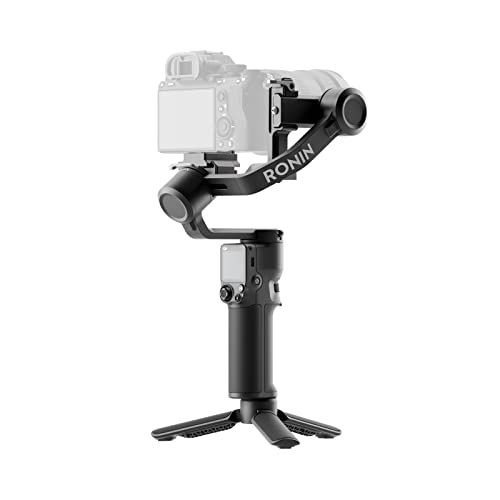
The DJI RS 3 Mini is a fantastic starting point for Canon 7D users who prioritize portability without compromising on performance. This ultra-compact gimbal is incredibly lightweight, making it a dream for travel and extended shooting sessions. Don’t let its size fool you, though; it packs a punch with strong motors capable of handling a decent payload, making it a strong contender for your 7D with many popular lenses. Its intuitive touchscreen and quick vertical shooting capabilities are real time-savers.
- Key Features:
- 795g (1.75lbs) Lightweight and Portable
- Load capacity up to 2 kg (4.4 lbs)
- Bluetooth Shutter Control
- 3rd-Gen RS Stabilization Algorithm
- Native Vertical Shooting
- 1.4″ Full-Color Touchscreen
- Pros:
- Extremely portable and easy to carry
- Excellent stabilization for its size
- User-friendly touchscreen interface
- Quick setup for social media content (vertical shooting)
- Cons:
- May struggle with very heavy lenses on the 7D
- Requires DJI Ronin app for full functionality
- User Impressions: Users rave about its compact size and surprisingly powerful stabilization. Many appreciate how easy it is to throw in a bag and go, making it ideal for run-and-gun shoots. It’s often praised as a great entry-level professional gimbal.
- See it on Amazon here
DJI RS 4 Mini

Stepping up from the RS 3 Mini, the DJI RS 4 Mini brings even more convenience and intelligent features to the table. Its standout auto axis locks mean you’re ready to shoot in virtually 1 second – no more fumbling with manual adjustments when a fleeting moment arises! Plus, the Teflon-enhanced balancing makes quick adjustments smoother than ever. This gimbal is designed for filmmakers who need speed, responsiveness, and smart tracking capabilities, which is a huge plus for dynamic shooting with your Canon 7D.
- Key Features:
- Ready in 1 s with auto axis locks
- Intelligent Tracking Module
- Teflon Enhanced Balancing
- Fast Vertical Switch (10 seconds)
- Responsive Follow Mode
- Supports up to 2kg/4.4lbs payload
- Pros:
- Super-fast setup and pack-down
- Intelligent tracking is excellent for solo filming
- Smooth balancing process
- Seamless horizontal to vertical switching
- Cons:
- Payload capacity is identical to RS 3 Mini, so still watch heavier setups
- DJI Ronin app download outside of Google Play might be inconvenient for some Android users
- User Impressions: Reviewers love the auto-locking feature and the overall speed of deployment. The intelligent tracking gets a lot of praise for making dynamic shots easier, especially for solo content creators. It’s seen as a reliable workhorse for consistent, smooth footage.
- See it on Amazon here
ZHIYUN CINEPEER Weebill 3E [Official]
![ZHIYUN CINEPEER Weebill 3E[Official], 3-Axis Lightweight...](https://m.media-amazon.com/images/I/41+kdEh7b2L._SL500_.jpg)
The ZHIYUN CINEPEER Weebill 3E strikes a great balance between portability and robust payload capacity, making it an excellent choice for the Canon 7D. Its A4 paper-sized footprint and comfortable handle design mean you can shoot for longer periods without fatigue, which is a massive plus for those extended projects. With a solid 3kg (6.6 lbs) payload, it can comfortably handle your Canon 7D with a variety of lenses, giving you more flexibility in your kit.
- Key Features:
- 3 kg (6.6 lbs) Payload Capacity
- Lightweight (1.05 kg) and Portable (A4 paper-sized)
- Native Vertical Shooting
- Bluetooth Shutter Control
- Up to 16 Hours Max Battery Life
- Supports 14W PD Fast Charging
- Pros:
- Excellent payload capacity for heavier DSLR setups
- Very long battery life for all-day shooting
- Ergonomic design reduces fatigue
- Native vertical shooting is super convenient
- Cons:
- Sling grip and wrist rest are optional accessories (need to be purchased separately)
- Only includes Panasonic control cable; Canon users need to buy an additional cable for full control
- User Impressions: Users frequently commend its impressive battery life and the comfortable design, which allows for extended shoots. The higher payload capacity is a definite win for DSLR users. The need for an additional Canon control cable is a minor gripe, but easily solvable.
- See it on Amazon here
FeiyuTech SCORP-C [Official] Camera Stabilizer 3-Axis
![FeiyuTech SCORP-C [Official] Camera Stabilizer 3-Axis...](https://m.media-amazon.com/images/I/41cuk84JumL._SL500_.jpg)
The FeiyuTech SCORP-C is a solid, upgraded choice for DSLR users like those with the Canon 7D. This model boasts an increased payload capacity from its predecessors, now capable of handling up to 5.51 lbs, which is plenty for the 7D and various lenses. What truly makes it stand out is its integrated handle grip, offering versatile shooting angles right out of the box without needing extra accessories. The multi-functional knob also provides precise control over camera focus and gimbal axes, streamlining your creative process.
- Key Features:
- Upgraded payload up to 5.51 lbs
- Integrated Handle Grip (no underslung handle as optional)
- Multi-Functional Knob Ring for focus and gimbal axis control
- Compatible with mainstream mirrorless and DSLR cameras
- Pros:
- Strong payload supports heavier DSLR setups well
- Integrated handle design offers ergonomic flexibility
- Intuitive multi-functional knob for precise control
- Durable and reliable build
- Cons:
- Specific Canon compatibility needs to be checked against their list for exact models beyond general DSLR support.
- Features list is less extensive than some competitors in terms of AI or advanced auto modes.
- User Impressions: Many users appreciate the robust build and the comfortable integrated handle. The increased payload capacity is a recurring positive, as it confidently handles a range of camera and lens combinations. It’s considered a reliable workhorse for serious video creators.
- See it on Amazon here
FeiyuTech SCORP-C Gimbal Stabilizer for Cameras DSLR and…

This version of the FeiyuTech SCORP-C offers a robust and user-friendly experience specifically tailored for DSLR users, including the Canon 7D. It builds on the strengths of the SCORP-C line with a highly integrated design featuring an integrated hanging handle for versatile shooting. What sets this particular model apart is its thoughtful “Considerate Design” elements, including three-axis motor locks for secure transport and easier balancing, plus a center of gravity memory slider for quick setup recall. For complex shots, features like AB Trajectory Memory and Flash Mode make intricate movements easily achievable.
- Key Features:
- Compatible with mainstream mirrorless and DSLR camera & lens combos (explicitly lists Canon 5D3/5D4/5DS R/6D/6D2/80D/90D/M50,M6 Mark)
- Integrated hanging handle and tilted handle holding
- Considerate design for easier installation and leveling (motor locks, 5-way CG adjustment, memory slider, Arca Quick Release)
- Powerful Key for easy mode switching
- Complex Shots, Easily Achieved (AB Trajectory Memory, Flash Mode)
- 2500mAh Efficient Battery (10-13 hour runtime with fast charging)
- Pros:
- Excellent battery life with fast charging
- Integrated handle design is very ergonomic
- Advanced features like AB Trajectory Memory enhance creative possibilities
- Thoughtful design elements for quicker setup and transport
- Cons:
- May require a bit of a learning curve to master all advanced features.
- While it lists many Canon models, confirm your specific 7D lens combo.
- User Impressions: Users love the long battery life and the smart design features that simplify balancing and transport. The integrated handles are a huge hit for comfortable low-angle and upright shooting. Filmmakers appreciate the advanced shooting modes for complex sequences.
- See it on Amazon here
DJI RS 3 Pro

For those with a Canon 7D who demand the absolute best in professional-grade stabilization and features, the DJI RS 3 Pro is a serious contender. While it might seem like overkill for some, its 4.5 kg (10 lbs) payload capacity means it can handle your 7D with virtually any lens you throw at it, even heavy cinema primes. The automated axis locks are a dream for swift transitions, and the extended carbon fiber arms provide ample space for balancing larger setups. This gimbal is built for serious video production, offering unparalleled stability and an ecosystem of accessories.
- Key Features:
- Automated Axis Locks
- Extended Carbon Fiber Axis Arms for larger camera/lens combos
- 4.5 kg (10lbs) Tested Payload
- Long-Range O3 Pro Video Transmission (Optional with combo)
- Dynamic & Versatile Solution with extensive ports and SDK
- Pros:
- Superior payload capacity handles heavy setups with ease
- Automated locks significantly speed up setup and pack-down
- Unmatched stabilization for professional-grade footage
- Scalable with various accessories for different production needs
- Cons:
- Larger and heavier than other options, impacting portability for some
- Higher price point reflects its professional capabilities
- May be more than what an average Canon 7D user needs
- User Impressions: Professionals and serious hobbyists consistently praise its robust build, incredible payload capacity, and the convenience of automated locks. It’s often described as a workhorse that can handle virtually any camera setup thrown at it, delivering consistently smooth and reliable results.
- See it on Amazon here
ZHIYUN Weebill 2
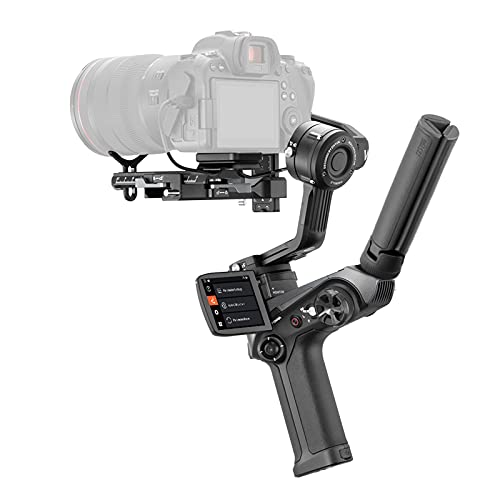
The ZHIYUN Weebill 2 is a powerhouse that perfectly balances portability with professional-grade features, making it an excellent match for your Canon 7D. Its standout feature is the built-in 2.88″ full-color flip-out touchscreen, allowing you to easily adjust settings and parameters on the fly without needing a separate app. The effort-saving sling grip design offers comfortable low-angle shooting, a huge plus for creative versatility. Powered by a new Infineon chip, it delivers incredibly smooth and responsive stabilization.
- Key Features:
- New Infineon Chip for dynamic stabilization
- Effort-saving Sling Grip design
- 2.88″ Full-Color Flip-out Touch Screen
- Focus Control Wheel
- Wider Compatibility (explicitly lists Canon EOS R, R6, R5, RP, 6D Mark II, 5D Mark III, 5D Mark IV, 6D, 77D, 800D, 80D, 5DS R, M6 Mark II, 90D, 200D Mark II)
- Pros:
- Integrated touchscreen is a massive convenience
- Excellent stabilization with quick response
- Ergonomic sling grip enhances comfort for various shots
- Broad compatibility with many Canon DSLR and mirrorless cameras
- Cons:
- While compatible, confirm the specific payload capacity for your 7D and desired heavy lens.
- Some advanced features might require a learning curve.
- User Impressions: Users absolutely love the integrated touchscreen, calling it a game-changer for workflow efficiency. The smooth stabilization and comfortable sling mode are also frequently highlighted. It’s seen as a versatile and powerful gimbal for both mirrorless and DSLR users.
- See it on Amazon here
FeiyuTech SCORP Mini 2 [White] All-in-One 3-Axis Mirrorless…
![FeiyuTech SCORP Mini 2 [White] All-in-One 3-Axis Mirorrless...](https://m.media-amazon.com/images/I/41S11kh+hFL._SL500_.jpg)
The FeiyuTech SCORP Mini 2 is an intriguing option, particularly for those who value smart features like AI tracking and an intuitive user experience. Its built-in AI tracking sensor means the gimbal can automatically recognize and follow subjects, keeping your Canon 7D perfectly framed without manual intervention – a dream for solo videographers! The upgraded quick-release system makes mounting your 7D a breeze, and the 1.3-inch OLED screen provides real-time control over settings. Plus, its ergonomic T-shaped handle makes long shooting sessions much more comfortable.
- Key Features:
- Built-in AI Tracking Sensor
- Upgraded Quick-Release System
- 1.3 Inches OLED Screen
- Multi-Functional Zoom Knob (for angles, focus, etc.)
- Ergonomic Integrated Handle
- Pros:
- AI tracking is a standout feature for dynamic solo shooting
- Intuitive OLED screen for quick adjustments
- Very comfortable ergonomic handle for extended use
- Quick-release system enhances setup speed
- Cons:
- “Mini” in the name suggests a potentially lower payload, ensure it meets your 7D + lens weight.
- AI tracking might not be perfect in all complex scenarios.
- User Impressions: Users are impressed by the AI tracking capabilities, finding it incredibly useful for self-filming. The ease of use, thanks to the OLED screen and quick-release, also receives high marks. It’s often recommended for creators looking for smart features in a compact package.
- See it on Amazon here
How to Balance Your Canon 7D on a Gimbal
Once you’ve got your new gimbal, the most critical step for buttery-smooth footage is proper balancing. It might seem daunting at first, but with a bit of practice, you’ll be a pro!
- Mount Your Camera: Secure your Canon 7D with your chosen lens onto the gimbal’s quick-release plate.
- Rough Balance: Loosen the axis locks and get a rough balance. Your goal is for the camera to stay roughly in place when you tilt or pan it, not flop around.
- Tilt Axis (Up/Down): Adjust the camera forward/backward until it stays level when you tilt it up or down.
- Roll Axis (Side to Side): Adjust the camera left/right until it stays level when you roll it side to side.
- Pan Axis (Left/Right): Adjust the entire arm forward/backward until the camera remains pointing straight ahead when you pan.
- Fine-Tune: Make small adjustments to each axis. The goal is for the camera to remain perfectly still in any position you leave it, without drifting. This ensures the motors aren’t overworked, giving you the best stabilization and battery life.
Refer to your gimbal’s specific manual for detailed instructions and balancing guides, as each model might have slight variations.
Conclusion
Choosing the best gimbal for Canon 7D can truly transform your videography, taking your creative vision to new heights. Whether you prioritize ultimate portability with options like the DJI RS 3 Mini, crave advanced features and smart tracking from the FeiyuTech SCORP Mini 2, or need serious payload capacity for heavier setups with the DJI RS 3 Pro, there’s a fantastic option waiting for you.
Remember to consider your specific shooting needs, budget, and the type of lenses you typically use with your Canon 7D. Invest in a quality gimbal, and prepare to capture incredibly stable, professional-looking footage that will surely impress. Happy shooting!
FAQ Section
Q1: What is a gimbal, and why do I need one for my Canon 7D?
A1: A gimbal is a motorized stabilizer that uses intelligent sensors and brushless motors to keep your camera steady and level, counteracting any shaky movements from your hands. The Canon 7D lacks in-body image stabilization for video, so a gimbal is essential for achieving smooth, professional-looking, cinematic footage, especially when moving or panning.
Q2: Can any gimbal work with a Canon 7D?
A2: Not necessarily. The most important factor is the gimbal’s payload capacity. Your Canon 7D, along with your chosen lens, has a significant weight. You need a gimbal that can comfortably support that combined weight. Always check the gimbal’s maximum payload capacity and ensure it exceeds your camera setup’s total weight.
Q3: How much payload capacity do I need for a Canon 7D?
A3: The Canon 7D body typically weighs around 820g (1.8 lbs) without a lens. With a standard zoom lens (e.g., a 24-70mm f/2.8), your total setup could easily reach 1.5 kg (3.3 lbs) or more. To be safe and have room for heavier lenses, look for gimbals with a minimum payload capacity of 2 kg (4.4 lbs) up to 3 kg (6.6 lbs) or more.
Q4: Is battery life important for a gimbal?
A4: Absolutely! Good battery life ensures you won’t run out of power in the middle of a crucial shoot. Most modern gimbals offer between 10-16 hours of battery life, which is generally sufficient for a full day of shooting. Fast charging capabilities are also a bonus.
Q5: What’s the difference between a 3-axis gimbal and a 2-axis gimbal?
A5: A 3-axis gimbal stabilizes across all three axes: pan (left/right), tilt (up/down), and roll (side-to-side rotation). This provides comprehensive stabilization, ensuring perfectly smooth footage even with complex movements. A 2-axis gimbal only stabilizes two axes, usually tilt and roll, leaving horizontal panning movements potentially shaky. For professional results with your Canon 7D, a 3-axis gimbal is highly recommended.
Q6: How do I balance my Canon 7D on a gimbal?
A6: Balancing is crucial for optimal performance. First, mount your camera securely. Then, adjust each axis (tilt, roll, and pan) one by one until the camera remains stationary without motor power in any orientation. The goal is for the camera’s center of gravity to align perfectly with the gimbal’s rotational axes. Refer to your specific gimbal’s manual for precise balancing steps.
Q7: Can I use a gimbal designed for mirrorless cameras with my Canon 7D?
A7: It depends. Some gimbals are marketed for mirrorless cameras but have a high enough payload capacity to handle lighter DSLR setups like the Canon 7D with smaller lenses. However, generally, dedicated DSLR gimbals or gimbals with higher payload capacities (like those listed in this article) are better suited for the Canon 7D’s weight and size. Always double-check the maximum payload and camera compatibility list.