So, you’re looking to elevate your video game with your trusty Canon EOS 70D, and the thought of smooth, cinematic footage has you eyeing a gimbal stabilizer. You’re in the right place! Finding the best gimbal for Canon 70D can feel like a quest, especially with so many options out there. This article isn’t just about pointing you to the top stabilizers; we’re also diving into essential gear that perfectly complements your 70D, ensuring you get the most out of your setup.
We’ll walk you through some fantastic gimbals designed to handle a camera like the Canon 70D, focusing on features like payload capacity, stabilization, and ease of use. But beyond just gimbals, we’ll also touch upon why understanding your 70D’s capabilities and considering key accessories like lenses can make all the difference in achieving that pro-level look. Ready to cut through the shake and capture some truly stunning visuals? Let’s dive in!
Product Reviews
DJI RS 3 Mini, 3-Axis Gimbal Stabilizer for Cameras
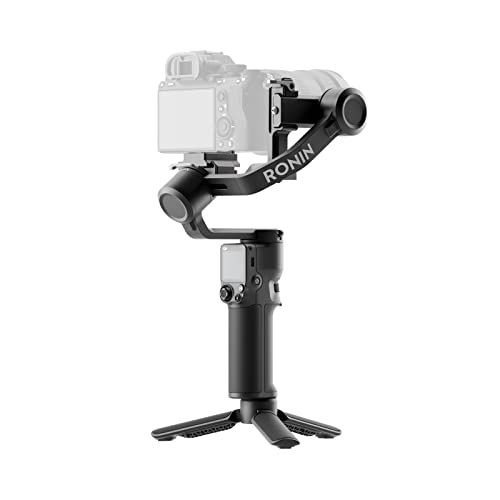
The DJI RS 3 Mini is a fantastic starting point if you’re looking for a lightweight yet powerful gimbal for your Canon 70D. What truly makes it stand out is its incredible portability without sacrificing a robust payload capacity. Tipping the scales at just 795g, it’s a breeze to carry on extended shoots or when traveling light, making it an excellent choice for creators on the go. Despite its compact size, it’s capable of handling setups up to 2 kg (4.4 lbs), which is more than enough for the Canon 70D, even with a versatile lens attached.
-
Key Features:
- 795g (1.75lbs) Lightweight and Portable
- Wide-Ranging Compatibility: Load capacity up to 2 kg (4.4 lbs)
- Bluetooth Shutter Control for easy photo/video capture
- 3rd-Gen RS Stabilization Algorithm for pro-level stability
- Native Vertical Shooting for social media content
- 1.4″ Full-Color Touchscreen with intuitive UI
- Requires DJI Ronin app for activation and full functionality
-
Pros:
- Extremely portable and easy to handle for long periods.
- Strong motors can comfortably support the Canon 70D.
- Excellent stabilization for smooth footage.
- Vertical shooting mode is a huge plus for content creators.
- Touchscreen makes settings adjustments quick and intuitive.
-
Cons:
- Requires app activation for full features, which can be an initial hurdle.
- Might be a bit pricey for absolute beginners on a tight budget.
User Impressions: Users frequently praise the RS 3 Mini for its surprisingly strong performance given its compact size. Many Canon 70D owners find it perfectly balances their camera, offering stable, fluid shots that dramatically improve their video quality. The intuitive controls and lightweight design are consistent highlights, though some mention the initial setup with the app takes a moment.
DJI RS 4 Mini, Gimbal Stabilizer for Cameras

Stepping up a notch from its predecessor, the DJI RS 4 Mini brings even more convenience and intelligent features to the table, making it another strong contender for the best gimbal for Canon 70D. Its standout feature has to be the auto axis locks, which get you ready to shoot in just one second – no more fiddling around! This is a game-changer for capturing spontaneous moments or making quick scene transitions, ensuring you never miss a shot. With Teflon-enhanced balancing and intelligent tracking, this gimbal is designed for efficiency and precision, allowing you to focus on your creative vision.
-
Key Features:
- Ready in 1s with Auto Axis Locks
- Intelligent Tracking Module keeps subjects framed
- Teflon Enhanced Balancing for smoother adjustments
- Fast Vertical Switch (10 seconds) for mobile-friendly content
- Responsive Follow Mode for instant reaction to hand movements
- Supports up to 2kg/4.4lbs payload, suitable for mirrorless, vlogs, and phones
- Starter kit available with essential accessories
-
Pros:
- Lightning-fast setup thanks to auto axis locks.
- Intelligent tracking significantly simplifies complex shots.
- Smooth balancing makes calibration a breeze.
- Quick vertical switching is perfect for modern content creation.
- Responsive follow mode offers dynamic shot control.
-
Cons:
- DJI Ronin app removed from Google Play, requiring direct download from DJI’s website.
- May offer features beyond what a basic Canon 70D user needs, impacting price.
User Impressions: Reviewers are consistently impressed by the RS 4 Mini’s speed and intelligent features. The auto locks and responsive follow mode are particular favorites, making it easier for users to get professional-looking footage with their Canon 70D quickly. While the app download process can be a minor inconvenience, the overall performance and convenience win users over.
Canon EOS 70D Digital SLR Camera (Body Only)

While not a gimbal itself, understanding your camera is absolutely crucial when searching for the best gimbal for Canon 70D. The Canon EOS 70D is the heart of your setup, and its features directly influence what kind of gimbal will work best for you. This DSLR stands out for its groundbreaking Dual Pixel CMOS AF system, which, at its release, offered incredibly fast and smooth autofocus in Live View and video modes – a must-have for stabilized footage. Its articulating touch screen is also a huge advantage for vlogging or shooting at awkward angles, especially when mounted on a gimbal. Knowing its weight, video capabilities, and connectivity helps you pick a gimbal that offers perfect balance and functionality.
-
Key Features:
- 20.2 MP APS-C CMOS sensor and DIGIC 5+ processor
- 19-point cross-type AF System (for stills)
- Dual Pixel CMOS AF for fast focus in live view and video
- 3-inch articulating touch panel LCD screen
- Full HD 1080p video (30, 25, 24 fps) and 720p (60, 50 fps)
- Built-in Wi-Fi for instant sharing and remote control
- ISO 100-12800 (expandable to 25600)
-
Pros:
- Dual Pixel AF provides excellent video autofocus for gimbal use.
- Articulating touchscreen is highly versatile for various shooting angles.
- Robust build quality, typical of Canon DSLRs.
- Good image quality and decent low-light performance for its class.
- Built-in Wi-Fi simplifies remote control and file transfer.
-
Cons:
- It’s a heavier DSLR compared to modern mirrorless cameras, which can impact gimbal battery life and require a gimbal with a higher payload.
- Older camera model, so some video features (e.g., 4K) are absent.
User Impressions: Long-time Canon 70D users still praise its reliability and the quality of its video output, especially for a DSLR of its generation. They appreciate the Dual Pixel AF for smooth focus transitions in video, making it surprisingly viable for gimbal work even today. The articulating screen is consistently mentioned as a favorite feature for its flexibility.
ZHIYUN CINEPEER WEEBILL 3E 3-Axis Gimbal Stabilizer for…

The ZHIYUN CINEPEER WEEBILL 3E is a formidable contender, especially if you’re eyeing a professional-grade gimbal that’s still manageable for your Canon 70D. Its standout feature is arguably the innovative “2.5 Sling Mode” (though the kit with the specific grip and wrist rest is separate), which promises to significantly reduce physical fatigue during long shooting sessions. Weighing in at just 1.05 kg but capable of handling payloads up to 3 kg (6.6 lbs), it strikes an impressive balance between portability and strength, easily accommodating the 70D with various lenses. Plus, native vertical shooting is seamlessly integrated, making social media content creation a breeze.
-
Key Features:
- Native Vertical Shooting without extra accessories
- Bluetooth Shutter Control for wireless camera operation
- Built-in 2600mAh batteries with 14W fast charging (2h 46m charge time)
- 2.5 Sling Mode (with optional accessories) for reduced fatigue
- Small but Strong: 1.05 kg weight, 3kg (6.6 lbs) payload capacity
- More comfortable handle design for long-term shooting
- Paper-based manuals provided for easy setup
-
Pros:
- High payload capacity is great for the 70D and heavier lenses.
- Exceptional battery life and fast charging.
- Ergonomic design helps reduce fatigue on long shoots.
- Seamless native vertical shooting is highly convenient.
- Bluetooth control simplifies the shooting process.
-
Cons:
- The full benefit of the 2.5 Sling Mode requires an additional accessory kit.
- Might be overkill for a casual user, given its robust features.
User Impressions: Users commend the Weebill 3E for its solid build and impressive payload capacity, confirming it’s a reliable choice for setups like the Canon 70D. The battery life is a consistent highlight, allowing for extended shooting without worry. While some note the initial learning curve, the smooth, stable footage it produces makes it a worthwhile investment for those serious about their video work.
58MM 0.43x Altura Photo Professional HD Wide Angle Lens

While not a gimbal, selecting the right lens is incredibly important when you’re working with a stabilizer like the best gimbal for Canon 70D. This 58MM 0.43x Altura Photo Professional HD Wide Angle Lens is a fantastic accessory for your Canon 70D, especially when you’re aiming for those expansive, stabilized shots for vlogging, landscapes, or interior spaces. It easily screws onto the front of your existing 58MM lens, instantly broadening your field of view. What makes it particularly interesting is its detachable macro lens, offering dual functionality for both wide shots and high-resolution close-ups. This lens can significantly impact the overall balance and weight of your camera setup, which is a key consideration for optimal gimbal performance.
-
Key Features:
- Lens attachment: Screws onto the front of your existing 58MM lens
- Expands field of view for wide-angle photography
- Detachable macro lens for high-resolution close-ups
- Compatible with popular 58MM Canon lenses (e.g., EF-S 18-55mm, EF 50mm f/1.4 USM)
- Also compatible with many other camera models and lenses with 58mm thread size
- NOTE: Verify your camera’s lens thread size before ordering.
-
Pros:
- Affordable way to achieve wide-angle shots.
- Adds versatility with the included macro function.
- Easy to attach and remove.
- Can be useful for vlogging or real estate with a gimbal.
- Lightweight, minimizing additional strain on your gimbal.
-
Cons:
- It’s an adapter, not a primary lens, which can sometimes introduce slight image quality degradation at the edges compared to a dedicated wide-angle lens.
- Requires a 58MM base lens, so compatibility needs to be checked.
User Impressions: Users find this Altura lens to be a great value accessory for expanding their creative options, especially when shooting video. Many appreciate its ease of use and the added macro capability. While some acknowledge it’s not a pro-grade prime lens, for its price and versatility, it’s a solid choice for Canon 70D owners looking to broaden their photographic horizons and complement their gimbal setup.
Wrapping Up: Finding Your Perfect Setup
Choosing the best gimbal for Canon 70D involves balancing payload capacity, portability, features, and of course, your budget. The Canon 70D is a capable camera for video, but its weight means you’ll need a robust gimbal that can handle it comfortably, like the DJI RS 3 Mini, RS 4 Mini, or the ZHIYUN CINEPEER WEEBILL 3E. Each offers unique advantages, from ultra-portability to advanced intelligent features and ergonomic design.
Don’t forget that a great gimbal is just one part of the equation. Understanding your 70D’s strengths and weaknesses, and considering how accessories like wide-angle lenses fit into your workflow, will truly unlock your full creative potential. With the right gimbal and complementary gear, you’re all set to capture stunning, shake-free footage that will impress your audience. Happy shooting!
FAQ Section
Q1: What is the ideal payload capacity for a gimbal used with the Canon 70D?
A1: The Canon 70D body weighs approximately 755g (1.66 lbs). When factoring in a standard lens (like the 18-135mm kit lens, which adds around 480g/1.06 lbs), your total setup could easily be around 1.2-1.3 kg (2.6-2.9 lbs). Therefore, look for a gimbal with a minimum payload capacity of at least 2 kg (4.4 lbs) to comfortably accommodate the camera and a variety of lenses, leaving some headroom for accessories.
Q2: Can the Canon 70D’s Dual Pixel AF work well with a gimbal?
A2: Yes, absolutely! The Canon 70D’s Dual Pixel CMOS AF system was revolutionary for its time, providing smooth and fast autofocus during video recording and Live View. This feature is highly beneficial when using a gimbal, as it allows the camera to maintain focus on your subject without jerky movements, leading to more professional-looking footage.
Q3: Are older DSLRs like the Canon 70D still worth using with a modern gimbal?
A3: Definitely! While the Canon 70D is an older model and lacks features like 4K video, its Full HD capabilities, excellent Dual Pixel AF, and articulating screen still make it a very capable camera for stabilized video, especially for online content creation, vlogging, or indie filmmaking on a budget. Pairing it with a modern gimbal breathes new life into its video functionality.
Q4: How important is a gimbal’s battery life for Canon 70D users?
A4: Very important, especially since the Canon 70D is a DSLR and can consume more power than mirrorless cameras when actively recording. You’ll want a gimbal with a decent battery life (8+ hours is good) to ensure you can shoot for extended periods without interruption. Consider gimbals with fast-charging capabilities or the option to power the camera (if supported by the gimbal).
Q5: What features should I prioritize in a gimbal for Canon 70D video?
A5: Key features to prioritize include:
1. Adequate Payload Capacity: As discussed, at least 2 kg (4.4 lbs).
2. Smooth Stabilization: A good 3-axis stabilization algorithm is crucial.
3. Ease of Balancing: Look for quick-release plates and intuitive balancing mechanisms.
4. Ergonomics/Portability: Especially important if you’ll be shooting handheld for long periods.
5. Shutter Control: Bluetooth or cable control for starting/stopping recording directly from the gimbal.
6. Articulating Screen Access: Ensure the gimbal design doesn’t block the 70D’s articulating screen.
Q6: Can a gimbal help with low-light shooting on the Canon 70D?
A6: While a gimbal directly improves stability, not low-light performance (which is a camera sensor/lens feature), it indirectly helps. By providing rock-solid stability, a gimbal allows you to use slower shutter speeds in certain scenarios (e.g., panning shots) without introducing shake, which can slightly help in borderline low-light situations. However, the primary improvement will be in overall smoothness, not necessarily brighter images.
Q7: Should I consider a mirrorless camera instead of my 70D for gimbal use?
A7: If your budget allows, newer mirrorless cameras often offer advantages like lighter weight (easier on gimbals), in-body image stabilization (IBIS), and superior video features (4K, higher frame rates, better low light). However, if you already own a Canon 70D, investing in a good gimbal is a cost-effective way to significantly upgrade your video quality without buying a whole new camera system. It truly depends on your specific needs and budget.