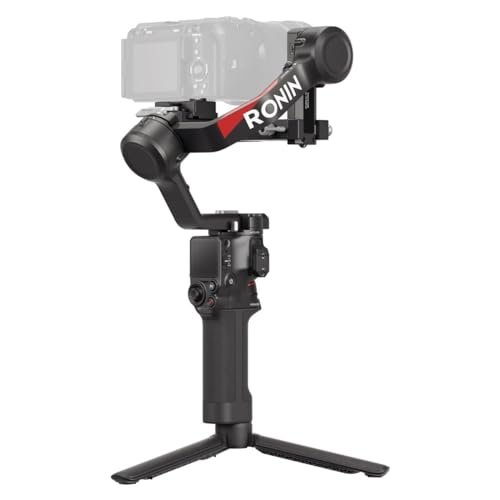
DJI RS 4 Review: Unlocking Cinematic Smoothness for the Modern Creator
Ever dreamt of capturing buttery-smooth, cinematic footage effortlessly? In the world of video production, a reliable gimbal is an absolute game-changer, and DJI has consistently led the charge. Their latest offering, the DJI RS 4, promises to elevate your filmmaking experience with thoughtful refinements and robust performance. We’ve taken this sleek new stabilizer for a spin, and here’s our honest, in-depth take on whether it deserves a spot in your gear bag.
The DJI RS series has become synonymous with professional-grade camera stabilization, and the DJI RS 4 builds upon that legacy with a keen eye on efficiency and user experience. Designed primarily for mirrorless and smaller DSLR camera setups, it aims to streamline your workflow and deliver impeccable stability, allowing you to focus on your creative vision.
Key Features That Make a Difference
What sets the DJI RS 4 apart from its predecessors and competitors? DJI has packed in several smart upgrades:
- Automated Axis Locks: This is a fantastic quality-of-life improvement. With a simple tap, the DJI RS 4 can automatically unlock all three axes and expand, or lock and fold for quick storage. No more fumbling with manual locks during setup or breakdown! This feature alone saves precious time on set.
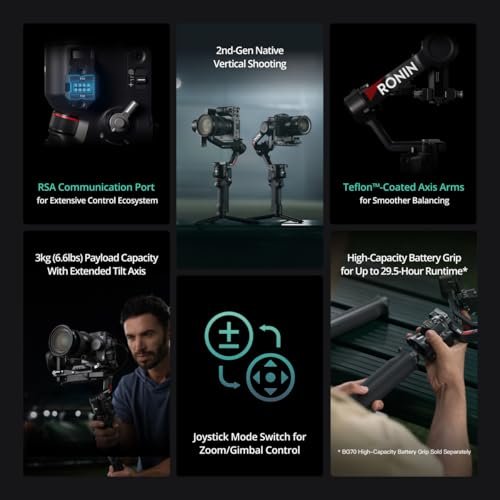
- Teflon™-Coated Arms: Balancing your camera is often the most tedious part of using a gimbal. DJI has addressed this by adding Teflon™ coating to the roll axis, reducing friction and making the balancing process noticeably smoother and quicker.
- Increased Motor Torque: The RS 4 boasts a 20% increase in motor torque compared to the RS 3, enabling it to handle heavier payloads (up to 3kg) and larger lenses with greater confidence and responsiveness, even in challenging shooting conditions.
- Native Vertical Shooting: For content creators focused on social media, this is huge. A redesigned horizontal plate allows for quick switching to native vertical shooting without needing additional accessories, making TikToks, Reels, and Shorts easier to produce than ever before.
- Bluetooth Shutter Control: Connect your camera directly via Bluetooth, allowing you to control video recording and photo capture from the gimbal itself. Less cables, more convenience.
- RSA Communication Port: This port allows for expanded accessory compatibility, including the new DJI Focus Pro Motor, offering precise lens control for focus, aperture, or zoom.
Performance & User Impressions: Smoothness Redefined
In real-world use, the DJI RS 4 truly shines. The core strength of any DJI gimbal lies in its stabilization, and the RS 4 delivers with flying colors. Even with brisk walking or light jogging, the footage remains remarkably stable, showcasing that signature cinematic glide.
The enhanced motor torque is noticeable when mounting slightly heavier mirrorless setups, like a Sony a7S III with a 24-70mm f/2.8 lens. The gimbal feels robust and responsive, holding its position admirably and recovering quickly from sudden movements. This translates to more confident and reliable shots, especially when tracking fast-moving subjects.
Balancing, thanks to the Teflon-coated arms and improved fine-tuning knob, is genuinely a smoother experience. We found ourselves getting our cameras perfectly balanced in record time, which is invaluable when time is money. The OLED touchscreen is bright and intuitive, making mode changes and settings adjustments quick and easy.
Battery life is excellent, typically giving you a full day’s shoot (around 12 hours) on a single charge, depending on your usage and payload. The quick-release plate design is tried and true, ensuring your camera is securely mounted in seconds.
The Good & The Not-So-Good
Pros:
- Exceptional Stabilization: DJI’s renowned stabilization technology ensures super-smooth footage every time.
- Time-Saving Features: Automated axis locks and easier balancing dramatically speed up setup.
- Native Vertical Shooting: A game-changer for social media content creators.
- Increased Motor Torque: Handles a wider range of mirrorless cameras and lenses with ease.
- Robust Build Quality: Feels premium and durable, ready for demanding environments.
- Intuitive Controls: User-friendly interface and ergonomic design make it a joy to operate.
Cons:
- Price Point: As with most professional DJI gear, it’s an investment, though justified by its performance.
- Payload Limit: While improved for mirrorless, it’s not designed for heavy cinema cameras (you’d need a larger, more specialized gimbal for that).
- Weight During Extended Use: Like any gimbal, holding it for very long periods can lead to arm fatigue, especially with heavier camera setups.
Who is the DJI RS 4 Best For?
The DJI RS 4 is an ideal choice for:
- Independent Filmmakers: Perfect for run-and-gun documentary style shoots, short films, and music videos.
- Wedding Videographers: Capture those crucial moments with fluid, professional motion.
- YouTube & Social Media Content Creators: The native vertical shooting is a huge advantage for online platforms.
- Event Videographers: From corporate events to live shows, achieve stable, dynamic shots.
- Videographers using Mirrorless & Smaller DSLR Cameras: If your camera falls into this category (e.g., Sony Alpha series, Canon R series, Panasonic Lumix, Nikon Z series), the RS 4 is a fantastic match.
Final Thoughts: A Smart Evolution
The DJI RS 4 isn’t just an incremental update; it’s a thoughtfully engineered stabilizer that genuinely enhances the shooting experience. By focusing on workflow efficiency, improved motor performance, and catering to modern content creation needs like native vertical video, DJI has crafted a highly compelling package. It’s a reliable workhorse that empowers creators to achieve professional-level stabilization with less fuss and more confidence.
If you’re looking to elevate your video production with consistently smooth, dynamic footage, the DJI RS 4 is a worthy investment that will quickly become an indispensable part of your kit.
Ready to capture stunningly smooth footage?
Click here to check out the DJI RS 4 on Amazon and elevate your filmmaking today!
FAQ
Q. What are the main improvements of the DJI RS 4 compared to its predecessor, the DJI RS 3?
A. The DJI RS 4 features enhanced stabilization performance with a 2nd-Gen RS Stabilization Algorithm, a 2nd-Gen Native Vertical Shooting mode for faster transitions, a 20% increase in motor torque for more responsive tracking, and a Teflon™-coated axis for smoother balancing. It also includes an Auto-Locking OLED screen and improved Bluetooth shutter control.
Q. What is the maximum payload capacity of the DJI RS 4, and what types of cameras can it support?
A. The DJI RS 4 boasts a payload capacity of 3 kg (6.6 lbs). This allows it to comfortably support most mainstream mirrorless camera setups, including various lenses, making it suitable for a wide range of content creators and independent filmmakers.
Q. How does the new 2nd-Gen Native Vertical Shooting system work on the DJI RS 4?
A. The 2nd-Gen Native Vertical Shooting mode on the DJI RS 4 allows users to quickly switch to vertical filming without needing additional accessories or re-balancing the camera. It utilizes a redesigned horizontal plate that enables direct mounting of the camera in a vertical orientation, streamlining the workflow for social media and portrait-style content.
Q. What are the battery life and charging capabilities of the DJI RS 4?
A. The DJI RS 4’s battery grip offers an impressive operating time of up to 12 hours on a single charge. It supports PD fast charging, allowing the gimbal to be fully recharged in approximately 2.5 hours, minimizing downtime during shoots.
Q. Can the DJI RS 4 integrate with DJI Focus motors for precise control?
A. Yes, the DJI RS 4 is fully compatible with DJI Focus motors, such as the DJI Focus Pro Motor. When connected via the RSA communication port, it enables precise focus and zoom control directly from the gimbal’s joystick, enhancing cinematic control and offering greater flexibility for solo operators.
Q. What intelligent features and control options are available on the DJI RS 4?
A. The DJI RS 4 supports intelligent features like ActiveTrack 4.0 (with the Ronin Image Transmitter), Force Mobile, and various cinematic modes such as Timelapse, Track, and Panorama. For control, it offers a customizable joystick for either gimbal movement or zoom/focus control, Bluetooth shutter control, and an Auto-Locking OLED touchscreen for quick access to settings.
Q. How does the Teflon™-coated axis system improve the user experience of the DJI RS 4?
A. The Teflon™-coated axis on the DJI RS 4’s roll and pan axes significantly reduces friction, making the camera balancing process much smoother and more precise. This enhancement saves valuable time and effort for creators during setup, allowing for quicker transitions between shots and improved overall efficiency.
![FeiyuTech SCORP Mini 3 [Kit] Gimbal Stabilizer for Mirrorless Cameras&Smartphone](https://gimbalhq.com/wp-content/uploads/2025/11/product_18_img_1-1.jpg)