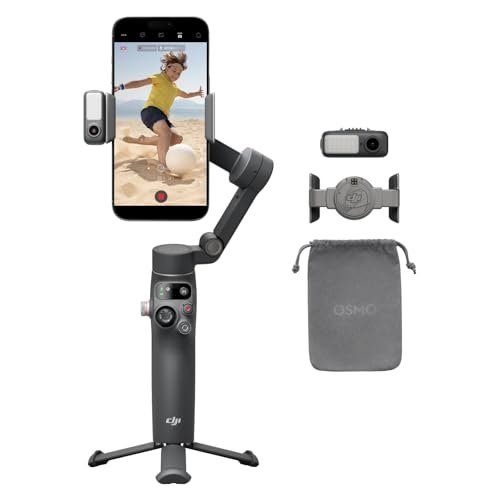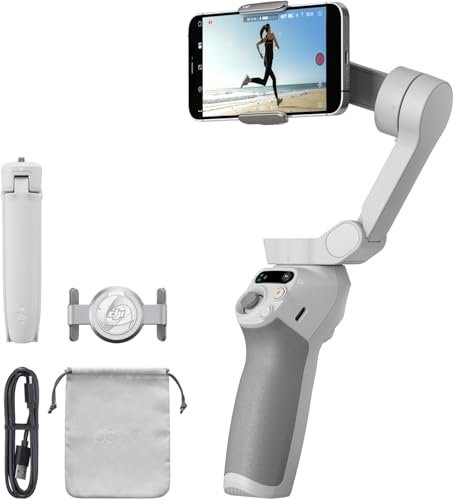
Ever wonder how professional videographers get those buttery-smooth, cinematic shots? Often, the secret sauce is a high-quality gimbal paired with the right lens. If you’re a Canon shooter looking to elevate your video game, finding the best Canon lens for gimbal setups – and sometimes even the perfect gimbal itself – is crucial. It’s all about balance, stability, and capturing stunning visuals without any jerky movements.
In this guide, we’re diving deep into some top gear that can transform your Canon camera into a smooth-shooting powerhouse. We’ll explore a mix of gimbals designed to handle your Canon camera and lenses that are a dream to use for stabilized footage. Let’s get you shooting like a pro!
Why the Right Gear Matters for Gimbal Shots
When it comes to using a gimbal, whether it’s for vlogging, filmmaking, or capturing dynamic events, the lens you choose plays a huge role. You need lenses that are:
- Lightweight and Compact: Heavy lenses can push a gimbal beyond its payload capacity, making balancing difficult or impossible. Smaller lenses keep your setup nimble.
- Good for Autofocus (AF): Lenses with smooth, quiet autofocus motors (like Canon’s STM or Nano USM) are essential for video, as they won’t introduce noise or jerky focus pulls.
- Versatile: Depending on your style, you might want a wide-angle for vlogging, a prime for beautiful bokeh, or a zoom for flexibility.
- Optically Sound: Sharpness, minimal distortion, and good low-light performance are always a plus, especially when trying to achieve that cinematic look.
Now, let’s look at some excellent choices that pair wonderfully with your Canon setup.
DJI RS 3 Mini, 3-Axis Gimbal Stabilizer for Cameras
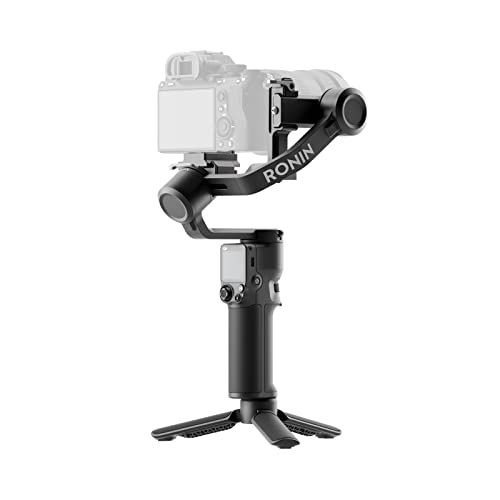
The DJI RS 3 Mini is a game-changer for Canon users who need a lightweight and highly portable stabilization solution. It’s DJI’s answer to the demand for a more compact gimbal, perfect for content creators on the go. Despite its small size, it boasts impressive strength and smart features, making it incredibly versatile for a range of Canon mirrorless and smaller DSLR bodies, along with many compatible lenses. If you’re chasing that super smooth footage without lugging around heavy gear, this mini marvel could be your new best friend.
Key Features:
– 795g (1.75lbs) Lightweight and Portable
– Wide-Ranging Compatibility with load capacity up to 2 kg (4.4 lbs)
– Bluetooth Shutter Control for seamless camera connection
– 3rd-Gen RS Stabilization Algorithm for pro-level stabilization
– Native Vertical Shooting for social media content
– 1.4″ Full-Color Touchscreen with intuitive UI design
– Requires DJI Ronin app for activation and full functionality
Pros:
– Exceptionally light and easy to travel with
– Strong payload for its size, fitting many popular Canon setups
– Quick and easy setup, including native vertical shooting
– Reliable stabilization for cinematic results
– Intuitive touchscreen enhances user experience
Cons:
– Max payload might be limiting for larger Canon DSLRs with heavy lenses
– Requires app activation for full features, which might be an extra step for some
User Impressions:
Users frequently rave about the RS 3 Mini’s portability and the quality of its stabilization. Many Canon users find it to be the perfect companion for their mirrorless cameras like the EOS R series or Rebels, noting how it simplifies shooting on the go. The Bluetooth control is a huge convenience, saving setup time. Some advanced users might wish for even higher payload capacity, but for its intended use, it’s a hit.
FeiyuTech SCORP-C [Official] Camera Stabilizer 3-Axis
![FeiyuTech SCORP-C [Official] Camera Stabilizer 3-Axis...](https://m.media-amazon.com/images/I/41cuk84JumL._SL500_.jpg)
The FeiyuTech SCORP-C represents a significant upgrade in the FeiyuTech line, designed to handle a broad spectrum of mirrorless and DSLR camera and lens combinations, including many Canon models. What truly sets the SCORP-C apart is its integrated handle grip, making it a more ergonomic and streamlined solution compared to its predecessors. It’s built for serious content creators who need robust performance, a higher payload, and intuitive controls for achieving professional-grade stabilized video.
Key Features:
– Compatible with mainstream mirrorless and DSLR camera & lens combos
– Upgraded payload capacity to 5.51 lbs (compared to AK2000C)
– Integrated Handle Grip for improved ergonomics and portability
– Multi-Functional Knob Ring for controlling camera focus and gimbal axis
– Wide compatibility list, including many Canon models (check FeiyuTech’s list)
Pros:
– Higher payload capacity accommodates more professional Canon setups
– Integrated handle design is ergonomic and convenient
– Multifunctional knob offers precise control over camera and gimbal functions
– Robust build quality feels durable and reliable
– Excellent stabilization for smooth, cinematic shots
Cons:
– Can be heavier than ultra-compact gimbals like the RS 3 Mini
– Learning curve for new users to master all functions
User Impressions:
Many Canon users appreciate the SCORP-C’s solid build and the confidence it inspires with heavier camera setups. The integrated handle is a definite highlight, improving comfort during long shoots. Filmmakers praise the smooth motor performance and the responsive control knob, which aids in precise adjustments on the fly. Some mention that while the payload is generous, balancing larger rigs can still require patience.
Canon EF 50mm f/1.8 STM Lens

Often dubbed the “nifty fifty,” the Canon EF 50mm f/1.8 STM is a legendary prime lens that offers incredible value, especially if you’re looking for the best Canon lens for gimbal setups on a budget. Its compact size and lightweight design make it perfect for balancing on most gimbals. The wide f/1.8 aperture excels in low light and creates beautiful background blur (bokeh), making your subjects pop. The STM (Stepping Motor) autofocus is super quiet and smooth, a vital feature for video work where motor noise can be detrimental. While it’s an EF mount lens, it works seamlessly with Canon’s mirrorless RF cameras via an adapter.
Key Features:
– 50mm focal length with wide f/1.8 aperture
– Excellent for portraits, action, and low-light photography
– Minimum focusing distance of 1.15 feet (0.35 meter)
– Stepping motor (STM) for near-silent, smooth AF during video
– Compact lens construction with 6 elements in 5 groups
– 80mm effective focal length on APS-C cameras
Pros:
– Superb image quality and shallow depth of field for the price
– Lightweight and compact, making it ideal for gimbal balancing
– Quiet and smooth STM autofocus is perfect for video
– Versatile for various shooting scenarios, from portraits to street photography
– Incredible value for money
Cons:
– Fixed focal length means no zoom flexibility
– Plastic build quality (though durable for its price point)
– Chromatic aberration can be present in high-contrast scenes
User Impressions:
This lens is a fan favorite for a reason! Canon users consistently praise its fantastic image quality and the creamy bokeh it produces, especially considering its affordable price tag. Vloggers and videographers love how easily it balances on gimbals and the silent, reliable autofocus. It’s often recommended as a must-have first prime lens, and many consider it their go-to for run-and-gun gimbal shooting due to its portability and low-light capabilities.
58MM 0.43x Altura Photo Professional HD Wide Angle Lens

The 58MM 0.43x Altura Photo Professional HD Wide Angle Lens is a clever accessory for Canon shooters who want to expand their field of view without buying a completely new lens. This isn’t a standalone lens but rather an attachment that screws onto the front of your existing 58mm lens (like many Canon kit lenses). It instantly provides a wider perspective, which can be fantastic for vlogging or capturing broader scenes, especially when working with a gimbal where a wider view helps capture more context and makes movements feel smoother. It also includes a detachable macro lens for close-up shots.
Key Features:
– Screws onto existing 58mm lenses for instant wide-angle
– Detachable macro lens for high-resolution close-ups
– Compatible with popular 58mm Canon lenses (e.g., EF-S 18-55mm, EF 50mm f/1.4)
– Compatible with a wide range of Canon camera models (check lens thread size)
Pros:
– Cost-effective way to get a wider field of view
– Easy to attach and detach
– Adds versatility to your existing lens
– Includes a useful macro function
– Lightweight, minimal impact on gimbal balancing
Cons:
– An attachment, not a true prime or zoom lens; optical quality may not match dedicated wide-angle lenses
– Can introduce some distortion or vignetting at the edges
– Requires your primary lens to have a 58mm filter thread
User Impressions:
Customers using this attachment often highlight its affordability and the convenience of instantly converting their standard lenses into wide-angle options. It’s a popular choice for beginners or those on a budget who want to experiment with wider shots for vlogging or landscapes. Users note that while it’s a great tool, it’s important to manage expectations regarding edge-to-edge sharpness compared to dedicated wide-angle lenses. For its price, many consider it a valuable addition to their kit, especially for gimbal use where a wider perspective can be beneficial.
Canon RF16mm F2.8 STM Lens, Ultra Wide-Angle, Fixed Focal

For Canon mirrorless users, especially those with an RF mount camera, the Canon RF16mm F2.8 STM is arguably one of the best Canon lens for gimbal setups, particularly for vlogging and real estate video. This ultra-wide-angle prime lens is remarkably compact and lightweight, making it incredibly easy to balance on virtually any gimbal. Its wide 16mm perspective is perfect for capturing expansive scenes or keeping yourself in frame while vlogging handheld, and the bright f/2.8 aperture performs well in various lighting conditions. The STM motor ensures silent and smooth autofocus, which is crucial for high-quality video recording.
Key Features:
– Canon’s first ultra-wide-angle, fixed focal length RF lens
– High image quality and bright, fixed f/2.8 maximum aperture
– Gear-type STM provides smooth and quiet continuous AF during video recording
– Supremely lightweight and compact for an ultra-wide lens
– Minimum focusing distance of 5.11 inches and maximum magnification of 0.26x
Pros:
– Extremely compact and lightweight, ideal for gimbals
– Ultra-wide 16mm perspective is excellent for vlogging and landscapes
– Bright f/2.8 aperture performs well in low light
– Quiet and smooth STM autofocus is perfect for video
– Native RF mount means no adapter needed for modern Canon mirrorless cameras
– Close focusing distance for creative shots
Cons:
– Fixed focal length offers no zoom flexibility
– Some barrel distortion typical of ultra-wide-angle lenses (can be corrected in post)
– Not image-stabilized (though gimbals mitigate this)
User Impressions:
Canon RF camera owners are absolutely thrilled with this lens. Vloggers, especially, praise its perfect focal length for self-recording and its incredibly small size, which makes it a dream for gimbal setups. The silent autofocus gets consistent high marks for video, and users are generally impressed with the sharpness for such a compact and affordable ultra-wide. It’s often cited as an essential lens for anyone doing video work with an RF-mount Canon camera on a gimbal.
Frequently Asked Questions (FAQ)
Q1: What makes a lens “good” for a gimbal?
A1: Generally, a good lens for gimbal use is lightweight, compact, and has smooth, quiet autofocus (like Canon’s STM or Nano USM motors). Lenses with internal focusing mechanisms are also a plus as their balance doesn’t shift during focusing. Wide apertures (low f-numbers) are great for low-light and creating cinematic depth of field.
Q2: Do I need a specific Canon camera for gimbals?
A2: While most modern Canon mirrorless cameras (like the EOS R series) and smaller DSLRs are well-suited, the main consideration is the gimbal’s payload capacity. Ensure your camera body plus the lens you plan to use doesn’t exceed the gimbal’s maximum weight limit. Compatibility lists from gimbal manufacturers are also very helpful.
Q3: What’s the difference between a prime and zoom lens for gimbal use?
A3: Prime lenses (fixed focal length, like the 50mm or 16mm reviewed above) are often smaller, lighter, and have wider apertures, making them easier to balance and better for low light. Zoom lenses offer more versatility but are often heavier and can change their balance point when zoomed, sometimes requiring re-balancing on the gimbal. For dedicated gimbal work, primes are often preferred for their stability and optical quality.
Q4: How important is STM autofocus for video on a gimbal?
A4: STM (Stepping Motor) autofocus is highly important. It provides very smooth, near-silent focusing, which is crucial for video to avoid distracting motor noise being picked up by your microphone and to ensure professional-looking focus transitions. Older, noisier autofocus systems can ruin your audio and footage.
Q5: Can I use my existing Canon EF lenses on a modern RF-mount gimbal setup?
A5: Yes, you can! Canon offers EF-EOS R Mount Adapters that allow you to use your existing EF and EF-S lenses on RF-mount mirrorless cameras. When using an adapter, just remember to account for its slight added weight and length when balancing your camera on the gimbal.
Q6: What’s the ideal focal length for vlogging with a gimbal?
A6: For vlogging, an ultra-wide-angle lens (typically 16mm to 24mm full-frame equivalent) is often ideal. This wider field of view allows you to comfortably hold the camera at arm’s length while still keeping yourself and some of the background in frame. Lenses like the Canon RF16mm F2.8 STM are perfect for this.
Q7: How do I balance my camera and lens on a gimbal?
A7: Balancing is key to getting smooth footage and preventing motor strain. It involves adjusting the camera’s position on the gimbal’s various axes (tilt, roll, pan) until it remains stable and level when released. Each gimbal has its specific balancing procedure, usually outlined in its manual or a quick-start guide, often involving sliding the camera plate and adjusting arm lengths until perfect equilibrium is achieved.
Conclusion
Finding the best Canon lens for gimbal use (and the right gimbal itself!) doesn’t have to be complicated. By prioritizing lightweight designs, smooth autofocus, and appropriate focal lengths for your shooting style, you can transform your Canon camera into an incredible tool for stabilized video. Whether you go for the ultra-portable DJI RS 3 Mini, the robust FeiyuTech SCORP-C, the classic versatility of the Canon EF 50mm f/1.8 STM, the adaptable Altura Photo wide-angle attachment, or the superb Canon RF16mm F2.8 STM, each of these picks offers fantastic value for Canon shooters aiming for that professional, smooth cinematic look. Happy shooting!