Are you a DSLR enthusiast constantly battling with shaky shots or struggling to track fast-moving subjects with precision? If so, you’re in the right place! Finding the best tripod gimbal for DSLR cameras can be a game-changer for wildlife, sports, and even panoramic photography. It allows your camera, often with a heavy telephoto lens attached, to move smoothly and fluidly on a tripod, giving you that ‘weightless’ feel and perfect balance.
But with so many options out there, how do you pick the right one? We’ve sifted through the market to bring you a comprehensive guide to the top contenders, focusing on stability, fluid movement, and overall value. While most of our picks are dedicated gimbal heads designed for heavy DSLR setups, we’ve also included a couple of popular options that, while not traditional DSLR gimbals, might catch your eye for different reasons, so read on to understand the distinctions!
Let’s dive into the reviews and help you find the best tripod gimbal for DSLR that fits your needs.
1. NEEWER Gimbal Tripod Head Professional Heavy Duty Aluminum
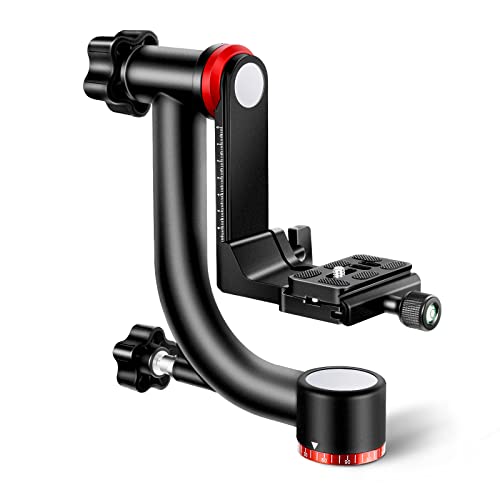
If you’re serious about capturing crisp, stable shots of fast-moving wildlife or sporting events with your DSLR and a hefty lens, the NEEWER GM101 Gimbal Tripod Head is an excellent contender. Built with a robust aluminum alloy and an integrated bearing structure, it offers exceptional stability and incredibly smooth operation, making those rapid adjustments feel effortless. Its design allows for perfectly balanced vertical and horizontal camera movements, ensuring you never miss a moment.
- Solid Construction: Durable aluminum alloy with 30lb/13.6kg maximum load capacity.
- Smooth Camera Movement: Bearing structure for effortless swivel and rotation on both axes.
- 360° Panning Base: Panoramic scales for precise 360° rotation, with a locking knob.
- Vertical & Horizontal Adjustments: Swinging arm for flexible positioning and a scale for height adjustments.
- Arca Type Quick Release Plate: Universal 1/4″ mounting screw, compatible with most DSLRs, mirrorless cameras, and camcorders, with rubber padding and a bubble level.
Pros:
– Very sturdy and stable for heavy camera and lens setups.
– Exceptionally smooth panning and tilting motion.
– Ideal for wildlife and sports photography.
– Easy to balance your gear.
– Arca-Swiss compatible quick release plate.
Cons:
– Can be bulky for travel compared to smaller tripod heads.
– Requires careful tightening of knobs, especially with heavy gear.
User Impressions: Users frequently praise its robust build quality and the fluidity of movement, often comparing it favorably to more expensive options. Photographers particularly love it for birding and action shots, noting how it transforms their shooting experience by eliminating arm strain and allowing for quick, precise tracking.
2. K&F Concept Aluminum Alloy 360 Degree Panoramic Gimbal

The K&F Concept Gimbal is a strong contender for photographers seeking buttery-smooth movements and a high load capacity. Crafted from durable 6061 aluminum alloy, this gimbal head is built to last and can easily support professional DSLR cameras and large telephoto lenses up to 44 lbs (20kg). What truly sets it apart is its refined lubrication system and superior sealing, which work together to provide incredibly fluid motion without the worry of grease leakage, ensuring consistent performance shot after shot.
- Smoother Operation: Features an exclusive third-generation grease for superior viscosity and uniformity.
- Improved Sealability: High-quality sealing rings prevent grease leakage, ensuring long-term smooth performance.
- Practical & Rugged Structure: Made from 6061 aluminum alloy with a 44lbs/20kg load capacity for stable horizontal and vertical movements.
- Precise Lens Positioning: Horizontal adjustment of the lens platform to accurately position the center of gravity.
- Panorama Photography Ready: Both rotating base and vertical arm offer 360-degree rotation.
- Quick Release System: Includes a standard 1/4” quick release plate with anti-slip design and a bubble level.
Pros:
– Exceptional load capacity suitable for very heavy setups.
– Incredibly smooth and consistent movement.
– Durable construction promises longevity.
– Excellent for panoramic photography.
– Reliable quick-release system.
Cons:
– Might be overkill for lighter DSLR setups.
– Heavier than some carbon fiber alternatives.
User Impressions: Customers are highly impressed by the K&F Concept’s build quality and, more importantly, its incredibly smooth operation. Many report that it handles large lenses and cameras with ease, making it a favorite for wildlife and sports photographers who demand precision and fluidity without breaking the bank.
3. WEYLLAN Professional Gimbal Tripod Head Heavy Duty Carbon

For the professional photographer who prioritizes both strength and portability, the WEYLLAN Professional Gimbal Tripod Head stands out. Constructed from 10-layer carbon fiber, it offers an impressive maximum load capacity of 33lbs/15kg while remaining surprisingly lightweight. This head is engineered for precision, featuring a bearing structure that enables incredibly smooth and stable 360-degree rotation, making it perfect for dynamic live sports or elusive wildlife photography where quick and precise movements are essential.
- Heavy Duty Carbon Fiber Construction: 10-layer carbon fiber for strength and portability, 33lbs/15kg max load.
- Precise 360° Panoramic Movement: Bearing structure for smooth horizontal and vertical rotation, ideal for dynamic subjects.
- Dual Screw Quick-Release Plate: Versatile 1/4” and 3/8” screws for different camera types.
- Anodized Anti-Oxidation Surface: CNC precision machining and anode treatment for enhanced durability and corrosion resistance.
- Bubble Level and Easy Adjustment: Built-in bubble level for accurate alignment and hassle-free adjustments.
Pros:
– Lightweight yet incredibly strong due to carbon fiber.
– Super smooth and stable panoramic movement.
– Durable finish resists wear and tear.
– Versatile quick-release plate for various cameras.
– Excellent for professional action and nature photography.
Cons:
– Higher price point compared to aluminum models.
– Some users might prefer a more compact design for travel.
User Impressions: Users rave about the WEYLLAN gimbal’s professional feel and performance. They often highlight its perfect balance of being lightweight enough to carry while robust enough to handle their heaviest lenses, providing fluid tracking that significantly improves their success rate with challenging shots.
4. Movo GH700 MKII Professional Gimbal DSLR Tripod Head with

The Movo GH700 MKII is a fantastic choice for photographers looking for a high-quality, professional-grade gimbal head that offers excellent value. Designed with precision bearings, it delivers incredibly fluid panning and tilting motions, making it a joy to use for capturing subjects in motion. Whether you’re a seasoned pro or a passionate hobbyist, its robust aluminum build can easily support up to 30 lbs (13.6kg), ensuring your heavy DSLR and telephoto lens combinations feel virtually “weightless” as you track.
- Fluid Panning & Tilting: Precision bearings enable smooth tracking of moving subjects.
- Smooth “Weightless” Flow: Arca clamp and plate are horizontally and vertically adjustable for perfect balance.
- Heavy Duty Construction: Superior aluminum build supports up to 30 lbs (13.6kg), yet the head is relatively light at 3.1 lbs.
- Excellent Value: Offers professional-grade features at a competitive price point.
- Warranty: 1-Year Movo Warranty with U.S.-based support.
Pros:
– Extremely smooth and responsive movements.
– Robust build quality for heavy camera setups.
– Achieves excellent balance, reducing effort during use.
– Great value for the features provided.
– Ideal for wildlife and birding.
Cons:
– May be considered bulky by some for general travel.
– The learning curve for balancing may take a few tries for newcomers.
User Impressions: Users consistently commend the Movo GH700 MKII for its exceptional performance, especially given its price. Many note its sturdy construction and how effortlessly it allows them to track fast-moving animals or athletes, transforming their photographic capabilities and making long shoots much less fatiguing.
5. Andoer Heavy Duty Gimbal Head Gimbal Tripod Head with

The Andoer Heavy Duty Gimbal Head is a solid, no-nonsense option for photographers and birdwatchers who need reliable, smooth camera support for heavy equipment. Crafted from rugged metal, this photographic head can comfortably bear loads up to 30 lbs (13.6kg), providing silent and smooth 360° panoramic shooting in both vertical and horizontal planes. Its damping system ensures precise and quiet movement, making it an ideal helper for capturing elusive wildlife or expansive panoramic landscapes without disturbance.
- Heavy Duty Metal Construction: Rugged build supports up to 30Lbs/13.6kg.
- Smooth 360° Panoramic Movement: Offers quiet and fluid panning and tilting in all directions.
- Damping System: Ensures precise and smooth camera movements.
- Graduated Lead Rail: Allows for simple and accurate vertical position adjustment.
- Arca-Swiss Standard: Features a 1/4″ quick release plate with a bubble level for balancing.
- Detailed Scale: Calibrated scales on pan and swing for accurate position calibration.
- Tripod Mounting: Bottom diameter 5cm/2″ with 3/8″ screw hole, includes 1/4″ and 3/8″ convertible screw.
Pros:
– Exceptionally sturdy and capable of handling heavy loads.
– Very smooth and quiet operation.
– Excellent for panoramic photography and tracking.
– Arca-Swiss compatibility is a big plus.
– Good value for a heavy-duty metal gimbal.
Cons:
– Heavier than carbon fiber alternatives.
– May lack some of the premium finishes of more expensive models.
User Impressions: Photographers appreciate the Andoer gimbal head for its robust build and the smooth, consistent motion it provides. They often highlight its ability to make heavy telephoto lenses feel almost weightless, allowing for extended shooting sessions without fatigue, and its excellent performance in tracking moving subjects.
6. VICTIV 74” Camera Tripod, Tripod for Camera and Phone

Important Note: While listed here, the VICTIV 74” Camera Tripod is a versatile, general-purpose tripod equipped with a 3-way pan head, not a specialized gimbal head designed for fluid, balanced movement of heavy DSLR and telephoto lens combinations. It’s an excellent choice for general photography, vlogging, and phone use, offering good stability and height. However, if your primary need is the “best tripod gimbal for DSLR” specifically for tracking wildlife or sports with large lenses, this tripod’s pan head will not provide the same free-flowing, balanced motion as a dedicated gimbal head.
- Tall & Compact: Height adjustment from 19-74 inches, compact design, and lightweight (3.14 lbs/1.4 kg) with a carrying bag.
- Universal Compatibility: Standard 1/4″ screw mount for all cameras (DSLR, SLR, mirrorless, camcorders) and a 360° phone mount.
- Professional 3-Way Pan Head: Allows 360° horizontal, 180° up/down, and 90° vertical shots.
- Enhanced Stability: Non-slip pads and a weight hook for hanging extra stability.
- Complete Kit: Includes phone holder, extra quick release plate, handle, and non-slip pads.
Pros:
– Very tall max height offers versatile shooting angles.
– Lightweight and portable for various shooting scenarios.
– Highly compatible with both cameras and smartphones.
– Affordable and comes with useful accessories.
– Good for general photography, vlogging, and static shots.
Cons:
– Not a gimbal head: Does not offer the fluid, balanced movement essential for tracking fast-moving subjects with heavy DSLR lenses.
– Pan head might not be smooth enough for professional video panning.
– Less robust for extremely heavy DSLR and telephoto lens setups compared to a dedicated gimbal head.
User Impressions: Users love the VICTIV tripod for its affordability, versatility, and height. It’s a popular choice for beginners, content creators, and those who need a reliable tripod for general use with various devices, including phones and lighter DSLRs. However, serious wildlife or sports photographers will find its pan head limiting compared to a true gimbal.
7. DJI Osmo Mobile 7P Gimbal Stabilizer for iPhone, Android

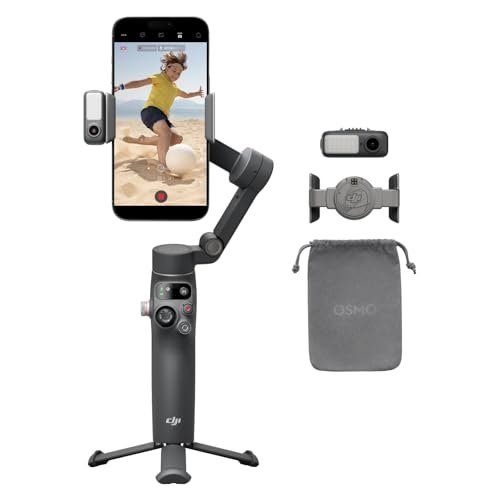
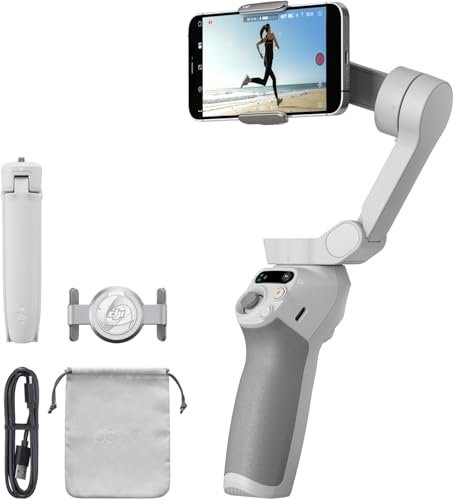
Important Note: The DJI Osmo Mobile 7P is a cutting-edge smartphone gimbal, not a tripod gimbal for DSLR cameras. It excels at providing super-stable, intelligent tracking and creative shooting modes for your phone, making it perfect for content creators, vloggers, and anyone looking to elevate their mobile videography. It features a built-in extension rod and a small tripod, but it is not designed to hold or stabilize a DSLR camera. We’ve included it to clarify that it’s a fantastic stabilization tool, but strictly for smartphones, so DSLR users looking for “best tripod gimbal for DSLR” should look at the other products on this list.
- Multifunctional Module: Features intelligent tracking, DJI Mic 2/DJI Mic Mini reception, and lighting.
- Robust 3-Axis Gimbal Stabilization: Ensures lossless stability for cinematic phone footage.
- User-Friendly: Snap-on magnetic design, unfolds to power on, and auto-launches DJI Mimo app.
- Built-in Extension Rod & Tripod: Offers creative freedom for wide selfies and steady vlogs.
- Long Operating Time: Up to 10 hours, with extra power to your phone when the module acts as a mic receiver.
- Dual-Lens Enhanced Tracking: Uses two phone lenses for smarter, steadier subject tracking.
- Comprehensive Kit: Includes phone gimbal, Multifunctional Module, Magnetic Phone Clamp, etc.
Pros:
– Excellent stabilization for smartphones, creating smooth, professional-looking video.
– Smart tracking features make vlogging and action shots easy.
– Portable and easy to set up and use.
– Built-in extension rod and tripod add versatility.
– Ideal for mobile content creation.
Cons:
– Not compatible with DSLRs: Designed exclusively for smartphones.
– Cannot support the weight or form factor of a DSLR camera.
– The DJI Mimo app is not on Google Play (requires direct download from DJI website for Android).
User Impressions: Mobile content creators absolutely adore the DJI Osmo Mobile 7P for its superb stabilization, intelligent features, and ease of use. It’s a highly recommended tool for anyone serious about improving their smartphone videography, offering a compact and powerful solution for on-the-go shooting.
Frequently Asked Questions (FAQ)
Q1: What is the main difference between a regular tripod head and a gimbal head?
A1: A regular tripod head (like a ball head or pan-tilt head) locks your camera in a set position. A gimbal head, on the other hand, is designed to balance your camera and lens precisely at their center of gravity, allowing for smooth, fluid, and almost “weightless” movement along one or two axes. This is crucial for tracking fast-moving subjects with heavy telephoto lenses without strain.
Q2: Why do I need a gimbal head for my DSLR, especially with a telephoto lens?
A2: DSLRs with long telephoto lenses can be very heavy and unwieldy. A gimbal head provides perfect balance, eliminating strain on your arms and allowing you to effortlessly pan and tilt to follow moving subjects (like birds or athletes) with incredible precision and stability, resulting in sharper images and smoother video.
Q3: Can I use a gimbal head with any tripod?
A3: Most gimbal heads come with a standard 3/8″ screw mount at the base, making them compatible with almost any robust tripod that has a removable head or a convertible mounting screw. Ensure your tripod is sturdy enough to support the combined weight of your camera, lens, and the gimbal head itself.
Q4: Are carbon fiber gimbal heads better than aluminum ones?
A4: Carbon fiber gimbal heads are generally lighter than their aluminum counterparts while often maintaining similar or even superior strength. This makes them ideal for photographers who need to carry their gear for long periods or over challenging terrain. Aluminum heads are typically more affordable and still very durable. The “best” depends on your budget and portability needs.
Q5: What’s “Arca-Swiss compatible,” and why is it important for a gimbal head?
A5: Arca-Swiss is a widely adopted standard for quick-release plates and clamps. When a gimbal head is “Arca-Swiss compatible,” it means you can use quick-release plates from various manufacturers, offering greater flexibility and interchangeability with other photography gear you might own. It allows for quick and secure mounting and dismounting of your camera.
Q6: Can I use a gimbal head for video recording?
A6: Absolutely! While often associated with still photography of wildlife and sports, gimbal heads are excellent for video recording, especially when you need smooth panning and tilting movements. Their fluid motion helps eliminate jitters and creates professional-looking footage, particularly for tracking subjects.
Q7: Is a smartphone gimbal the same as a tripod gimbal for DSLR?
A7: No, they are very different. A smartphone gimbal (like the DJI Osmo Mobile reviewed above) is a handheld stabilizer specifically designed for small, lightweight phones, offering electronic stabilization. A tripod gimbal for DSLR is a mechanical head that mounts on a tripod and is built to support and balance heavy DSLR cameras and large lenses for fluid motion. They serve completely different purposes and cannot be interchanged.
Conclusion
Choosing the best tripod gimbal for DSLR is a crucial step for photographers aiming to capture breathtaking shots of dynamic subjects. While there are a few versatile options out there, dedicated gimbal heads like those from NEEWER, K&F Concept, WEYLLAN, Movo, and Andoer truly excel at providing the smooth, balanced movement heavy DSLR and telephoto lens setups demand.
Remember to consider your specific needs: are you prioritizing lightweight portability, maximum load capacity, or the smoothest possible fluid motion? By understanding these distinctions and evaluating the pros and cons of each product, you’ll be well-equipped to make an informed decision and significantly elevate your photography game. Happy shooting!