So, you’ve got a shiny Sony camera, and you’re ready to dive into the world of silky-smooth, professional-looking video. But there’s a secret sauce to truly cinematic footage: a great gimbal paired with the right lens. Choosing the best Sony lens for gimbal use isn’t just about image quality; it’s about weight, balance, focal length, and aperture working in harmony with your stabilizer.
A gimbal excels at eliminating shakes, but the lens you choose can make or break your setup’s balance and overall performance. From run-and-gun vlogging to cinematic masterpieces, the perfect combination can elevate your content. We’ve rounded up some top contenders – a mix of excellent Sony lenses and versatile gimbals – to help you achieve that flawless motion.
Let’s dive into the options!
1. DJI RS 3 Mini: Lightweight & Powerful Gimbal Stabilizer
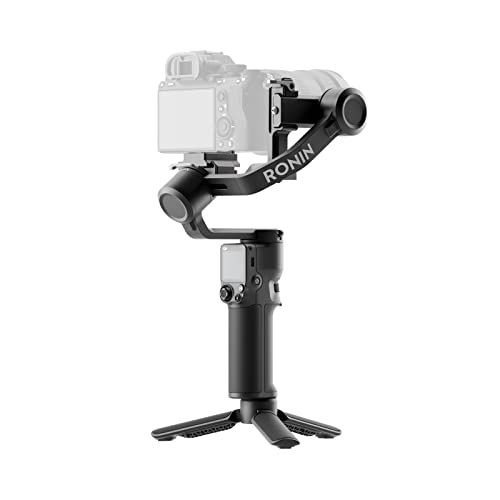
If you’re looking for a compact yet mighty companion for your Sony camera, the DJI RS 3 Mini is an excellent starting point. This isn’t a lens, but a crucial piece of the puzzle for achieving stable footage with your chosen Sony optics. Its ultra-light design means you can shoot for extended periods without fatigue, making it perfect for travel or long shooting days. Despite its small size, it packs a punch with a strong motor system, capable of handling a wide array of mirrorless and DSLR camera/lens combos, including many popular Sony setups.
- 795g (1.75lbs) Lightweight and Portable for extended shooting.
- Wide-Ranging Compatibility with a load capacity up to 2 kg (4.4 lbs).
- Bluetooth Shutter Control for seamless camera operation.
- 3rd-Gen RS Stabilization Algorithm for pro-level stability.
- Native Vertical Shooting for social media content creation.
- 1.4″ Full-Color Touchscreen with intuitive UI design.
- Requires DJI Ronin app for activation and full functionality.
Pros:
– Extremely portable and lightweight.
– Impressive payload capacity for its size.
– Excellent stabilization performance.
– Easy vertical shooting mode.
– Convenient Bluetooth control.
Cons:
– Requires app for full features and initial setup.
– Might be too small for very large cinema lenses or heavy DSLR setups.
User Impressions: Users rave about its portability and how well it handles a variety of mirrorless cameras, noting the stabilization is surprisingly effective for such a small gimbal. Many appreciate the quick setup and ease of balancing.
2. Sony FE 50mm F1.8: The Versatile Prime Lens

Sometimes, simplicity is key, especially when you’re aiming for that beautiful, creamy bokeh and excellent low-light performance on your gimbal. The Sony FE 50mm F1.8 is a fantastic, affordable prime lens that truly shines. Its compact and lightweight design makes it incredibly easy to balance on most gimbals, ensuring smoother movements. This 50mm focal length is often considered a “nifty fifty” for its versatility, making it a superb best Sony lens for gimbal when you want a classic, cinematic look for portraits, interviews, or general videography.
- Large F1.8 maximum aperture for beautiful background blur.
- 7-blade circular aperture creates appealing bokeh.
- Compact, lightweight design ideal for full-frame E-mount cameras.
- Aspherical element controls spherical aberration and coma.
- Double-gauss configuration suppresses field curvature & distortion.
Pros:
– Excellent image quality and bokeh for the price.
– Very lightweight and easy to balance on gimbals.
– Great for low-light shooting.
– Compact form factor.
Cons:
– Fixed focal length requires “zooming with your feet.”
– Autofocus can be slower than more premium lenses in certain situations.
User Impressions: Owners consistently praise its incredible value, sharp images, and beautiful background blur. It’s often recommended as a first prime lens for Sony full-frame users due to its portability and performance.
3. Tamron 18-300mm F/3.5-6.3 Di III-A VC VXD Lens for Sony

For those who prioritize versatility and don’t want to swap lenses on their gimbal, the Tamron 18-300mm is an absolute game-changer, especially for APS-C Sony cameras. This all-in-one zoom lens covers an enormous range, from wide-angle landscapes to distant telephoto shots, all in one surprisingly compact package. The VXD linear motor provides exceptionally fast and precise autofocus, crucial for tracking subjects while on the move with a gimbal. While its variable aperture isn’t ideal for extreme low light, its sheer convenience makes it a contender for the best Sony lens for gimbal if you need one lens to do it all.
- World’s first 16.6x all-in-one zoom lens for APS-C mirrorless cameras.
- Best-in-class, extremely fast and precise AF (VXD linear motor focus).
- Maintains high resolving power across the entire zoom range.
- Compact and portable design at 4.9 inches and 21.9 ounces.
- Moisture-Resistant Construction and Fluorine Coating for durability.
Pros:
– Unrivaled zoom range for an APS-C lens.
– Fast and accurate autofocus.
– Good optical quality across the range for an all-in-one.
– Weather-sealed for robust use.
Cons:
– Variable aperture (f/3.5-6.3) limits low-light performance at longer focal lengths.
– Can be a bit heavy for smaller gimbals at full extension.
User Impressions: Travel photographers and videographers love this lens for its versatility, often calling it their “desert island” lens. They highlight the impressive autofocus speed and image quality given its vast zoom capabilities.
4. Sony SELP1650 16-50mm OSS Lens: The Ultra-Compact Kit Lens
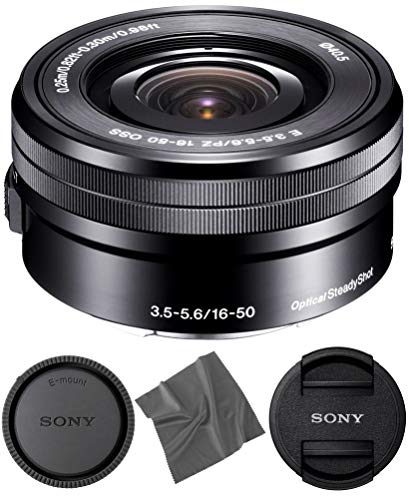
Often bundled with APS-C Sony cameras, the Sony E PZ 16-50mm OSS lens is surprisingly capable, especially when portability and gimbal balance are paramount. Its unique power zoom mechanism allows for incredibly smooth, cinematic zooms directly from the lens, which is fantastic for video work. What truly makes it stand out for gimbal use is its retractable design, which makes it incredibly compact when powered off, and its feather-light weight. This makes it one of the easiest lenses to balance and carry around on a gimbal setup.
- E-Mount Lens/APS-C Format (24-75mm 35mm Equivalent).
- Aperture Range: f/3.5-5.6 to f/22-36.
- Optical SteadyShot Image Stabilization (OSS).
- Power Zoom Mechanism for smooth video zooms.
- Retractable Design; Internal Focus for compactness.
- Seven-Blade Circular Diaphragm.
Pros:
– Extremely compact and lightweight, excellent for small gimbals.
– Power zoom feature is fantastic for video.
– Optical SteadyShot (OSS) complements gimbal stabilization.
– Affordable and widely available.
Cons:
– Variable aperture, limiting in low light.
– Image quality is decent but not exceptional compared to primes or G lenses.
User Impressions: Users appreciate its extreme portability and how it makes their camera and gimbal setup feel less cumbersome. The power zoom is a frequently praised feature for video creators, despite the lens’s “kit lens” reputation.
5. FeiyuTech SCORP-C: Versatile & High-Payload Gimbal
![FeiyuTech SCORP-C [Official] Camera Stabilizer 3-Axis...](https://m.media-amazon.com/images/I/41cuk84JumL._SL500_.jpg)
Another crucial piece of gear for achieving steady footage is a robust gimbal, and the FeiyuTech SCORP-C steps up as a powerful contender. This isn’t a lens, but a significant upgrade in payload capacity and design from previous models, making it suitable for a broader range of Sony camera bodies and heavier lenses. Its integrated handle grip is a welcome ergonomic improvement, allowing for comfortable low-angle shooting and better overall handling. If your choice of best Sony lens for gimbal is on the heavier side, this gimbal offers the necessary muscle.
- Upgraded Payload from 4.85 lbs to 5.51 lbs for wider camera/lens compatibility.
- Integrated Handle Grip for improved ergonomics and low-angle shots.
- Multi-Functional Knob Ring to control camera focus and gimbal axis.
- Extensive Sony camera compatibility (RX100 series, ZV-1, ZV-E10, Alpha series, FX3).
- Also compatible with Canon, Nikon, Panasonic, and Fujifilm cameras.
Pros:
– High payload capacity handles larger camera/lens setups.
– Ergonomic integrated handle.
– Intuitive control with the multi-functional knob.
– Wide compatibility with popular Sony cameras.
Cons:
– Larger and potentially heavier than mini gimbals.
– Requires careful balancing for optimal performance, like all gimbals.
User Impressions: Users report excellent stability and build quality, appreciating the added payload capacity that allows them to use a wider range of lenses. The integrated handle and control knob are often highlighted as significant usability improvements.
6. Sony FE 24-105mm F4 G OSS Standard Zoom Lens

If you’re a professional videographer or a serious enthusiast looking for a versatile, high-quality zoom lens that performs beautifully on a gimbal, the Sony FE 24-105mm F4 G OSS is hard to beat. This constant F4 aperture lens delivers exceptional sharpness and contrast across its entire zoom range, thanks to its G-lens design. Its Optical SteadyShot (OSS) complements gimbal stabilization for even smoother results, and the fast, quiet Direct Drive SSM (DDSSM) autofocus system is perfect for video, making it arguably the best Sony lens for gimbal if you need an all-rounder with professional-grade performance.
- G-lens design with 4 aspherical and 3 ED glass elements for high resolving power.
- Constant F4 maximum aperture maintains consistent exposure and depth of field.
- 9-Blade circular aperture for beautifully de-focused backgrounds.
- Minimum focusing distance of 1.25 feet for close-up ability.
- Sony’s DDSM internal focusing system for fast, quiet, and precise focusing.
Pros:
– Exceptional image quality and sharpness throughout the zoom range.
– Constant F4 aperture provides consistent exposure.
– Versatile focal length for various shooting scenarios.
– Fast, quiet, and reliable autofocus for video.
– OSS aids in stabilization.
Cons:
– Heavier and larger than prime lenses.
– F4 might not be fast enough for extreme low-light situations without increasing ISO.
User Impressions: This lens is consistently praised as a workhorse, offering incredible versatility and superb optical performance. Videographers love the constant aperture and reliable autofocus for professional projects.
7. Sony SELP18105G E PZ 18-105mm F4 G OSS, Black

For APS-C Sony camera users, the Sony SELP18105G is a standout choice for video, especially on a gimbal. This lens, part of Sony’s G series, offers excellent image quality and a constant F4 aperture across its versatile 18-105mm zoom range (27-158mm full-frame equivalent). What truly sets it apart for gimbal use is its integrated power zoom (PZ) mechanism. This allows for incredibly smooth, controlled zooms that are impossible to achieve manually, making your video transitions look professionally seamless. It balances well, making it a fantastic contender for the best Sony lens for gimbal if you’re rocking an APS-C body.
- High performance E mount G lens with excellent contrast.
- Versatile 27-158mm (35mm equiv.) zoom range.
- Constant F4 maximum aperture throughout the zoom range.
- Power Zoom (PZ) for incredibly smooth and controlled zooms.
- Optical SteadyShot (OSS) for added stability.
- 7-blade circular aperture.
Pros:
– Excellent image quality for an APS-C zoom.
– Constant F4 aperture is great for consistent video exposure.
– Smooth power zoom ideal for video.
– OSS enhances handheld and gimbal stability.
– Internal zoom and focus for easier gimbal balancing.
Cons:
– APS-C only, not compatible with full-frame cameras.
– Can be larger and heavier than other APS-C lenses.
– Power zoom might be too slow for some fast-paced scenarios.
User Impressions: Videographers using Sony APS-C cameras frequently call this their go-to lens, especially appreciating the smooth power zoom for cinematic shots. They praise its consistent image quality and reliable performance for vlogging and general video production.
Frequently Asked Questions (FAQ)
1. Why is the right lens important for gimbal use?
The right lens impacts gimbal performance in several ways: its weight affects balance, its focal length determines your field of view, and its features like power zoom or internal focusing can significantly enhance video capabilities and ease of use on a gimbal. A well-balanced setup leads to smoother, more stable footage and less strain on the gimbal motors.
2. Should I choose a prime or zoom lens for my gimbal?
Both have their merits. Prime lenses (like the Sony FE 50mm F1.8) are often lighter, more compact, and offer wider apertures for better low-light performance and shallower depth of field (bokeh). Zoom lenses (like the Sony FE 24-105mm F4 G OSS or Tamron 18-300mm) offer versatility, allowing you to change focal lengths without swapping lenses, which can save time and rebalancing. For static shots or artistic bokeh, primes are great. For dynamic shooting where you can’t change lenses, zooms are better.
3. What’s the ideal aperture for video on a gimbal?
A constant aperture (e.g., F2.8 or F4) is generally preferred for video on a gimbal. This means your exposure won’t change as you zoom in or out, leading to smoother transitions. Wider apertures (like F1.8 or F2.8) are great for low light and achieving cinematic bokeh, while F4 lenses offer a good balance of light gathering and depth of field for many shooting situations.
4. How does lens weight affect gimbal performance?
Lens weight is crucial for gimbal performance. Heavier lenses require gimbals with higher payload capacities and can be more challenging to balance. Lighter lenses are generally easier to balance and allow for longer shooting times without user fatigue, especially with smaller, portable gimbals. It’s important to match your lens’s weight to your gimbal’s maximum payload.
5. What about image stabilization (OSS) in a lens vs. gimbal stabilization?
Optical SteadyShot (OSS) in a lens works in conjunction with a gimbal. While the gimbal handles larger movements and shakes, OSS can fine-tune stabilization and reduce micro-jitters, especially noticeable when walking or running. Using both can lead to incredibly smooth, almost float-like footage.
6. Are power zoom lenses good for gimbals?
Yes, power zoom (PZ) lenses are excellent for gimbal use, particularly for videography. They allow for incredibly smooth and consistent zoom transitions that are difficult to achieve manually. This feature is invaluable for creating cinematic effects and precise framing adjustments without introducing jarring movements.
7. Can I use full-frame lenses on an APS-C Sony camera for gimbal work?
Yes, you absolutely can! Sony’s E-mount system allows full-frame (FE) lenses to be used on APS-C (E) camera bodies. Keep in mind that using a full-frame lens on an APS-C camera will result in a “crop factor,” meaning the effective focal length will be multiplied (e.g., a 50mm FE lens on an APS-C camera becomes effectively a 75mm lens). This can sometimes be beneficial for reach but means you lose some wide-angle capability.