If you’re a serious photographer or videographer, you know that shaky footage can completely ruin an otherwise perfect shot. That’s where a good gimbal comes in. These incredible devices stabilize your DSLR camera, turning even the bumpiest walk into buttery smooth, cinematic footage. But with so many options out there, which is the best gimbal for DSLR cameras? It’s a question many ask, and thankfully, we’re here to help you navigate the choices.
Choosing the right DSLR gimbal isn’t just about picking the most expensive one; it’s about finding the perfect balance of payload capacity, features, portability, and ease of use for your specific needs. Whether you’re shooting professional films, vlogs, or simply want to elevate your personal projects, a quality camera stabilizer is a game-changer.
We’ve rounded up seven top contenders, breaking down what makes each one tick, so you can decide which is the best gimbal for DSLR camera you own. Let’s dive in and find your ideal stability companion!
1. ZHIYUN CINEPEER Weebill 3E [Official]
![ZHIYUN CINEPEER Weebill 3E[Official], 3-Axis Lightweight...](https://m.media-amazon.com/images/I/41+kdEh7b2L._SL500_.jpg)
The ZHIYUN CINEPEER Weebill 3E is designed for creators who need a powerful yet portable solution. What truly makes this gimbal stand out is its commitment to ergonomic comfort and native vertical shooting. Weighing in at just 1.05 kg and roughly the size of an A4 piece of paper, it’s remarkably lightweight and easy to transport, while still capable of handling a substantial 3 kg payload. The revamped handle design is a real win, significantly reducing fatigue during those long shooting sessions. Plus, with its native vertical shooting capability, you can switch orientations for social media content in a snap, without fiddling with extra accessories.
Key Features:
– 3 kg (6.6 lbs) Max Payload
– Lightweight 1.05 kg Design
– A4 Paper-Sized Portable Form Factor
– Native Vertical Shooting (no extra accessories needed)
– Comfortable Ergonomic Handle Design
– Bluetooth Shutter Control
– Up to 16 Hours Battery Life
– Supports 14W PD Fast Charging (2h 46m charge time)
– Sling Mode 2.5 (sling grip and wrist rest sold separately)
Pros:
– Excellent portability and lightweight design.
– Ergonomic handle greatly reduces user fatigue.
– Seamless native vertical shooting for content creators.
– Impressive 16-hour battery life with fast charging.
– Robust payload capacity for its size.
Cons:
– Some accessories (like sling grip and wrist rest) are sold separately.
– Specific control cables (e.g., Canon, Sony) need to be purchased additionally for full connectivity.
User Impressions:
Users frequently praise the Weebill 3E for its compact size and comfortable grip, making it ideal for run-and-gun shooting. The ability to quickly switch to vertical mode is a huge plus for social media creators. While the separate purchase of some cables can be a minor annoyance, the overall performance and battery life often outweigh this for most users.
2. DJI RS 3 Pro Combo

The DJI RS 3 Pro Combo is a powerhouse, built for professional filmmakers who demand precision, efficiency, and heavy-duty performance. Its standout feature is arguably the automated axis locks, which make setup and packing incredibly quick and seamless – a huge time-saver on set. With extended carbon fiber axis arms and a hefty 4.5 kg payload, it can comfortably accommodate larger professional camera setups, like a Sony FX6 or Canon C70 with a 24-70mm F2.8 lens. The included Ronin Image Transmitter and Focus Motor in this combo make it an even more comprehensive solution for high-end productions.
Key Features:
– Automated Axis Locks for rapid setup and storage
– Extended Carbon Fiber Axis Arms for larger camera setups
– 4.5 kg (10 lbs) Max Tested Payload
– Long-Range O3 Pro Video Transmission (up to 6km/20,000ft with ultra-low latency)
– Dynamic & Versatile Solution with extensive ports and DJI RS SDK support
– Combo includes Ronin Image Transmitter, Focus Motor (2022), Lower Quick-Release Plate (Extended)
Pros:
– Unmatched payload capacity for professional cinema cameras.
– Automated axis locks significantly speed up workflow.
– Carbon fiber construction offers strength without excessive weight.
– Advanced video transmission system is perfect for remote monitoring.
– Highly versatile and expandable for various filmmaking scenarios.
Cons:
– Higher price point due to professional-grade features and combo accessories.
– Can be overkill for casual users with lighter DSLR setups.
User Impressions:
Professionals consistently rate the RS 3 Pro highly for its robust build, impressive payload, and smart features like auto-locking axes. The integrated video transmission and included focus motor are particularly appreciated, streamlining complex shoots. Users find it to be a reliable workhorse for demanding projects.
3. FeiyuTech SCORP 2 Gimbal Stabilizer

The FeiyuTech SCORP 2 is a truly innovative gimbal that brings intelligent tracking to the forefront without needing extra accessories. Its built-in AI sensor for intelligent tracking is a game-changer, allowing you to use simple gestures (like an “OK” sign) to enable subject tracking, photo capture, and video recording. This means you can keep your hands on the camera and focus on composition. Add to that its upgraded quick-installation system for instant vertical filming, and you have a gimbal that’s incredibly versatile and intuitive for dynamic content creation.
Key Features:
– Built-in AI Sensor for Intelligent Tracking (gesture control)
– Instant Vertical Filming Setup with new L-shaped mounting plates
– Wireless/Cable Camera Control via Bluetooth or cable
– 1.3″ Touchscreen for clear status and settings
– Multifunctional Control Knob for axis rotation and electronic zoom
– Feiyu SCORP App connectivity for advanced settings and somatosensory remote control
Pros:
– Revolutionary built-in AI tracking simplifies solo shooting.
– Rapid and accessory-free vertical filming.
– Intuitive control with touchscreen and multi-function knob.
– Flexible camera control options (wireless/cable).
– App provides expanded creative control and fun features.
Cons:
– AI tracking, while innovative, might have a slight learning curve for optimal use.
– Touchscreen size is relatively small.
User Impressions:
Users are particularly impressed by the SCORP 2’s AI tracking capabilities, finding it incredibly convenient for self-shooting and vlogging. The quick vertical setup is also a significant highlight for social media content creators. Many appreciate the blend of smart technology with user-friendly controls.
4. FeiyuTech SCORP-C Gimbal Stabilizer

The FeiyuTech SCORP-C punches above its weight, offering a thoughtful design and a suite of advanced features that make it a formidable choice for both mirrorless and DSLR users. Its standout design element is the integrated hanging handle, which provides complete control whether you’re shooting upright or underslung, ensuring comfortable handling from any angle. The integral folding aileron bracket means you can set it down anywhere without needing a separate tripod, making it incredibly convenient for on-the-go shooting. Plus, features like three-axis motor locks and a center of gravity memory slider simplify setup and balancing.
Key Features:
– Wide Compatibility with mainstream mirrorless and DSLR cameras
– Integrated Hanging Handle for versatile upright and underslung shooting
– Tilted Handle for ergonomic comfort
– Integral Folding Aileron Bracket (no tripod needed to set down)
– Considerate Design: Three-axis motor lock, Five-way CG adjustment, Memory slider, Arca Quick Release Plate
– Powerful Key for easy mode switching to professional settings
– Complex Shots Easily Achieved: AB Trajectory Memory, Flash Mode, Panoramic, Time-lapse, Space Mode, Vertical-shooting Mode
– 2500mAh Efficient Battery with 10-13 Hour runtime and 18W fast charging
Pros:
– Highly versatile integrated handle design.
– Convenient fold-out bracket for setting down anywhere.
– Smart design features make balancing and setup a breeze.
– Extensive creative modes for advanced videography.
– Excellent battery life with quick charging.
Cons:
– May require a bit of time to master all the advanced shooting modes.
– While compatible, larger DSLR setups might push its weight limits compared to pro-grade gimbals.
User Impressions:
Customers frequently praise the SCORP-C for its intuitive handling and ergonomic design. The built-in stand and quick-release plate are popular features, saving time and hassle. Users appreciate the robust battery life and the variety of creative modes that unlock new shooting possibilities.
5. FeiyuTech SCORP-C [Official] Camera Stabilizer
![FeiyuTech SCORP-C [Official] Camera Stabilizer 3-Axis...](https://m.media-amazon.com/images/I/41cuk84JumL._SL500_.jpg)
This “Official” version of the FeiyuTech SCORP-C highlights key upgrades, making it an even more robust choice for a broader range of cameras. The most significant improvement here is the boosted payload capacity, increasing from 4.85 lbs to a more capable 5.51 lbs (approx. 2.5 kg). This means you can mount heavier camera bodies and lenses with more confidence, expanding your creative toolkit. Like its counterpart, it features the integrated handle grip, solidifying FeiyuTech’s commitment to user comfort and seamless design by making the underslung handle a standard, built-in feature rather than an optional accessory.
Key Features:
– Upgraded Max Payload from 4.85 lbs to 5.51 lbs (approx. 2.5 kg)
– Compatible with mainstream mirrorless and DSLR camera & lens combos
– Integrated Handle Grip (no separate underslung handle needed)
– Multi-Functional Knob Ring to control camera focus and gimbal axis
– Extensive Compatibility List provided for popular Sony, Canon, Nikon, Panasonic, Fujifilm models
Pros:
– Increased payload capacity allows for a wider range of camera/lens combinations.
– Integrated handle design enhances convenience and stability.
– Multi-functional knob offers precise control over focus and axes.
– Broad compatibility with popular camera brands.
Cons:
– Still a mid-range payload, so very heavy professional cinema rigs might struggle.
– Features are largely similar to the non-official SCORP-C, with payload being the primary differentiator.
User Impressions:
Users upgrading or purchasing this version often commend the slight but impactful payload increase, which offers more flexibility. The integrated handle is a recurring positive point, simplifying operation. It’s seen as a solid, reliable choice for those needing a bit more capacity than standard consumer gimbals.
6. ZHIYUN Weebill 3S Combo Gimbal Stabilizer

The ZHIYUN Weebill 3S Combo takes the Weebill line’s renowned portability and elevates it with professional-grade features, making it a strong contender for which is the best gimbal for DSLR users focused on content creation. Its standout feature is the built-in 1000lux fill light, offering adjustable dual color temperature (2600k-5500k), perfect for illuminating subjects in challenging lighting conditions. The 10th Generation Honeycomb Algorithm ensures even smoother and more stable footage, ideal for novices and pros alike. Plus, the native horizontal and vertical shooting mode is lightning-fast, letting you switch orientations in just 3 seconds, a huge boon for modern videographers.
Key Features:
– Powerful Compatibility with full-frame mirrorless/DSLR cameras
– 10th Generation Honeycomb Algorithm for enhanced stability
– Built-In 1000lux Fill Light (adjustable 2600k-5500k)
– Native Horizontal And Vertical Shooting Mode (3-second switch)
– PD Fast Charging (2 hours for full charge), 11.5 hours Battery Life
– Bluetooth Shutter Control
– 0.96″ Function Screen for quick status checks
– Lightweight and comes with tripod and camera cables in combo
Pros:
– Integrated fill light is incredibly convenient and enhances shooting quality.
– State-of-the-art stabilization algorithm delivers incredibly smooth results.
– Effortless and fast switching between horizontal and vertical modes.
– Excellent battery life and fast charging.
– Great value with included accessories in the combo.
Cons:
– Payload capacity, while good, might be slightly less than dedicated heavy-duty gimbals.
– Built-in light may not be powerful enough for very large scenes.
User Impressions:
Content creators are especially fond of the Weebill 3S for its built-in light and quick vertical shooting. Many describe the footage as exceptionally smooth, even for beginners. The combo package adds great value, making it a popular choice for those looking for an all-in-one solution for vlogging and online content.
7. DJI RS 2 Combo
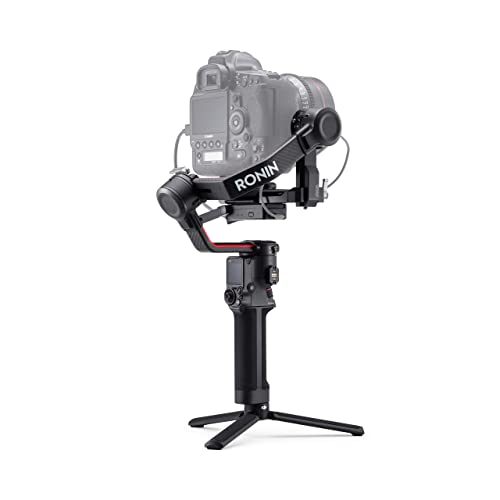
The DJI RS 2 Combo is a legend in the professional filmmaking world, setting a high bar for performance, build quality, and intelligent features. Its most impressive feat is the incredible 10lb (4.5 kg) tested payload capacity paired with a mere 2.3 lbs (1.04 kg) gimbal weight, offering the industry’s highest weight-to-payload ratio. This is largely thanks to its monocoque carbon fiber axis arms, which provide exceptional strength and lightness. The integrated 1.4” full-color touchscreen with ActiveTrack 3.0 directly on the screen provides intuitive control, making it a favorite among solo cinematographers and professional crews alike.
Key Features:
– 10 lb (4.5 kg) Tested Payload with a lightweight 2.3 lbs (1.04 kg) design
– Carbon Fiber Construction for strength and lightness
– 1.4” Full-Color Touchscreen with direct ActiveTrack 3.0 access
– Professional Mounting Options for integration with cars, jibs, sliders, etc.
– Efficient Balancing with dual-layer Manfrotto/Arca-Swiss plate and fine-tune knob
– Extensive Compatibility with most popular DSLRs and mirrorless cameras
Pros:
– Industry-leading weight-to-payload ratio.
– Durable and incredibly lightweight carbon fiber build.
– Intuitive touchscreen for quick parameter adjustments and intelligent tracking.
– Highly versatile for professional filmmaking setups and accessories.
– Efficient balancing system simplifies setup.
Cons:
– Premium price reflects its professional-grade capabilities.
– May be an over-spec for casual users with very light setups.
User Impressions:
Professionals and serious hobbyists consistently praise the DJI RS 2 for its robust build, the ability to handle heavy camera setups, and its incredibly smooth stabilization. The touchscreen with ActiveTrack is a frequently lauded feature, enhancing workflow. Users find it to be a reliable and high-performing gimbal that justifies its investment.
Frequently Asked Questions (FAQ)
Q: Why do I need a gimbal for my DSLR?
A: A gimbal helps stabilize your DSLR camera, eliminating unwanted shakes and jitters from handheld shooting. This results in incredibly smooth, professional-looking video footage, perfect for vlogs, cinematic shots, and any moving camera work.
Q: What’s the difference between a 3-axis gimbal and other stabilizers?
A: A 3-axis gimbal stabilizes your camera on all three axes (pan, tilt, and roll), providing comprehensive stabilization against movements in any direction. While there are 2-axis gimbals or simpler mechanical stabilizers, 3-axis gimbals offer the most advanced and fluid stabilization for dynamic shots.
Q: How do I choose the right gimbal for my DSLR?
A: Consider your camera’s weight (including lens and accessories) and choose a gimbal with a sufficient payload capacity. Also, think about portability, battery life, specific features you need (like AI tracking, built-in light, vertical shooting), and your budget. Compatibility with your specific camera model is also crucial.
Q: Is a higher payload capacity always better?
A: A higher payload capacity means the gimbal can handle heavier camera and lens combinations, offering more flexibility. However, gimbals with higher payloads can also be heavier themselves. If your DSLR setup is light, you might prefer a more portable gimbal with a lower payload, as it will be less cumbersome to carry around.
Q: How do I balance my DSLR on a gimbal?
A: Balancing involves adjusting the camera’s position on each of the gimbal’s axes (tilt, roll, and pan) until it remains level and still when the motors are off. This reduces strain on the motors and ensures optimal performance. Most gimbals come with quick-release plates and adjustable arms to facilitate this process. Always balance your camera before powering on the gimbal.
Q: Can I use a gimbal designed for a DSLR with my mirrorless camera too?
A: Yes, many gimbals are designed to be compatible with both DSLR and mirrorless cameras, as long as the camera’s weight (including lens) falls within the gimbal’s payload capacity. Always check the specific compatibility list provided by the gimbal manufacturer.
Q: What are L-shaped quick release plates and why are they useful?
A: L-shaped quick release plates allow you to quickly switch your camera between horizontal (landscape) and vertical (portrait) shooting orientations without having to rebalance or remove multiple components. This is incredibly useful for content creators who often shoot for different platforms like YouTube (horizontal) and Instagram/TikTok (vertical).
Q: What does “combo” mean when buying a gimbal?
A: A “combo” package typically includes the gimbal itself along with additional accessories that enhance its functionality or usability. These might include items like an external monitor, focus motor, wireless video transmitter, extra handles, carrying cases, or additional cables, offering better value than buying each item separately.