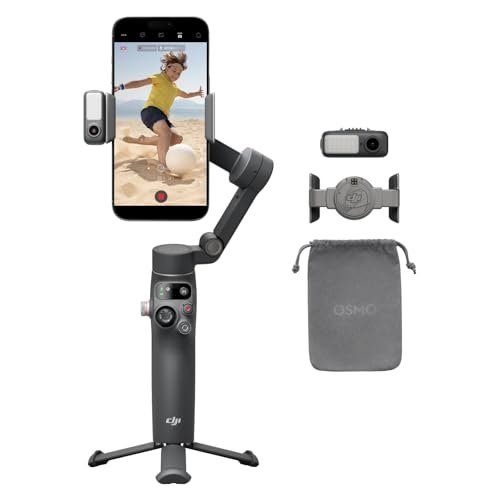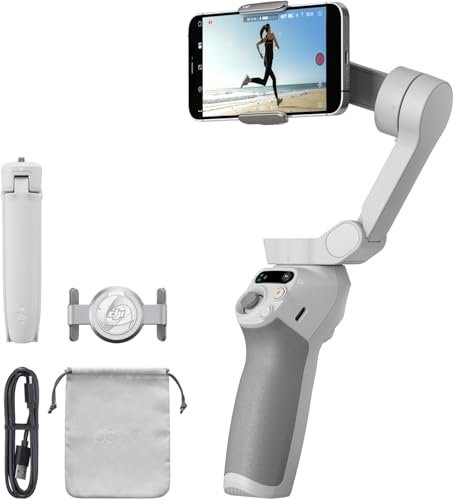
Ever wondered how professional filmmakers get those incredibly smooth, cinematic shots that just glide across the screen? The secret often lies in a powerful tool called an electronic gimbal. If you’re a DSLR user, you know how frustrating shaky footage can be, especially when you’re trying to capture dynamic action or moving subjects. That’s where investing in the best electronic gimbal for DSLR comes into play.
An electronic gimbal acts as your camera’s personal stabilization system, using advanced motors and algorithms to counteract unwanted movements. This means no more jarring bumps or wobbly videos, just silky-smooth, professional-looking results. Whether you’re shooting vlogs, documentaries, short films, or just trying to elevate your family videos, a quality camera gimbal can make a world of difference.
In this guide, we’ll dive deep into some of the top electronic gimbals designed specifically for DSLR and mirrorless cameras. We’ve sifted through the features, pros, and cons to help you find the perfect match for your shooting style and gear.
Why You Need an Electronic Gimbal for Your DSLR
DSLRs, while fantastic for image quality, can be heavy and unwieldy for handheld video. Even the steadiest hands can’t replicate the fluid motion an electronic gimbal provides. These devices unlock a new level of creative freedom, allowing you to:
- Eliminate Camera Shake: Say goodbye to shaky footage caused by walking, running, or even just subtle hand movements.
- Achieve Cinematic Motion: Create smooth pans, tilts, and tracking shots that look like they came straight from a Hollywood set.
- Unlock Low-Angle & Dynamic Shots: Gimbals make it easy to get unique perspectives that are difficult or impossible to achieve handheld.
- Boost Production Value: Professional-looking video naturally draws more viewers and enhances your brand or personal projects.
How We Chose the Best Electronic Gimbals
When selecting the best electronic gimbal for DSLR, we focused on several key factors:
- Payload Capacity: Can it handle your DSLR and preferred lens combo?
- Stabilization Performance: How well does it iron out bumps and shakes?
- Ease of Use: Is it simple to balance, operate, and navigate its features?
- Battery Life: Can it last through your entire shoot?
- Features: What extra modes, controls, and functionalities does it offer?
- Portability: Is it easy to transport to your shooting locations?
Let’s get into the reviews!
DJI RS 3 Mini, 3-Axis Gimbal Stabilizer for Cameras
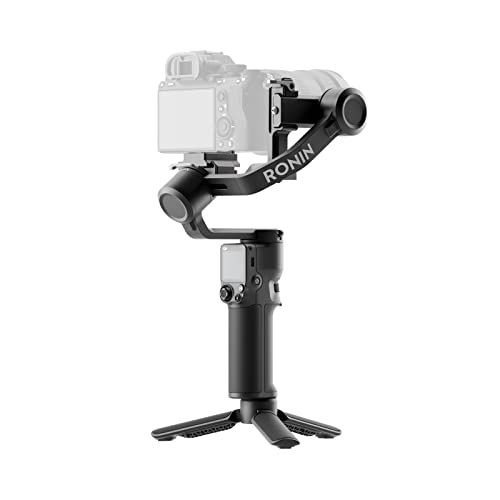
The DJI RS 3 Mini is a game-changer for content creators who need professional stabilization without the bulk. This ultra-compact and lightweight gimbal is designed for portability, making it a fantastic companion for travel vloggers or anyone on the go. Despite its small size, it boasts impressive motor strength and payload capacity, comfortably handling a wide range of popular mirrorless and even some DSLR camera setups. Its intuitive 1.4-inch full-color touchscreen and third-generation RS stabilization algorithm make setup and shooting a breeze, ensuring buttery-smooth footage every time.
Key Features
– 795g (1.75lbs) Lightweight and Portable
– Wide-Ranging Compatibility with up to 2 kg (4.4 lbs) payload
– Bluetooth Shutter Control for seamless camera operation
– 3rd-Gen RS Stabilization Algorithm for pro-level stability
– Native Vertical Shooting for easy social media content creation
– 1.4″ Full-Color Touchscreen with intuitive UI
Pros
– Extremely lightweight and travel-friendly
– Surprising payload capacity for its size
– Excellent stabilization performance
– Convenient native vertical shooting mode
– Easy to use with clear touchscreen interface
Cons
– May not handle the heaviest DSLR and super-telephoto lens combinations
– Requires DJI Ronin app for full functionality and activation
– Smaller form factor might feel less robust to some users
User Impressions
Users consistently praise the RS 3 Mini for its portability and powerful performance despite its small footprint. Many are surprised by how well it handles their cameras and love the convenience of native vertical shooting. The intuitive controls and effective stabilization are frequently highlighted as major positives, making it a popular choice for solo creators.
Zhiyun Weebill S [Official] 3-Axis Gimbal Stabilizer for…
![Zhiyun Weebill S [Official] 3-Axis Gimbal Stabilizer for...](https://m.media-amazon.com/images/I/41dofxRBqiL._SL500_.jpg)
The Zhiyun Weebill S has long been a favorite among videographers for its compact design and powerful performance. It’s known for its unique underslung Sling Mode, which significantly reduces fatigue during long shoots and allows for effortless low-angle shots. The Weebill S offers excellent compatibility with a vast array of popular DSLR and mirrorless cameras, ensuring many users can integrate it into their existing setup. Its advanced 8th Instune algorithm delivers highly responsive and jitter-free stabilization, even during fast-paced movements, making it a reliable choice for dynamic shooting.
Key Features
– Compatible with mainstream mirrorless and DSLR camera & lens combos
– Compact size (A4 paper-sized)
– Ergonomically designed Sling mode for comfortable underslung shooting
– 8th Instune algorithm for high responsiveness and jitter elimination
– 14 hours battery life
– Brand new TransMount Image Transmission Module (accessory) for high-quality video transmission
– Dual focus control system; Quick release system; OLED display
Pros
– Exceptional battery life
– Ergonomic sling mode is very comfortable for extended use
– Excellent compatibility with many camera models
– Reliable and smooth stabilization
– Optional image transmission module enhances workflow
Cons
– Image transmission module is an additional purchase
– OLED display can be small for some users
– Balancing can have a slight learning curve for beginners
User Impressions
Videographers love the Weebill S for its comfortable design and the ability to get truly cinematic low-angle shots. Its long battery life is a huge plus for all-day shoots, and users appreciate its broad camera compatibility. While some found the initial balancing a bit tricky, the overall consensus is that its stabilization performance and robust feature set make it a highly valuable tool.
ZHIYUN CINEPEER Weebill 3E[Official], 3-Axis Lightweight…
![ZHIYUN CINEPEER Weebill 3E[Official], 3-Axis Lightweight...](https://m.media-amazon.com/images/I/41+kdEh7b2L._SL500_.jpg)
The ZHIYUN CINEPEER Weebill 3E builds on the legacy of its predecessors, offering a refined, lightweight experience with an impressive payload capacity. Weighing just 1.05 kg, it can still handle up to 3 kg (6.6 lbs) of camera gear, making it suitable for many DSLR and mirrorless setups. What truly sets the Weebill 3E apart is its focus on ergonomics, featuring a comfortable handle design and the innovative 2.5 Sling Mode (with optional accessories) which promises to reduce physical fatigue by over 50%. This focus on user comfort, combined with native vertical shooting and a long 16-hour battery life, makes it ideal for creators who embark on marathon shoots.
Key Features
– 3 kg (6.6 lbs) Payload and lightweight (1.05 kg)
– Native Vertical Shooting without additional accessories
– More comfortable handle design to reduce fatigue
– 2.5 Sling Mode (with optional accessories) for improved ergonomics and low-angle stability
– Bluetooth Shutter Control for convenient camera operation
– 16H Max Battery Life with 14W PD fast charging
– Wide-axis arm for compatibility with major mirrorless and DSLR cameras
Pros
– Excellent balance between payload and lightweight design
– Very comfortable for long shooting sessions, especially with Sling Mode
– Impressive 16-hour battery life and fast charging
– Convenient native vertical shooting
– Robust build quality
Cons
– Sling grip and wrist rest for 2.5 Sling Mode need to be purchased separately
– Specific control cables for Canon/Sony cameras are not included and must be purchased separately
– Balancing might take some practice
User Impressions
Customers are generally very pleased with the Weebill 3E’s lightweight feel and its ability to handle heavier camera setups. The extended battery life and the comfort provided by the new handle design are frequently praised. Users particularly appreciate the native vertical shooting for social media content.
FeiyuTech SCORP-C Gimbal Stabilizer for Cameras DSLR and…

The FeiyuTech SCORP-C stands out with its integrated hanging handle and unique ergonomic design, allowing for incredibly comfortable upright and underslung shooting. This electronic gimbal for DSLR is built for convenience, featuring an integral folding aileron bracket that eliminates the need for a separate tripod for resting. It boasts strong compatibility with a wide range of DSLR and mirrorless cameras and includes thoughtful design elements like three-axis motor locks and a center of gravity memory slider for quick setup. With its powerful key features like AB Trajectory Memory and Flash Mode, complex shots become easily achievable, letting you focus on creativity.
Key Features
– Compatible with mainstream mirrorless and DSLR camera & lens combos
– Integrated hanging handle for versatile shooting angles
– Tilted handle holding for ergonomic comfort
– Integral folding aileron bracket (no tripod needed for resting)
– Considerate design for easier installation and leveling (motor locks, 5-way COG adjustment, memory slider, Arca Quick Release)
– Powerful shooting modes: AB Trajectory Memory, Flash Mode, Panoramic Photography, Time-lapse, Space Mode, Vertical-shooting
– 2500mah Efficient Battery (10-13 hours runtime) with 18W fast charging
Pros
– Highly ergonomic and comfortable to hold
– Built-in stand is incredibly convenient
– Quick and easy setup/balancing with memory features
– Robust range of intelligent shooting modes
– Good battery life with fast charging
Cons
– Some users might find the integrated handle design takes a little getting used to
– App experience could be refined for some users
– May not support the absolute heaviest cinema camera setups
User Impressions
Users rave about the SCORP-C’s comfortable grip and the convenience of its integrated stand. The quick setup features and memory functions are highly appreciated, saving valuable time on shoots. Many also commend the variety of creative shooting modes, which help them achieve dynamic shots with ease.
DJI RS 4, 3-Axis Gimbal Stabilizer for DSLR and…

The DJI RS 4 represents the cutting edge of DJI’s professional stabilization technology, designed for serious filmmakers and videographers using DSLRs and mirrorless cameras. It introduces significant enhancements like a second-generation native vertical shooting mechanism via a new horizontal plate, making the transition seamless and quick. The gimbal’s Teflon-coated axis arms ensure incredibly smooth balancing, while an extended tilt axis offers more space for larger camera setups. With a robust 3kg (6.6lbs) payload and an RSA communication port for an extensive control ecosystem, the RS 4 is built for versatility and demanding production environments, allowing you to focus on capturing the perfect shot.
Key Features
– 2nd-Gen Native Vertical Shooting with new horizontal plate for efficiency
– Joystick Mode Switch for quick control over zoom/gimbal modes (PF, PTF, FPV)
– Teflon-Coated Axis Arms for smoother, ultra-precise balancing
– 3kg (6.6lbs) Payload Capacity with extended tilt axis for larger combos
– RSA Communication Port for extensive control accessories (e.g., DJI RS Tethered Control Handle)
– New BG70 High-Capacity Battery Grip (sold separately) extends runtime to 29.5 hours
– Includes Gimbal, BG21 Battery Grip, Quick-Release Plate, Extended Grip/Tripod
Pros
– Top-tier stabilization performance
– Extremely smooth balancing process
– Enhanced native vertical shooting is very efficient
– High payload capacity for most professional setups
– Modular design allows for expanded control options
– Option for significantly extended battery life
Cons
– High-capacity battery grip sold separately
– DJI Ronin app requires direct download from DJI’s website for Android users
– Can be a significant investment for hobbyists
User Impressions
Professionals and enthusiasts alike are highly impressed by the RS 4’s refined performance and thoughtful improvements. The ease of balancing, the seamless vertical shooting, and the overall stability are frequently highlighted. While the price point is higher, users feel the performance justifies the investment, particularly for larger camera rigs.
FeiyuTech SCORP 2 Gimbal Stabilizer for DSLR and Mirrorless…

The FeiyuTech SCORP 2 takes intelligent filmmaking to the next level with its built-in AI sensor for intelligent tracking, eliminating the need for external modules. This means you can use simple hand gestures to enable subject tracking, control photography, and more, streamlining your workflow. Its instant vertical filming setup with an upgraded L-shaped mounting plate makes switching orientations incredibly fast, perfect for dynamic social media content. Combining wireless/cable control options, a clear 1.3″ touchscreen, and a multifunctional control knob, the SCORP 2 offers both intuitive operation and precise control, helping you master every shot.
Key Features
– Built-in AI Sensor for Intelligent Tracking via gestures
– Instant Vertical Filming Setup with new L-shaped mounting plates
– Wireless/Cable Control for camera connection (Bluetooth or control cable)
– 1.3″ Touchscreen & Multifunctional Control Knob for easy parameter adjustment and axis control
– Connects to Feiyu SCORP App for professional settings and somatosensory remote control
– Trigger focus by lightly pressing the shutter button
Pros
– Integrated AI tracking is a significant convenience
– Very fast and easy vertical shooting setup
– Flexible camera control options (wireless/cable)
– Intuitive touchscreen and control knob
– Somatosensory remote control via app is unique
Cons
– Gesture control might require some practice for accuracy
– Payloads for specific DSLR models should be double-checked
– App functionality is key to unlocking all features
User Impressions
Users are captivated by the SCORP 2’s built-in AI tracking, finding it incredibly useful for solo shooting. The quick vertical filming setup is a massive time-saver, and the intuitive touchscreen and control knob are highly praised for making adjustments on the fly. Many appreciate the combination of smart features and robust performance.
FAQ Section
Q1: What exactly is an electronic gimbal, and why do I need one for my DSLR?
A1: An electronic gimbal is a motorized stabilizer that uses brushless motors and advanced algorithms to keep your camera perfectly level and smooth, regardless of your movement. For DSLRs, which can be heavy and prone to handshake, a gimbal is essential to eliminate shaky footage and achieve professional, cinematic-quality video that’s impossible to get handheld.
Q2: How important is payload capacity when choosing an electronic gimbal for DSLR?
A2: Payload capacity is critically important. It’s the maximum weight the gimbal can effectively stabilize. You need to ensure the gimbal can support the combined weight of your DSLR camera, the lens you plan to use, and any accessories (like a microphone or small monitor). Always check your camera’s weight (with lens) against the gimbal’s stated maximum payload to avoid underperforming stabilization or damage.
Q3: How do I balance my DSLR camera on an electronic gimbal?
A3: Balancing involves adjusting the camera’s position on each of the gimbal’s three axes (tilt, roll, and pan) until the camera remains stable and level when the motors are off. This ensures the motors don’t have to work too hard, preserving battery life and improving stabilization. Most gimbals come with detailed instructions or online tutorials for balancing, and it typically involves sliding the camera and adjusting arm lengths until it’s perfectly weighted.
Q4: Can I use any DSLR camera with any electronic gimbal?
A4: Not necessarily. While many gimbals offer broad compatibility, it’s crucial to check the specific gimbal’s compatibility list for your DSLR model and the lenses you intend to use. Factors like camera body size, lens length, and overall weight (payload) are important. Some gimbals also offer specific control cables or Bluetooth integration for certain camera brands/models, allowing direct control over camera functions from the gimbal.
Q5: What are some common shooting modes available on electronic gimbals?
A5: Most electronic gimbals offer a variety of intelligent shooting modes. Common ones include:
* Pan Follow (PF): The camera follows your pan movements, but stays locked on tilt and roll.
* Pan & Tilt Follow (PTF): The camera follows both pan and tilt movements, but keeps roll locked.
* FPV (First Person View): All three axes follow your movements, allowing for dynamic, immersive shots.
* Lock Mode (L): All axes are locked, keeping the camera pointed in one direction regardless of gimbal movement.
* Sport Mode/Go Mode: Increases motor response for fast-moving action shots.
* Inception Mode (Vortex): Rotates the camera 360 degrees on the roll axis for a spinning effect.
* Time-lapse/Motion-lapse: Automates movement over time for cinematic time-lapse videos.
Q6: What’s the typical battery life for an electronic gimbal, and how do I extend it?
A6: Battery life for electronic gimbals typically ranges from 10 to 16 hours, though some models can extend this with optional high-capacity battery grips. To extend battery life, ensure your camera is perfectly balanced before turning on the gimbal, as poorly balanced setups make the motors work harder. Avoid unnecessary heavy movements, and turn off the gimbal when not actively shooting for extended periods.
Q7: Is an electronic gimbal suitable for both video and photography?
A7: While primarily designed for video stabilization, electronic gimbals can also benefit photography, especially in low-light conditions or for unique long-exposure shots where camera movement needs to be minimized. Some gimbals even offer features like panorama modes or motion time-lapses for photography. However, their main advantage lies in creating smooth, dynamic video footage.
Conclusion
Choosing the best electronic gimbal for DSLR is a game-changer for anyone serious about elevating their video production. From the ultra-portable DJI RS 3 Mini to the feature-packed FeiyuTech SCORP 2, each of these gimbals offers unique advantages tailored to different shooting needs.
No matter which one you choose, investing in a quality camera gimbal means saying goodbye to shaky footage and hello to smooth, professional, and cinematic results. Consider your camera’s weight, your shooting style, and the features that matter most to you, and you’ll be well on your way to capturing truly stunning videos. Happy shooting!