So, you’ve got your gimbal, right? That magical piece of tech that turns shaky, handheld footage into buttery-smooth cinematic gold. But here’s the kicker: even the best gimbal can’t fix a bad lens. To truly unlock its potential and capture stunning, professional-looking video, you need the right glass. That’s where a prime lens comes into play. They’re known for their superior image quality, wider apertures, and often lighter, more compact designs, making them a fantastic pairing for any gimbal setup.
Choosing the best prime lens for gimbal use isn’t just about sharpness; it’s about balancing weight, autofocus performance, focal length, and that sweet, sweet bokeh. We’ve scoured the market to find five top contenders that will elevate your video production, whether you’re a seasoned filmmaker or a passionate content creator. Let’s dive in and find the perfect prime lens to make your gimbal sing!
SIRUI VP-1 Vision Prime 1 T1.4 Full Frame Cine Lens

The SIRUI VP-1 Vision Prime 1 stands out as a fantastic choice for serious videographers looking for a versatile and high-performance cine lens designed specifically for demanding video work. What makes this lens truly unique is its innovative Multi-Mount Versatility. Forget being tied down to one camera system; with interchangeable E, RF, Z, and L mounts, you can seamlessly switch between different camera bodies without needing a new lens. It’s built for 8K storytelling, offering incredibly sharp images from edge to edge, and its incredibly fast T1.4 aperture ensures superb low-light performance and stunning, dreamy bokeh that really separates your subject.
- Multi-Mount Versatility: Interchangeable mounts (E, RF, Z, L) included.
- 8K Storytelling Ready: Engineered with aspherical, ED, and HRI glass for sharp, distortion-free images.
- Fast T1.4 Aperture: Excellent for low light and beautiful subject separation with creamy bokeh.
- Consistent Design: Uniform size, weight, gear position, filter thread (67mm), and color across the series.
-
Compact and Lightweight: Durable aluminum alloy body, around 600g, ideal for gimbal use.
-
Designed for high-resolution cinematic output.
- Versatile mount system is a game-changer for multi-camera shooters.
- Extremely fast aperture provides incredible creative control.
- Consistent build quality across the series simplifies lens changes on set.
-
Lightweight construction is perfect for extended gimbal use.
-
As a cine lens, it’s typically manual focus, which might be a learning curve for some.
- Specific focal lengths (e.g., 24mm, 35mm, 50mm) mean you’d need the set for versatility.
User Impressions: Users rave about the cinematic look and feel this lens provides, especially appreciating the T1.4 aperture for stunning low-light shots and creamy backgrounds. The interchangeable mount system gets huge praise for its adaptability, making it a valuable asset for filmmakers who work with different camera brands. Its compact size is also frequently highlighted as a major plus for gimbal balancing.
NiSi – Athena Prime 5-Lens Kit, Compatible with ARRI PL

For professional filmmakers and high-end productions, the NiSi Athena Prime 5-Lens Kit is a dream come true. This isn’t just one lens, but a meticulously crafted set designed for ARRI PL mount systems, ensuring consistent, high-quality full-frame compatibility across all five focal lengths. What sets these primes apart is their commitment to cinematic excellence: incredibly fast apertures (mostly T1.9), buttery smooth bokeh, and exceptional low-light capabilities. The consistent design, from gear positioning to exterior size, means lightning-fast lens swaps without re-rigging your setup, a massive time-saver on a busy set. Plus, the unique rear threaded filter system adds a clever layer of versatility.
- Full Frame Compatibility: Designed for ARRI PL mount with a 46mm image circle.
- Fast Aperture & Cinematic Bokeh: T1.9 (25, 35, 50, 85mm) and T2.4 (14mm) for shallow depth of field.
- Consistent Design: Uniform gear positioning and exterior size across the set for quick changes.
- Rear Threaded Filter Advantage: Unique design allows for optional ND, Black Mist, and UV/IR Cut filters (sold separately).
-
Built for Professional Filmmakers: Compact, consistent, and optically sharp, ideal for gimbals, drones, and studio.
-
A complete professional lens kit offering incredible value for a serious filmmaker.
- Outstanding image quality, contrast, and color accuracy.
- Consistent physical characteristics simplify workflow on professional sets.
- Unique rear filter system is innovative and practical.
-
Perfect for high-end cinematic productions, including gimbal and drone work.
-
High price point as it’s a full 5-lens kit, not a single lens.
- Primarily for ARRI PL mount users, limiting compatibility for other camera systems without adapters.
- Rear filters need to be purchased separately.
User Impressions: Professionals using the NiSi Athena Kit are consistently impressed by the optical performance and the sheer convenience of a matched set. They often praise the consistent size and weight, which makes balancing gimbals a breeze when switching focal lengths. The fast apertures and beautiful bokeh are frequently mentioned as highlights, leading to truly cinematic results.
Canon RF16mm F2.8 STM Lens, Ultra Wide-Angle, Fixed Focal

If you’re a Canon RF mirrorless shooter looking for an ultra-wide, super-compact, and affordable prime lens that plays nice with gimbals, the Canon RF16mm F2.8 STM is a fantastic pick. This lens is Canon’s first ultra wide-angle fixed focal length RF lens, offering a bright f/2.8 maximum aperture in an incredibly tiny package. Its standout feature for video is the stepping motor (STM), which provides smooth and quiet continuous autofocus – absolutely crucial for clean audio and professional-looking video when you’re on the move. Its diminutive size and minimal weight make it an ideal companion for lightweight gimbal setups, letting you capture sweeping shots without breaking your back.
- Ultra Wide-Angle: 16mm fixed focal length on full-frame.
- Bright f/2.8 Aperture: Good for low light and shallow depth of field.
- STM Motor: Provides smooth and quiet AF, perfect for video.
- Supremely Lightweight and Compact: Ideal for small setups and travel.
-
Close Focusing: Minimum focusing distance of 5.11 inches.
-
Extremely compact and lightweight, perfect for travel and compact gimbals.
- Affordable price point makes it accessible.
- Quiet STM autofocus is excellent for video recording.
-
Ultra-wide perspective is great for vlogging, landscapes, and tight spaces.
-
Fixed focal length means no zoom versatility.
- F2.8, while bright, isn’t as fast as some cine primes on this list.
- Some edge distortion may be noticeable at 16mm, common for ultra-wides.
User Impressions: Canon RF users absolutely adore this lens for its incredibly small size and surprisingly good image quality for the price. Vloggers and content creators particularly highlight its wide-angle view and the quiet, reliable autofocus for their gimbal work. It’s often praised as a go-to lens for run-and-gun shooting thanks to its portability.
Sony FE 20mm F1.8 G Full-Frame Large-Aperture Ultra-Wide
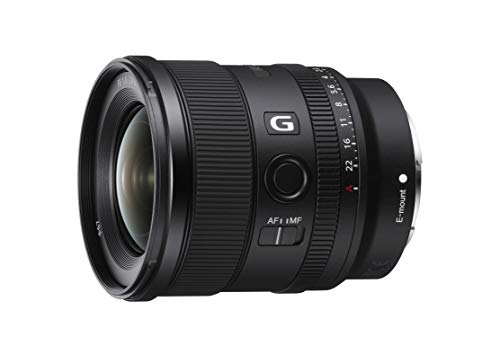
For Sony Alpha users, the Sony FE 20mm F1.8 G lens is a serious contender when seeking the best prime lens for gimbal use. It’s an ultra-wide prime from Sony’s esteemed G series, meaning you get stunning wide-open resolution and beautiful rendering. The fast F1.8 maximum aperture is a game-changer for low-light scenarios and for achieving superb depth of field, helping your subject pop. What truly sets it apart for gimbal work are its dual XD (Extreme Dynamic) Linear motors, which deliver incredibly fast, precise, and virtually silent autofocus – essential for dynamic video shooting. Combine this with its compact and lightweight design, and you have a powerhouse lens that won’t strain your gimbal or your arms.
- Compact Ultra-Wide G Lens: 20mm focal length with stunning resolution.
- Fast F1.8 Max Aperture: Excellent low-light performance and depth of field control.
- Lightweight Design: Ideal for both full-frame and APS-C cameras, great for gimbals.
- Advanced Aspheric Elements: For natural, lifelike high resolution.
-
Dual XD Linear Motors: Super fast, precise, and quiet autofocus.
-
Exceptional image quality typical of Sony G lenses.
- Extremely fast and silent autofocus makes it ideal for video.
- Wide F1.8 aperture is fantastic for low-light shooting and bokeh.
- Compact and lightweight, perfect for maintaining gimbal balance and portability.
-
Versatile focal length for vlogging, landscapes, and environmental portraits.
-
As a prime lens, it lacks zoom flexibility.
- It’s a G lens, so it’s a higher price point than entry-level primes.
User Impressions: Sony shooters frequently call this one of their favorite wide-angle primes. The sharpness even wide open, combined with the buttery smooth bokeh, gets consistent praise. Its lightning-fast and silent autofocus is a huge hit for videographers, especially those using it on gimbals, ensuring subjects stay in focus without any distracting noise. The comfortable weight and size are also often mentioned as a big plus.
SIRUI Aurora 85mm F1.4 Full Frame Auto Focus Lens

Rounding out our list is another gem from SIRUI, the Aurora 85mm F1.4 Full Frame Auto Focus Lens. If you’re looking for that classic portrait look with incredible subject separation and dreamy bokeh, this is your go-to lens, especially when combined with a gimbal for smooth tracking shots. Its F1.4 fast aperture and fifteen-blade diaphragm create magnificent, creamy bokeh. But what truly makes it shine for gimbal work is its fast, smooth, and precise auto-focus, driven by a step motor that supports eye AF and object tracking – perfect for capturing moving subjects with ease. Plus, with an optimized lens structure that keeps its weight down to just 540g, it’s remarkably light for an 85mm F1.4, allowing for comfortable long-time handheld or gimbal work.
- Unparalleled Image Quality: Sharpness throughout the frame even at F1.4.
- Ultra Fast F1.4 Aperture: Fifteen-blade diaphragm for beautiful, creamy bokeh.
- Fast, Smooth & Precise AF: Step motor supports eye AF and object tracking.
- King of Portrait: Classic 85mm focal length for natural facial shots and compression.
-
Super Lightweight: Only 540g, around 17% lighter than similar lenses, optimized for gimbal work.
-
Stunning optical performance and beautiful bokeh, ideal for cinematic portraits.
- Reliable and smooth autofocus is a major advantage for video.
- Incredibly lightweight for an 85mm F1.4, reducing strain on gimbals.
-
Excellent for isolating subjects and creating dramatic depth of field.
-
85mm is a longer focal length, which might be too tight for some common gimbal shots (e.g., walk-and-talk vlogging).
- Requires more space between subject and camera.
User Impressions: Portrait photographers and videographers alike adore the Sirui Aurora 85mm for its exceptional image quality and stunning bokeh. Users frequently praise its surprisingly lightweight build for an 85mm f/1.4, which makes it much more manageable on gimbals compared to heavier alternatives. The autofocus performance, especially for tracking, is consistently highlighted as being reliable and smooth for video.
Wrapping Up: Choosing Your Best Prime Lens for Gimbal
Picking the best prime lens for gimbal use boils down to your specific needs, budget, and camera system. For raw cinematic power and multi-system flexibility, the SIRUI VP-1 Vision Prime stands tall. If you’re a professional looking for a complete, high-end cinema solution, the NiSi Athena Kit is an investment worth considering. Canon users seeking an ultra-wide and incredibly compact option will love the RF16mm F2.8 STM, while Sony shooters get a fantastic blend of sharpness and fast AF with the FE 20mm F1.8 G. And for breathtaking portraits with smooth, lightweight gimbal control, the SIRUI Aurora 85mm F1.4 is a superb choice.
No matter which you choose, pairing a quality prime lens with your gimbal will significantly improve your video’s production value. You’ll enjoy sharper images, beautiful background blur, and more consistent, reliable performance – ultimately helping you tell your story with greater visual impact.
FAQ Section
Q1: Why should I use a prime lens instead of a zoom lens with a gimbal?
A1: Prime lenses generally offer superior image quality, wider maximum apertures (meaning better low-light performance and more beautiful bokeh), and are often lighter and more compact than zoom lenses. Their fixed focal length also encourages more thoughtful composition. For gimbals, their lighter weight helps with balance, and consistent weight distribution is easier to manage, leading to smoother footage and longer battery life for your gimbal.
Q2: What focal length is best for gimbal work?
A2: It really depends on your shooting style. Wide-angle primes (like 16mm, 20mm, 24mm) are great for vlogging, establishing shots, or shooting in tight spaces, offering a stable, immersive feel. Mid-range primes (35mm, 50mm) are versatile for general storytelling and interviews. Longer primes (85mm, 100mm) are excellent for portraits, isolating subjects, and creating cinematic compression, but require more space. A good starting point for versatility is a 24mm, 35mm, or 50mm.
Q3: Does lens weight matter when using a gimbal?
A3: Absolutely! Lens weight is crucial. Heavier lenses can quickly exceed your gimbal’s payload capacity, leading to instability or even damage. Even if within capacity, a heavier lens can make balancing more difficult and drain your gimbal’s battery faster. Lighter, more compact lenses are generally preferred for ease of use, longer shooting times, and overall smoother performance.
Q4: Is autofocus or manual focus better for prime lenses on a gimbal?
A4: For most content creators and run-and-gun shooting, a fast, accurate, and silent autofocus system is generally preferred, especially when dealing with moving subjects or during solo operation (e.g., vlogging). Many modern prime lenses (like the Sony FE 20mm F1.8 G) have excellent AF motors for video. However, for precise, cinematic shots where focus pulls are planned, manual focus can offer more creative control and smoother transitions, especially with cine-style primes that have long focus throws.
Q5: What is bokeh, and why is it important for video?
A5: Bokeh refers to the aesthetic quality of the blur in the out-of-focus areas of an image. A “beautiful bokeh” often means a smooth, creamy blur that helps separate your subject from the background, making them stand out. For video, good bokeh adds a professional, cinematic look, drawing the viewer’s eye to the intended subject and enhancing the visual storytelling. Prime lenses with wide apertures (e.g., F1.8, F1.4) are excellent for achieving this effect.
Q6: Are cine lenses better than photo lenses for gimbal use?
A6: Cine lenses are designed specifically for video production, often featuring de-clicked apertures for smooth iris pulls, long focus throws for precise manual focusing, and consistent physical characteristics (size, weight, gear position) across a set. This consistency is excellent for gimbal users as it minimizes the need for re-balancing when switching lenses. However, they are typically more expensive and usually manual focus only. Photo lenses, especially modern ones with quiet and fast autofocus, can be equally effective for many gimbal applications, particularly for solo shooters or those prioritizing AF.
Q7: How does lens consistency (like uniform size/weight) help with gimbal setups?
A7: When using a gimbal, every time you swap lenses, you typically have to re-balance the setup if the new lens has a different size or weight. Lenses with consistent physical dimensions (like the NiSi Athena or SIRUI Vision Prime series) allow for quick, seamless swaps without significant re-balancing, saving valuable time on set and maintaining workflow efficiency.