Ever found yourself struggling to capture that perfect, sharp shot of a fast-moving bird or a dynamic sports event? If you’re passionate about wildlife or action photography, you know the challenge of keeping a heavy DSLR camera and telephoto lens steady while tracking subjects. That’s where a gimbal head comes in! It’s a game-changer, designed to balance your gear perfectly, allowing for incredibly smooth, fluid motion, almost as if your camera is floating.
In this guide, we’re diving deep into what makes the best gimbal head for DSLR cameras truly stand out. We’ll explore five top contenders that can transform your photography experience, helping you nail those tricky shots with ease and precision. Ready to upgrade your stability and capture breathtaking moments? Let’s get started!
Understanding the Best Gimbal Head for DSLR
A gimbal head works by balancing your camera and lens at their natural center of gravity. This innovative design means you can maneuver even the heaviest telephoto lenses with just a fingertip, reducing strain and preventing arm fatigue during long shooting sessions. It’s an absolute must-have for nature photographers, sports photographers, and anyone who needs to track moving subjects effortlessly.
Our Top 5 Picks for the Best Gimbal Head for DSLR
Let’s break down the best options available, highlighting what makes each one a fantastic choice for your valuable DSLR setup.
NEEWER Gimbal Tripod Head Professional Heavy Duty Aluminum…
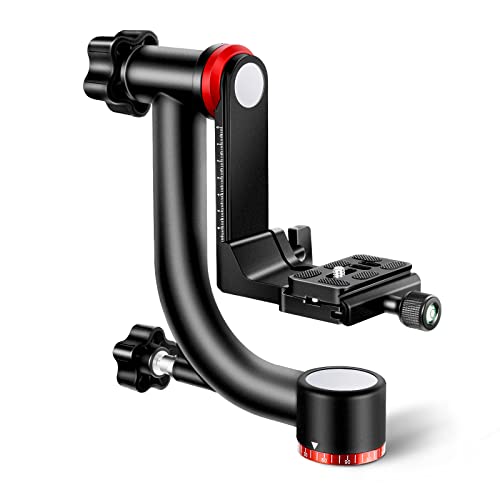
The NEEWER GM101 is a fantastic entry point for photographers needing robust support without breaking the bank. What truly makes this gimbal head shine is its “Solid Construction” combined with a clever “Bearing Structure” for incredibly smooth movement. Crafted from durable aluminum alloy, it’s built like a tank, ready to handle professional DSLR cameras and weighty telephoto lenses with exceptional stability. If you’re into birdwatching or fast-action sports, its fluid motion will help you capture crystal-clear images of even the most erratic subjects.
-
Key Features:
- Solid aluminum alloy construction with integrated load-bearing structure.
- Maximum load capacity: 30lb/13.6kg.
- Smooth camera movement with an internal bearing structure for fluid adjustments.
- 360° panning base with panoramic scales and lock knob.
- 1/4″ and 3/8″ sockets for versatile tripod mounting.
- Swinging arm allows for vertical and horizontal photography with height scale.
- Arca-Type quick release plate with 1/4″ mounting screw, rubber padding, and bubble level.
-
Pros:
- Exceptional stability for heavy gear.
- Very smooth and easy adjustments thanks to the bearing structure.
- Affordable yet professional-grade performance.
- Wide compatibility with most DSLR and mirrorless cameras.
- Precise 360° panning for panoramic shots.
-
Cons:
- Being aluminum, it’s heavier than carbon fiber alternatives.
- Requires care when loosening knobs with heavy gear to prevent drops.
-
User Impressions: Users frequently praise its robust build quality and surprisingly smooth operation for the price point. Many consider it a high-value purchase for supporting large telephoto lenses, noting its effectiveness in achieving sharp, stable shots of wildlife.
SIRUI PH-Series Carbon Fiber Gimbal Head (PH-10)

When every gram counts, the SIRUI PH-10 steps up to the plate. Its standout feature is its incredibly lightweight design, thanks to a 10-layer carbon-fiber body. Don’t let the lightness fool you, though; this gimbal head can comfortably support up to a 15kg (33lbs) load, making it perfect for those beefy telephoto lenses often paired with DSLRs. It’s ideal for adventurers and outdoor photographers who need a strong, reliable, yet easily portable solution.
-
Key Features:
- Lightweight 10-layer carbon-fiber body (0.98kg/2.16lbs).
- Supports up to a 15kg/33lbs load.
- Designed for mirrorless cameras and 200mm-600mm telephoto lenses.
- Quick release plate with precision scale marks, 1/4”-20 and 3/8” accessory screws.
- Universal 3/8” screw port at the bottom for accessories.
- Independent locking knobs for track, base, sliding platform, and quick release plate.
- 360-degree rotating and panoramic base for omni-directional creation.
-
Pros:
- Extremely lightweight, making it highly portable for travel and hiking.
- High load capacity despite its light build.
- Independent locking knobs offer precise control.
- Excellent for fast-paced outdoor shoots and birdwatching.
- Durable carbon fiber construction.
-
Cons:
- Premium carbon fiber often comes with a higher price tag.
- Some users might prefer the “heft” of aluminum for perceived stability (though carbon fiber is extremely rigid).
-
User Impressions: Photographers rave about its perfect balance of strength and portability. It’s often recommended for those long treks where minimizing gear weight is crucial, without compromising on stability or smooth operation.
Andoer Heavy Duty Gimbal Head Gimbal Tripod Head with…

The Andoer Heavy Duty Gimbal Head is a no-nonsense workhorse designed for photographers who need maximum stability and robust construction. Its defining characteristic is its “Rugged metal construction” capable of bearing up to an impressive 30Lbs/13.6kg. This makes it an ideal helper for panoramic shooting and particularly attractive for dedicated bird watchers who often use very long, heavy lenses. It offers smooth 360° panoramic shooting, ensuring you don’t miss a single detail.
-
Key Features:
- Rugged heavy-duty metal construction.
- Can bear up to 30Lbs/13.6kg heavy load.
- Smooth and quiet 360° panoramic shooting (vertical and horizontal).
- Damping system for smooth and quiet movement.
- Graduated lead rail for simple vertical position adjustment.
- Arca-Swiss standard 1/4″ quick release plate with bubble level.
- Detailed scales on pan and swing for accurate position calibration.
- Bottom diameter 5cm/2″ with 3/8″ screw hole for tripod mounting, includes 1/4″ and 3/8″ convertible screw.
-
Pros:
- Exceptional load capacity and durability.
- Very stable for professional setups.
- Smooth 360-degree panning and tilting.
- Affordable heavy-duty option.
- Arca-Swiss compatibility is a big plus for many users.
-
Cons:
- Likely heavier than carbon fiber models due to its all-metal build.
- May feel less refined in its aesthetics compared to premium brands.
-
User Impressions: This gimbal head is frequently praised for its tank-like build and ability to handle very heavy camera/lens combos without any wobble. Users find it to be a reliable and cost-effective solution for serious telephoto work, especially for static tripod use.
WEYLLAN Professional Gimbal Tripod Head Heavy Duty Carbon…

The WEYLLAN Professional Gimbal Tripod Head stands out by blending the best of both worlds: the strength of “Heavy Duty Carbon Fiber Construction” and the precision of a “Precise 360° Panoramic Movement” thanks to its bearing structure. Crafted with a 10-layer carbon fiber, it offers incredible strength while remaining relatively lightweight, supporting up to 33lbs/15kg. This makes it an excellent choice for professional photographers who demand both durability and portability for dynamic shoots.
-
Key Features:
- Heavy-duty 10-layer carbon fiber construction.
- Maximum load capacity of 33lbs/15kg.
- Bearing structure for smooth and stable 360-degree horizontal and vertical rotation.
- Dual screw Quick-Release Plate with 1/4” and 3/8” screws.
- Anodized anti-oxidation surface for enhanced durability and corrosion resistance.
- Equipped with a bubble level for accurate alignment.
-
Pros:
- Excellent strength-to-weight ratio due to carbon fiber.
- Very high load capacity accommodates large professional gear.
- Smooth and precise movement for tracking fast subjects.
- Dual screw QR plate adds versatility.
- Anodized finish ensures long-term outdoor performance.
-
Cons:
- Carbon fiber construction typically results in a higher price point.
- May be considered overkill for lighter camera setups.
-
User Impressions: Reviewers often highlight its robust yet refined feel, appreciating the smooth adjustments and solid lock-down. It’s particularly popular among wildlife and sports photographers who spend long hours in the field and need gear that can withstand the elements.
K&F Concept Aluminum Alloy 360 Degree Panoramic Gimbal…

K&F Concept has made a strong statement with their Aluminum Alloy Gimbal, emphasizing exceptional smoothness and reliability. Their commitment to “Smoother” operation is evident with an exclusive third-generation grease and a “Sealability” focus that maintains a 0% grease leakage rate. Made from robust 6061 aluminum alloy, this gimbal head boasts an incredible load capacity of up to 20kg/44lbs, making it one of the strongest contenders on this list. It’s a fantastic choice for photographers prioritizing a fluid, leak-free experience with maximum stability.
-
Key Features:
- Enhanced smoothness with exclusive third-generation grease.
- Superior sealability for 0% grease leakage.
- Constructed from rugged 6061 aluminum alloy.
- Impressive load capacity of up to 20kg/44lbs.
- Horizontal adjustment of lens platform for precise center of gravity.
- Calibrated scale for repeatable lens positioning.
- 360-degree horizontal and vertical rotation for panoramic photography.
- Includes standard 1/4” quick release plate with anti-slip design and bubble level.
-
Pros:
- Outstanding smoothness and fluid operation.
- Unparalleled load capacity for virtually any DSLR and lens combo.
- No issues with grease leakage, ensuring longevity.
- Robust and stable aluminum construction.
- Excellent for precise panoramic shots.
-
Cons:
- Being aluminum, it will be heavier than carbon fiber alternatives.
- Some might find the sheer load capacity overkill for their needs.
-
User Impressions: Many users are highly impressed by the K&F Concept’s buttery-smooth movement and rock-solid stability. The zero-grease-leakage claim resonates well, building trust, and its incredible load capacity means it can handle even the largest telephoto lenses without a hitch.
FAQ: Your Questions About Gimbal Heads Answered
Choosing the best gimbal head for DSLR can bring up a few questions. Here are some common ones to help you make an informed decision:
Q1: What exactly is a gimbal head?
A: A gimbal head is a specialized tripod head designed to perfectly balance your camera and large telephoto lens at their natural center of gravity. This allows for incredibly smooth, effortless movement and tracking of subjects, particularly for wildlife and sports photography.
Q2: Why should I use a gimbal head for my DSLR?
A: If you regularly use heavy DSLR cameras with long telephoto lenses (e.g., 300mm, 500mm, 600mm), a gimbal head is indispensable. It eliminates the strain of holding heavy gear, prevents arm fatigue, and most importantly, enables you to smoothly follow fast-moving subjects without jerkiness, resulting in sharper images.
Q3: How do I choose the best gimbal head for DSLR for my needs?
A: Consider your primary use (wildlife, sports, general outdoor), the weight of your camera and heaviest lens (check the gimbal’s load capacity), material preference (carbon fiber for lightness, aluminum for durability/cost), and specific features like quick-release plate type, panning options, and independent locking knobs.
Q4: What’s the main difference between a gimbal head and a ball head?
A: A ball head locks your camera at an angle using a single locking knob, which can be difficult to fine-tune with heavy lenses and can cause lens creep. A gimbal head, however, balances your camera system, allowing it to move freely and smoothly along a single axis (tilt or pan) without needing to be locked down for tracking, making it far superior for dynamic subjects.
Q5: Is load capacity an important factor for a gimbal head?
A: Absolutely! The load capacity indicates the maximum weight the gimbal head can safely support. Always ensure the gimbal’s load capacity exceeds the combined weight of your heaviest camera body and telephoto lens. This ensures stability and prevents damage to your gear or the head itself.
Q6: Should I go for a carbon fiber or aluminum gimbal head?
A:
* Carbon Fiber: Lighter weight, excellent strength-to-weight ratio, good vibration dampening. Ideal if you hike long distances or prioritize portability. Often more expensive.
* Aluminum: Heavier, generally more affordable, very robust. A good choice if weight isn’t your primary concern and you want a sturdy, reliable option.
Q7: Can I use a gimbal head for video recording with my DSLR?
A: While primarily designed for still photography of moving subjects, a gimbal head can be used for smooth panning and tilting movements during video recording. However, for truly cinematic and controlled video movements, a dedicated fluid video head might offer finer dampening and counterbalance adjustments more suited for professional videography.
Final Thoughts on Finding Your Perfect Gimbal Head
Choosing the best gimbal head for DSLR cameras is a crucial step for any serious wildlife or sports photographer. Each of the products reviewed above offers unique strengths, from the lightweight portability of carbon fiber models to the sheer brute strength and fluid operation of heavy-duty aluminum options.
Ultimately, the best choice depends on your specific needs, the weight of your gear, and your budget. Investing in a quality gimbal head will not only protect your expensive camera and lenses but will also significantly enhance your ability to capture those fleeting, high-impact moments with remarkable clarity and precision. Happy shooting!