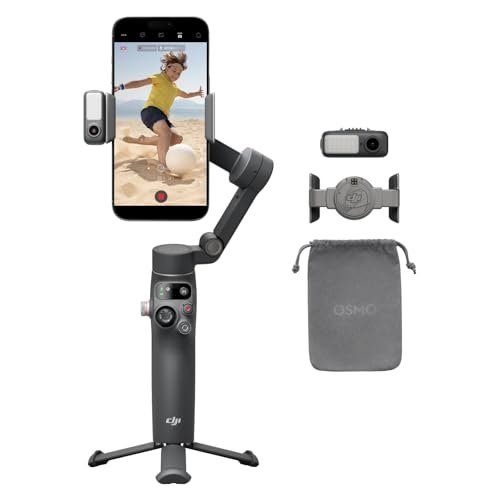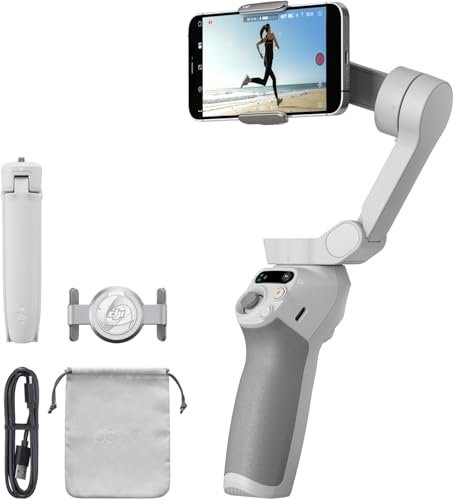
So, you’ve got a fantastic Fuji camera, a trusty gimbal, and a passion for capturing buttery-smooth video footage. But wait – are you pairing your setup with the right lens? Choosing the best Fuji lens for gimbal use is crucial for achieving that professional, cinematic look without compromising on stability or autofocus performance.
If you’re anything like us, you know that a great lens can transform your video production, making your gimbal even more effective. The right glass minimizes wobble, keeps your setup lightweight for extended shoots, and ensures your subjects stay tack-sharp. From vlogging to travel films and short documentaries, having the perfect lens in your kit can be an absolute game-changer.
We’ve scoured the market to find some of the top contenders that truly shine when mounted on a gimbal with your beloved Fuji X-mount camera. Let’s dive in and explore the lenses that will help you capture incredible, stable video.
What to Look For in a Gimbal Lens for Fuji
Before we jump into the reviews, let’s quickly touch on why certain lenses are better suited for gimbals:
- Weight & Size: Lighter, more compact lenses are easier to balance and put less strain on your gimbal’s motors, extending battery life and allowing for longer shoots. “Pancake” lenses are often a sweet spot here.
- Internal Focusing: Lenses that focus internally (meaning the front element doesn’t extend) maintain their balance better on a gimbal.
- Autofocus Performance: Fast, quiet, and reliable autofocus is critical for video, especially if you’re tracking subjects. Look for STM (Stepping Motor) or Linear Motor (LM) systems.
- Focal Length: Wider angles (e.g., 14mm-28mm equivalent) are generally more forgiving with subtle movements, making stabilization easier. However, a slightly longer lens can offer beautiful compression for specific shots if you’re careful.
- Aperture: A wider aperture (lower f-number) is great for low-light conditions and achieving beautiful background blur (bokeh), which adds a cinematic feel.
- Minimal Focus Breathing: This refers to the subtle change in focal length that can occur when you adjust focus. Less focus breathing is better for professional-looking video.
Product Reviews
1. TTArtisan 25mm F2 Wide-Angle APS-C Camera Lens Large…

This TTArtisan 25mm F2 lens offers a fantastic blend of a wide perspective and a bright aperture, making it a compelling choice for gimbal users looking for creative freedom. Its F2 aperture is a real standout, allowing you to shoot in lower light conditions with less noise and create that beautiful, creamy bokeh that adds a professional touch to your video. For gimbal work, its compact size and the versatile 37.5mm full-frame equivalent focal length (close to human eyesight) make it easy to balance and ideal for a wide range of subjects, from daily vlogs to more artistic compositions.
- Key Features:
- F2 bright and large aperture for low light and beautiful bokeh.
- Excellent close-up function with a closest focusing distance of 0.25 meters.
- Compact design for enhanced portability.
- 37.5mm full-frame equivalent focal length, versatile for various subjects.
- Wide compatibility with Fuji FX Mount Mirrorless Cameras.
- Pros:
- Bright F2 aperture is excellent for low-light video and subject isolation.
- Compact size makes it easy to balance on most gimbals.
- Versatile focal length for general purpose and street videography.
- Great value for money, offering cinematic potential on a budget.
- Cons:
- Manual focus only, which might be a challenge for fast-moving subjects on a gimbal without practice.
- Build quality is decent but not premium.
- User Impressions: Users frequently praise this lens for its surprisingly good image quality given the price point. They love the fast aperture for low-light shooting and the pleasing bokeh it produces. Many find it a fun, everyday lens that encourages creativity, though some mention the learning curve with manual focus for video.
- See it on Amazon here
2. TTartisan 27mm F2.8 Autofocus Lens, Compatible with Fuji…

When you’re searching for the best Fuji lens for gimbal setups, compactness and autofocus are often at the top of the list, and this TTartisan 27mm F2.8 pancake lens delivers on both fronts. Its ultra-portable, “pancake” form factor makes it incredibly lightweight and easy to balance on any gimbal, ensuring minimal strain and maximum battery life. The added benefit of autofocus, combined with a bright f/2.8 aperture and manual aperture control, gives you the flexibility to capture sharp, well-exposed footage with smooth transitions, whether you’re vlogging on the go or shooting cinematic scenes.
- Key Features:
- Compact APS-C Prime Lens with a 41mm equivalent focal length.
- Pancake form factor (less than 3cm thick) for ultra-portability.
- Bright f/2.8 maximum aperture for low light and depth of field control.
- Autofocus with manual focus override and a manual aperture ring.
- Constructed with 6 elements in 5 groups, including 2 high refractive index lenses.
- Pros:
- Extremely lightweight and compact, ideal for gimbal balancing and travel.
- Autofocus capability is a huge plus for video work on a gimbal.
- Good for low-light conditions with its f/2.8 aperture.
- Versatile focal length suitable for street, travel, and everyday video.
- Cons:
- F2.8 isn’t as fast as some primes, limiting extreme bokeh or very low-light performance.
- Autofocus speed might not match native Fuji lenses perfectly in all scenarios.
- User Impressions: This lens receives high marks for its incredible portability and decent image quality. Users love how it transforms their Fuji camera into a truly pocketable setup. The autofocus is generally seen as reliable for its price, making it a great option for casual shooting and vlogging.
- See it on Amazon here
3. VILTROX 28mm F4.5 XF Pancake APS-C for Fuji XF, Auto…

The VILTROX 28mm F4.5 XF Pancake lens redefines portability, making it arguably one of the lightest and thinnest options available for Fuji XF cameras, and thus an outstanding contender for your gimbal setup. Weighing a mere 60g and measuring just 15.3mm thick, it’s almost imperceptible on your camera, drastically reducing the burden on your gimbal motors and making it incredibly easy to balance. Its precise autofocus ensures quick and effortless shooting, while the multi-layer coating minimizes ghosting and flare, delivering sharp, clear images and videos—perfect for wide-angle landscape or environmental portrait shots that demand stability.
- Key Features:
- Wide-angle 28mm focal length (approx. 42mm equivalent) for versatile perspectives.
- Ultra-light (60g) and slim (15.3mm) design.
- Efficient autofocus for quick and effortless shooting.
- Multi-layer coating to minimize ghosting and flare.
- Exceptional image quality with 6 elements in 6 groups, including 2 ED and 2 aspherical lenses.
- Innovative slide cap design for dust protection and convenience.
- Pros:
- Unbeatable weight and size for gimbal balance and portability.
- Reliable autofocus for video.
- Excellent image quality with good sharpness and color rendition.
- Great for wide-angle vlogging and stable cinematic moves.
- Cons:
- F4.5 aperture is slow, limiting low-light performance and bokeh potential significantly.
- Not ideal for shallow depth of field effects.
- User Impressions: Reviewers are consistently amazed by the minuscule size and weight of this Viltrox lens, praising its convenience for everyday carry. While the F4.5 aperture is noted as a limitation in dim light, users appreciate the sharp images and quick autofocus, making it a favorite for bright outdoor shooting and casual video.
- See it on Amazon here
4. Rokinon AF 75mm f/1.8 Lens for Fuji X

While often overlooked for typical gimbal setups due to its longer focal length, the Rokinon AF 75mm f/1.8 lens for Fuji X offers unique cinematic possibilities, especially for portraits and detailed shots where you want stunning subject isolation. Its wide F1.8 aperture produces incredibly creamy, beautiful bokeh, making your subjects pop with a professional flair. The Linear STM autofocus motor ensures quick, quiet, and accurate focusing, which is crucial for maintaining sharp focus during video recording on a gimbal, even with its tighter field of view. It’s a fantastic choice if you’re looking to add a specialized, artistic touch to your gimbal footage, though it requires more careful movement.
- Key Features:
- 75mm focal length (approx. 112mm equivalent) perfect for portraits and detailed shots.
- Wide F1.8 aperture for stunning background blur and low-light performance.
- Fast, quiet, and accurate Linear STM autofocus motor.
- Robust weather-sealed construction for durability.
- Customizable control switch for personalized settings.
- Pros:
- Exceptional bokeh and subject separation due to the wide F1.8 aperture.
- Excellent low-light performance.
- Fast and quiet autofocus, good for tracking subjects.
- Weather sealing adds durability for outdoor shoots.
- Cons:
- Longer focal length (75mm) can amplify camera shake, requiring a very stable gimbal and careful operation.
- Not ideal for wide-angle establishing shots or vlogging.
- Heavier than pancake lenses, potentially impacting gimbal balance for some smaller models.
- User Impressions: Photographers rave about the Rokinon 75mm’s outstanding image quality, particularly its gorgeous bokeh and sharpness. They appreciate the speedy autofocus and sturdy build. While some acknowledge the longer focal length requires adaptation for general use, many find it an indispensable lens for creative portrait and detail video work.
- See it on Amazon here
5. TTArtisan 14mm F3.5 AF Lens for Fuji X-Mount, APS-C Wide…

For immersive, expansive shots and incredibly stable video, the TTArtisan 14mm F3.5 AF lens is a phenomenal choice for the best Fuji lens for gimbal applications. This ultra-wide pancake-style lens (a 21mm full-frame equivalent) captures sprawling 92° views, making it perfect for dramatic landscapes, architectural videos, or creating a highly stabilized, almost “floating” effect in your footage. Weighing a mere 3.45oz, its incredibly compact design is ideal for maintaining gimbal balance and portability. What truly sets it apart for video creators is its STM stepping motor technology, enabling silent and instantaneous eye-tracking autofocus, ensuring your subjects remain sharp even during dynamic 4K video recording.
- Key Features:
- Innovative rear-mounted Type-C port for firmware upgrades.
- Ultra-wide 14mm focal length (21mm full-frame equivalent) with a 92° angle of view.
- Compact pancake design, weighing only 3.45oz (approx. 98g).
- 0.25m minimum close focus distance for detailed close-ups.
- Eye-tracking autofocus with STM stepping motor technology for silent and precise subject tracking.
- Wide compatibility with numerous Fuji X Mount cameras.
- Pros:
- Extremely wide angle of view for highly stable, immersive gimbal footage.
- Incredibly lightweight and compact, excellent for gimbal balance.
- Fast and quiet eye-tracking autofocus, perfect for vlogging and dynamic subjects.
- Type-C port for easy firmware updates.
- Cons:
- F3.5 aperture is not ideal for very low-light environments.
- Ultra-wide angle can introduce distortion at the edges if not used carefully.
- Bokeh is less pronounced due to the wide focal length and aperture.
- User Impressions: Users are highly impressed by this TTArtisan 14mm’s compact size and ultra-wide perspective, finding it a go-to for landscape, architectural, and street photography. The autofocus performance, especially the eye-tracking, receives positive feedback for video. Many appreciate its portability, making it a constant companion for their Fuji setups.
- See it on Amazon here
Conclusion
Choosing the best Fuji lens for gimbal use really comes down to your specific shooting style and priorities. If you prioritize portability and versatile autofocus for vlogging and everyday video, the TTartisan 27mm F2.8 AF or the VILTROX 28mm F4.5 Pancake are fantastic, super-light options. For ultra-wide, immersive shots with excellent autofocus, the TTArtisan 14mm F3.5 AF is a clear winner. If you’re into manual control and cinematic bokeh on a budget, the TTArtisan 25mm F2 offers a lot of creative potential. And for those looking to add a professional, creamy background blur with a longer reach, the Rokinon AF 75mm f/1.8 brings a unique touch.
No matter your choice, pairing the right lens with your Fuji camera and gimbal will unlock new levels of smooth, high-quality video production. Happy shooting!
FAQ Section
Q1: What focal length is generally best for gimbals?
A1: Generally, wider focal lengths (e.g., 14mm to 35mm full-frame equivalent) are preferred for gimbals. They make subtle camera movements less noticeable, making your footage appear smoother and more stable. They’re also great for vlogging and establishing shots.
Q2: Should I use prime or zoom lenses on a gimbal?
A2: Both can work, but prime lenses are often favored for gimbals. They are typically lighter, more compact, and have wider maximum apertures (better for low light and bokeh). Zoom lenses can be convenient for versatility, but they are usually heavier, larger, and can shift balance when zooming, requiring re-balancing your gimbal.
Q3: Does lens weight matter for gimbals?
A3: Absolutely! Lighter lenses put less strain on your gimbal’s motors, extending battery life and making it easier to balance. Overly heavy lenses can cause motors to overheat or even prevent proper stabilization, especially on smaller gimbals.
Q4: How important is autofocus performance for video on a gimbal?
A4: Very important! For smooth, professional-looking video, especially when tracking moving subjects or vlogging, fast, quiet, and reliable autofocus is crucial. Lenses with stepping motors (STM) or linear motors often provide excellent video autofocus.
Q5: Can I use any Fuji lens on a gimbal?
A5: While you can technically mount most Fuji X-mount lenses, not all are ideal. Heavy, long, or externally focusing lenses can be difficult to balance and may strain your gimbal. Lenses that are compact, lightweight, and have good internal autofocus are generally the best Fuji lens for gimbal use.
Q6: Does aperture size (e.g., f/1.8 vs. f/4.5) affect gimbal performance?
A6: Aperture size doesn’t directly affect gimbal performance or stability. However, a wider aperture (smaller f-number like f/1.8 or f/2.8) is beneficial for video as it allows more light in (better for low light) and creates shallower depth of field (more cinematic bokeh). You’ll need to consider how the lens’s weight and balance factor into your gimbal setup regardless of its aperture.