Hey Canon 80D users! If you’re passionate about capturing smooth, cinematic video footage, you know the struggle of shaky handheld shots. Whether you’re a budding filmmaker, a vlogger, or just someone who loves recording life’s moments, a good gimbal can transform your video quality from amateur to pro. Your trusty Canon 80D is a fantastic DSLR, but adding a stabilizer can truly unlock its full potential for dynamic, shake-free videos.
In this guide, we’re diving deep into some of the best gimbal for Canon 80D options available today. We’ll explore what makes each one stand out, their key features, and what real users think, helping you make an informed decision to elevate your videography game. Let’s get started!
Why Your Canon 80D Needs a Gimbal
The Canon EOS 80D is a beloved DSLR known for its excellent image quality, versatile autofocus, and robust build. However, its in-body stabilization for video isn’t its strongest suit. That’s where a 3-axis gimbal comes in! A gimbal uses motors and advanced algorithms to counteract unwanted movements, keeping your camera perfectly level and stable, no matter how much you move. This means:
- Silky Smooth Footage: Say goodbye to shaky videos and hello to professional-looking, flowing shots.
- Dynamic Camera Movement: Easily execute tracking shots, pans, tilts, and even complex cinematic movements with ease.
- Reduced User Fatigue: Many modern gimbals offer ergonomic designs, making long shooting sessions less tiring.
- Enhanced Creativity: With stability handled, you can focus on composition and storytelling.
Ready to find the perfect match for your Canon 80D? Let’s check out our top picks!
Our Top Picks for the Best Gimbal for Canon 80D
DJI RS 3 Mini
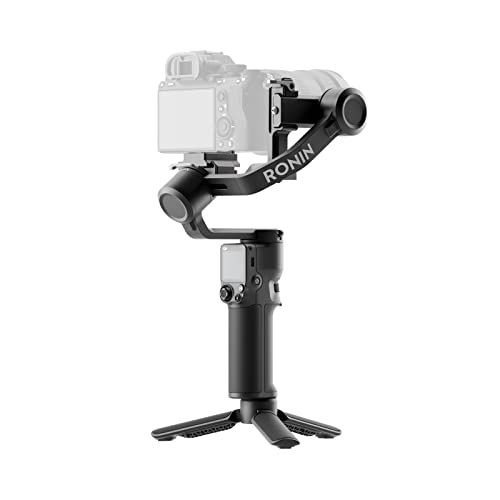
The DJI RS 3 Mini is an incredibly compelling choice for Canon 80D owners looking for a lightweight yet powerful stabilization solution. DJI has packed a lot of punch into this compact gimbal, making it ideal for run-and-gun shooting or travel vlogging without compromising on stability. Its design is thoughtfully minimal, ensuring that you’re not bogged down by heavy gear, while still delivering the professional-grade smooth footage DJI gimbals are known for. It’s a fantastic balance of portability and performance, perfect for keeping your Canon 80D stable on the go.
- Key Features:
- 795g (1.75lbs) Lightweight and Portable design
- Wide-Ranging Compatibility with a load capacity up to 2 kg (4.4 lbs)
- Bluetooth Shutter Control for easy camera operation
- 3rd-Gen RS Stabilization Algorithm for pro-level stabilization
- Native Vertical Shooting capability
- 1.4″ Full-Color Touchscreen with intuitive UI
- Pros:
- Extremely portable and easy to carry
- Excellent stabilization performance for its size
- Simple setup and quick balancing
- Native vertical mode is great for social media content
- Intuitive touchscreen makes operation a breeze
- Cons:
- Maximum payload might be limiting for heavier lenses
- Requires DJI Ronin app for full functionality and activation
- User Impressions: Users frequently praise the RS 3 Mini for its portability and impressive stabilization, especially given its small footprint. Many Canon 80D owners find it perfectly handles their camera body and standard lenses, making it a favorite for travel and everyday vlogging. The quick setup and responsive controls are also big pluses.
- See it on Amazon here
DJI RS 4 Mini

Stepping up slightly from its predecessor, the DJI RS 4 Mini refines the compact gimbal experience, focusing on speed and intelligent features. This camera stabilizer is designed for creators who need to be ready at a moment’s notice, offering features like auto axis locks that eliminate fumbling during setup. Its enhanced balancing and responsive follow modes make dynamic shots feel effortless, ensuring your Canon 80D captures every movement with precision and smoothness. If you’re chasing fleeting moments or doing solo shoots, the RS 4 Mini keeps your subject perfectly framed.
- Key Features:
- Ready in 1 s with auto axis locks
- Intelligent Tracking Module to keep subjects framed
- Teflon Enhanced Balancing for smoother adjustments
- Fast Vertical Switch in 10 seconds for mobile content
- Responsive Follow Mode for instant reactions to hand movements
- Supports up to 2kg/4.4lbs payload, suitable for mirrorless, vlogs cams, and phones
- Pros:
- Extremely fast setup time
- Intelligent tracking simplifies complex shots
- Smoother balancing process
- Quick vertical shooting transition
- Responsive and precise controls
- Cons:
- Ronin app needs to be downloaded from DJI’s official site for Android users
- Payload still limited compared to larger gimbals
- User Impressions: Reviewers often highlight the RS 4 Mini’s auto-lock feature as a game-changer for speed. The improved balancing and responsive follow mode are also frequently mentioned as significant upgrades, making it easier for users to get stable, dynamic shots with their Canon 80D. Its ability to quickly adapt to different shooting scenarios is highly valued.
- See it on Amazon here
ZHIYUN CINEPEER Weebill 3E
![ZHIYUN CINEPEER Weebill 3E[Official], 3-Axis Lightweight...](https://m.media-amazon.com/images/I/41+kdEh7b2L._SL500_.jpg)

(Note: You might find this product listed as “ZHIYUN CINEPEER Weebill 3E [Official]” or “ZHIYUN CINEPEER WEEBILL 3E 3-Axis Gimbal Stabilizer for…”, but they refer to the same excellent model!)
The ZHIYUN CINEPEER Weebill 3E is a formidable contender for the title of best gimbal for Canon 80D, especially for users prioritizing ergonomics and long battery life. Weighing just 1.05 kg, it’s remarkably lightweight for its impressive 3 kg (6.6 lbs) payload capacity, which is more than enough for the Canon 80D with a variety of lenses. What truly makes it shine is its unique ergonomic design, including a comfortable handle and the potential for a “Sling Mode 2.5” (with optional accessories), significantly reducing fatigue during extended shooting sessions. This gimbal is built for endurance and comfort without sacrificing powerful stabilization.
- Key Features:
- 3 kg (6.6 lbs) Payload with a lightweight 1.05 kg design
- Native Vertical Shooting without extra accessories
- Bluetooth Shutter Control for wireless camera operation
- 16H Max Battery Life and 14W PD fast charging (2h 46m charge time)
- Comfortable handle design reducing fatigue
- Optional 2.5 Sling Mode (requires separate purchase of wrist rest and sling grip)
- Pros:
- Excellent payload capacity for various Canon 80D setups
- Exceptional battery life for all-day shoots
- Ergonomic design significantly reduces hand fatigue
- Quick and easy native vertical shooting
- Robust build quality
- Cons:
- Sling grip and wrist rest for 2.5 Sling Mode are separate purchases
- Requires specific control cables for non-Panasonic cameras (like Canon, sold separately)
- User Impressions: Many users rave about the Weebill 3E’s long battery life and comfortable handling, citing it as a major advantage for long filming days. Canon 80D users appreciate its ample payload capacity, allowing for more lens flexibility. The smooth stabilization and straightforward operation also receive high marks.
- See it on Amazon here
FeiyuTech SCORP-C Gimbal Stabilizer

The FeiyuTech SCORP-C stands out as a highly versatile and user-friendly gimbal, and importantly, it explicitly lists compatibility with the Canon 80D, which is a huge plus! This gimbal is designed with the user experience in mind, from its unique integrated hanging handle for various shooting angles to its thoughtful design features for easier installation and balancing. If you’re looking for a robust gimbal that offers specific modes for complex shots and a long-lasting battery, the SCORP-C is a solid contender that can truly enhance your Canon 80D videography.
- Key Features:
- Compatible with mainstream mirrorless and DSLR cameras, including Canon 80D
- Integrated hanging handle for flexible shooting angles (upright or underslung)
- Tilted handle holding for ergonomic comfort
- Integral folding aileron bracket (no tripod required to set down)
- Easier installation and leveling with three-axis motor lock, five-way center of gravity adjustment, and memory slider
- Powerful key to switch to professional modes (AB Trajectory Memory, Flash Mode, Panoramic Photography, Time-lapse Photography, Space Mode, Vertical-shooting Mode)
- 2500mah Efficient Battery: 10-13 Hour runtime with 18W fast charging
- Pros:
- Explicit Canon 80D compatibility
- Highly ergonomic and versatile handle design
- Convenient built-in stand
- Smart design features for quick setup and balancing
- Variety of advanced shooting modes for creative control
- Good battery life with fast charging
- Cons:
- Might be a bit heavier than the mini gimbals
- Learning curve for advanced modes
- User Impressions: Users frequently commend the FeiyuTech SCORP-C for its solid build and comfortable design. The integrated handle and easy balancing system are big hits, making it quicker to get shooting. Canon 80D users confirm its excellent compatibility and smooth performance, appreciating the dedicated shooting modes for more creative freedom.
- See it on Amazon here
Choosing the Best Gimbal for Your Canon 80D
When picking the perfect gimbal for your Canon 80D, consider these points:
- Payload Capacity: The Canon 80D body weighs about 730g (1.6 lbs). Add a lens, and you’re typically looking at 1-1.5kg (2.2-3.3 lbs). Make sure the gimbal’s max payload comfortably exceeds your camera and heaviest lens combo. All the gimbals listed here meet this requirement.
- Portability: Do you need something ultra-light for travel, or are you okay with a bit more weight for added features?
- Battery Life: Longer battery life means fewer interruptions during shoots.
- Ease of Use & Balancing: Look for features that make setup quick and hassle-free, like auto-locks or intuitive balancing systems.
- Ergonomics: For long shooting sessions, a comfortable grip is crucial.
- Advanced Features: Do you need intelligent tracking, specific shooting modes, or a touchscreen?
No matter which one you pick from our list, investing in a high-quality gimbal will significantly enhance your Canon 80D’s video capabilities. Get ready to capture some truly stunning, professional-looking footage!
FAQ Section
Q1: What is a gimbal and why do I need one for my Canon 80D?
A: A gimbal is a motorized stabilizer that uses brushless motors to keep your camera perfectly level and smooth, even when you’re moving. You need one for your Canon 80D to eliminate shaky footage, achieve cinematic camera movements, and significantly improve the overall professional quality of your videos.
Q2: What payload capacity should I look for in a gimbal for my Canon 80D?
A: The Canon 80D body alone weighs about 730 grams (1.6 lbs). When you add a lens, the total weight can range from 1 kg to 2 kg (2.2 lbs to 4.4 lbs) or more, depending on the lens. Aim for a gimbal with a minimum payload capacity of 2 kg (4.4 lbs) to comfortably handle your 80D with various lenses, ensuring stable performance.
Q3: Can I use my Canon 80D with any gimbal?
A: Not necessarily any gimbal, but most modern gimbals designed for mirrorless or DSLR cameras with a suitable payload capacity will work. However, specific control features (like start/stop recording via the gimbal) might require compatible control cables or Bluetooth integration, so always check the gimbal’s compatibility list for your Canon 80D model.
Q4: How does a 3-axis gimbal work to stabilize footage?
A: A 3-axis gimbal stabilizes footage by using three motors that rotate on different axes (roll, pitch, and yaw). Sensors detect unwanted movements, and the motors instantly counteract these movements, keeping the camera perfectly level and pointed in the desired direction, resulting in ultra-smooth video.
Q5: What’s the difference between a gimbal and a tripod?
A: A tripod provides static stability, holding your camera still in a fixed position. A gimbal, on the other hand, provides dynamic stability, allowing you to move your camera smoothly while walking, running, or performing complex camera movements, keeping the footage shake-free. They serve different purposes for different types of shots.
Q6: Is native vertical shooting important for Canon 80D users?
A: Yes, especially if you plan to share your videos on social media platforms like TikTok, Instagram Reels, or YouTube Shorts. Native vertical shooting allows you to quickly switch your camera to a portrait orientation without rebalancing or using extra accessories, making it much easier to create content optimized for mobile viewing.
Q7: How do I balance my Canon 80D on a gimbal?
A: Balancing involves adjusting the camera’s position on the gimbal’s arms until it remains level and still without motor power. This typically requires adjusting the horizontal, vertical, and tilt axes. Most gimbals come with guides or apps that walk you through this process, and a proper balance is crucial for optimal performance and battery life.