So, you’re ready to dive into the thrilling world of wildlife photography, aiming to capture those elusive moments, from a bird in flight to a deer on the run? You’ve got your camera, your impressive telephoto lens, but something’s still missing, isn’t it? You’re likely wrestling with stability, smooth movement, and getting that perfect shot without your arms giving out. That’s where a fantastic gimbal head comes into play!
A gimbal head isn’t just another accessory; it’s a game-changer for anyone serious about shooting fast-moving subjects with heavy lenses. It balances your camera and lens almost perfectly, allowing you to pan and tilt with incredible fluidity and seemingly weightless precision. Forget the jerks and wobbles – with the right gimbal head, tracking wildlife becomes intuitive and effortless.
In this comprehensive guide, we’ll walk you through the top contenders, reviewing the best gimbal heads for wildlife photography on the market. We’ve got a selection of 10 outstanding options, covering various budgets and features, to help you find the perfect partner for your outdoor adventures. Let’s get started!
Why a Gimbal Head for Wildlife Photography?
Imagine trying to follow a soaring eagle with a heavy 600mm lens mounted on a standard ball head. It’s clunky, hard to adjust quickly, and often results in missed shots. A gimbal head, on the other hand, pivots around your lens’s center of gravity. This design provides:
- Effortless Tracking: Smooth, fluid motion to follow subjects with ease.
- Reduced Fatigue: Your heavy lens feels “weightless,” reducing strain during long shoots.
- Superior Stability: Essential for sharp images, especially with long telephoto lenses.
- Quick Adjustments: Rapidly change your angle or direction without fumbling.
The 10 Best Gimbal Heads for Wildlife Photography Reviewed
1. Movo GH800 MKII Carbon Fiber Professional Gimbal Tripod Head

The Movo GH800 MKII is a standout choice for serious wildlife photographers who prioritize both strength and portability. Crafted from superior carbon fiber, this head offers an impressive 30 lbs (13.6kg) load capacity while remaining incredibly lightweight at just 2.75 lbs. Its precision bearings ensure exceptionally fluid panning and tilting, making it a breeze to track fast-moving subjects like birds in flight or running animals. It’s a fantastic investment that truly delivers on its promise of smooth, “weightless” camera operation.
Key Features:
– Fluid panning & tilting with precision bearings
– Smooth “weightless” flow for easy subject tracking
– Arca clamp & plate are horizontally & vertically adjustable for perfect balance
– Heavy-duty carbon-fiber build supports up to 30 lbs (13.6kg)
– Lightweight at only 2.75 lbs
– Excellent value for hobbyists and pros
– 1-Year Movo Warranty with U.S.-based support
Pros:
– Exceptional strength-to-weight ratio due to carbon fiber
– Incredibly smooth and precise movements for dynamic shots
– High load capacity accommodates heavy camera and lens combos
– Arca-Swiss compatible for wide usability
– Excellent value for the quality and features
Cons:
– Premium price point compared to aluminum alternatives
– May require a bit of practice to master the perfect balance for your gear
User Impressions:
Users consistently praise the GH800 MKII for its buttery-smooth operation and robust carbon fiber construction. Many highlight how it transforms their experience with heavy telephoto lenses, making long shooting sessions far less fatiguing and vastly improving their ability to capture sharp, moving subjects. It’s often described as a significant upgrade for serious enthusiasts.
2. NEEWER Gimbal Tripod Head Professional Heavy Duty Aluminum
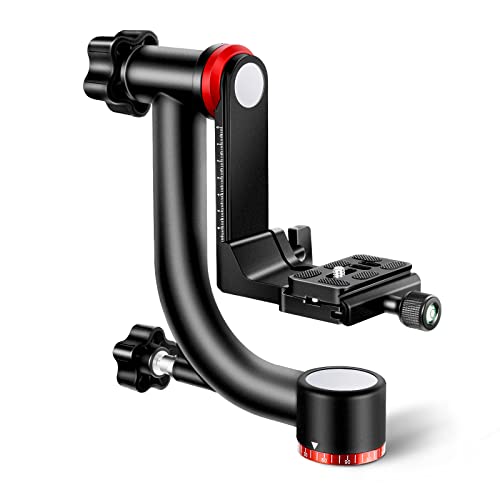
The NEEWER Gimbal Tripod Head is a solid, reliable choice for those needing robust support without breaking the bank. Built with durable aluminum alloy and an integrated load-bearing structure, it can comfortably support professional DSLR cameras and heavy telephoto lenses up to 30 lbs (13.6kg). What truly makes it shine is its built-in bearing structure, which ensures remarkably smooth and precise camera movement, perfect for birdwatching and sports photography where every millisecond counts. Its 360° panning base with panoramic scales also opens up possibilities for stunning wide-angle shots.
Key Features:
– Solid aluminum alloy construction with integrated load bearing
– Max load capacity: 30lb/13.6kg
– Smooth camera movement with built-in bearing structure
– 360° panning base with panoramic scales and lock knob
– Vertical & horizontal adjustment with scale for precise positioning
– Arca-Type Quick Release Plate with 1/4″ mounting screw
– Rubber padded mounting plate for device protection
– Bubble level for precise angle adjustment
– 1/4″ and 3/8″ sockets for tripod mounting
Pros:
– Very sturdy and stable aluminum construction
– Exceptionally smooth movement due to bearing structure
– Versatile 360° panning and vertical/horizontal adjustments
– Broad compatibility with Arca-type plates and tripod mounts
– Integrated bubble level for accurate setup
Cons:
– Heavier than carbon fiber alternatives
– Requires careful handling (e.g., loosening knob while holding camera) to prevent accidental drops
User Impressions:
Photographers frequently commend the NEEWER gimbal for its impressive build quality and surprisingly smooth performance given its price point. It’s a popular choice for beginners and intermediates looking for a dependable solution for tracking wildlife and sports action without a huge investment. The smoothness of the panning motion is a consistent highlight.
3. Fotopro E-6H Gimbal Head, Unique 3-in-1 Functionality

The Fotopro E-6H stands out not just as a fantastic gimbal head, but as a versatile powerhouse with unique 3-in-1 functionality. It seamlessly transforms into a fluid head and a panoramic head with click stops, making it a dream for photographers who dabble in various genres beyond just wildlife. Its innovative backward shift allows for precise nodal point alignment, crucial for stitching high-quality panoramic images, and the carbon fiber construction ensures it remains lightweight yet robust, supporting up to 22.1 lbs (10 kg). Plus, its waterproof, sand-proof, and dust-proof design means you can take it into the wildest environments without worry.
Key Features:
– Unique 3-in-1 functionality: Gimbal, Fluid, and Panoramic head with click stops
– Versatile shooting angles: Astro photography (straight up) and macro (straight down)
– Precise Nodal Point Alignment via innovative backward shift
– Convenient “Bowling Center” leveling system for easy camera leveling
– Durable carbon fiber construction, supporting up to 22.1 lb (10 kg)
– Waterproof, sand-proof, and dust-proof for reliable outdoor performance
Pros:
– Exceptional versatility for multiple photography styles
– Robust and durable construction, ideal for harsh outdoor conditions
– Advanced features like nodal point alignment and unique leveling
– Lightweight for its multi-functional capabilities
– Excellent for both stills and video (as a fluid head)
Cons:
– Lower maximum load capacity compared to some dedicated gimbal heads
– The multi-functionality might be more than some wildlife-only photographers need
User Impressions:
Users rave about the E-6H’s adaptability and build quality. They appreciate its ability to perform well across different photography disciplines, particularly its smooth fluid head capabilities and ruggedness in challenging environments. The unique leveling system is often cited as a game-changer for quick setup.
4. Movo GH700 Professional Gimbal DSLR Tripod Head with Aluminum Build
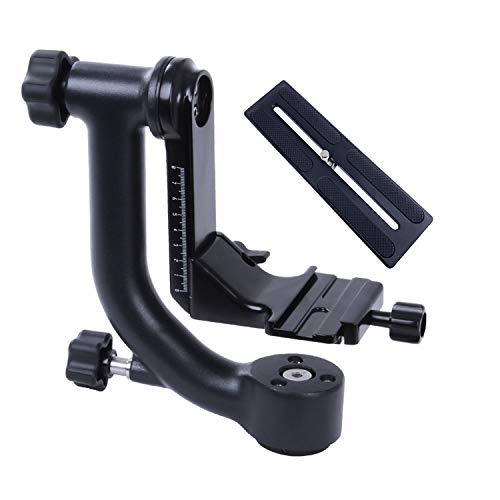
For those seeking robust support without the carbon fiber price tag, the Movo GH700 is an outstanding choice. This professional-grade gimbal head is constructed from superior aluminum, offering a hefty 30 lbs (13.6kg) load capacity while maintaining a relatively light weight of 2.75 lbs. It boasts the same fluid panning and tilting capabilities as its carbon fiber siblings, thanks to precision bearings, ensuring your telephoto lens moves with a smooth, “weightless” feel. It’s a highly-rated, excellent value option that proves you don’t need carbon fiber to achieve professional-level stability and motion for wildlife photography.
Key Features:
– Fluid panning & tilting with precision bearings
– Smooth “weightless” flow with Arca clamp & plate
– Horizontally & vertically adjustable for optimal camera balance
– Heavy-duty aluminum build supports up to 30 lbs (13.6kg)
– Relatively light at 2.75 lbs
– Excellent value, highly reviewed by users
– 1-Year Movo Warranty with U.S.-based support
Pros:
– High load capacity for heavy camera and lens setups
– Very smooth and responsive motion for tracking
– Durable aluminum construction
– Great value for the performance it delivers
– Arca-Swiss compatibility for easy mounting
Cons:
– Aluminum makes it slightly heavier than carbon fiber equivalents
– May not offer the absolute lightest carry weight for extensive treks
User Impressions:
Customers frequently highlight the Movo GH700 as an incredible value proposition. They’re impressed by its solid build and the surprising smoothness of its operation, especially for an aluminum head. It’s a go-to for hobbyists and emerging pros who need reliable performance for their heavy wildlife lenses without a premium investment.
5. Leofoto Camera Gimbal Head, Professional Gimbal Tripod Head
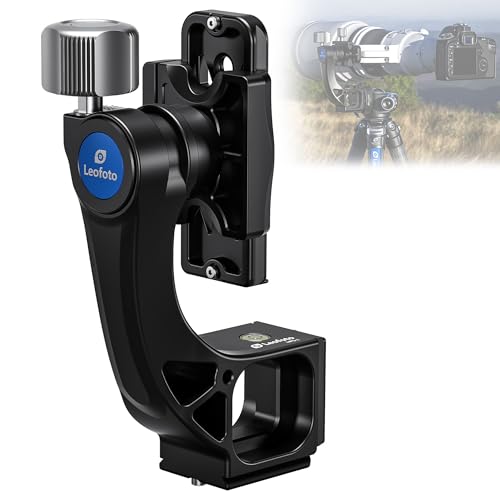
The Leofoto MPG-2 is a thoughtfully designed gimbal head built for seamless outdoor photography, particularly excelling in bird watching and sports. Crafted from high-quality aluminum alloy, including its oversized control knobs, it ensures durability and ease of use, even when wearing winter gloves. Its broad compatibility is a major plus, featuring two positioned Arca-type dovetail bases and versatile mounting sockets to fit nearly any monopod or tripod. Precision is further enhanced by an included spirit level and numbered scales, making it easy to replicate settings for consistent results. This head is an ideal companion for mirrorless cameras paired with telephoto lenses, ensuring steady and smooth shots in any environment.
Key Features:
– Durable high-quality aluminum alloy construction, including knobs
– Large control knobs for easy twisting and locking, even with gloves
– Two positioned Arca-type dovetail bases for broad compatibility
– 3/8″-16 threaded mounting socket with 1/4″ reducing bushings
– Included spirit level at the base for extra precision
– Numbered scales to facilitate repeat settings
– Ideal for mirrorless cameras and telephoto lenses, bird watching, sports photography, telescopic observations
Pros:
– User-friendly design with large, ergonomic control knobs
– Excellent build quality for long-lasting use
– Wide compatibility with various tripods and monopods
– Precise leveling and repeatable settings with spirit level and scales
– Smooth operation optimized for telephoto lens use
Cons:
– Aluminum construction makes it heavier than carbon fiber options
– Might be considered overly robust for very lightweight mirrorless setups
User Impressions:
Photographers appreciate the Leofoto’s solid feel and the practical design of its large knobs, which are especially useful in cold weather. Its smooth operation and ease of setup are frequently praised, making it a reliable choice for long days in the field tracking wildlife. The compatibility with different tripod systems is also a big plus for users.
6. GKJr. Katana Junior Telephoto Lens Gimbal Head

When it comes to sheer strength and lightweight design, the GKJr. Katana Junior is in a league of its own. This professional-grade gimbal head boasts an astounding 50 lbs load capacity, yet weighs in at an incredibly light 2.4 pounds! Made in the USA, it features sealed ball bearings for ultimate smoothness, ensuring your camera and a monster telephoto lens glide effortlessly. With 360-degree panning and an independent tilt mechanism, it gives you full control. Its black anodized, scratch-resistant finish means it’s built to withstand the rigors of the field, making it a top-tier choice for the most demanding wildlife photographers.
Key Features:
– Impressive 50 lbs Load Capacity
– Incredibly lightweight at only 2.4 pounds
– Arca-Swiss type Lens Mount for broad compatibility
– 360-degree panning with independent tilt mechanism
– Sealed Ball Bearings for ultimate smoothness
– Black Anodized Scratch Resistant Finish for durability
– Made in USA
– Includes a 6-inch lens mount plate
Pros:
– Unmatched load capacity for the heaviest professional setups
– Exceptionally lightweight for its strength, enhancing portability
– Superior smoothness and durability with sealed ball bearings
– Proudly made in the USA with high-quality craftsmanship
– Robust, scratch-resistant finish for tough outdoor conditions
Cons:
– Likely a higher price point due to its premium features and US manufacturing
– More specialized for heavy telephoto setups, less emphasis on multi-functionality
User Impressions:
Photographers who invest in the Katana Junior consistently describe it as a “tank” that performs with incredible grace. The smoothness of operation, even with very large lenses, is a recurring theme in reviews. Its made-in-USA quality and durability are highly valued, making it a favorite for seasoned professionals.
7. K&F Concept Aluminum Alloy 360 Degree Panoramic Gimbal Head

The K&F Concept Gimbal Head truly focuses on delivering a superior user experience, particularly excelling in smoothness and long-term reliability. A unique highlight is their proprietary third-generation grease and high-quality sealing rings, ensuring a 0% grease leakage rate and exceptionally smooth operation. Constructed from robust 6061 aluminum alloy, it boasts a substantial load capacity of up to 44 lbs (20kg), making it incredibly stable for heavy gear. With calibrated scales, precise lens positioning, and 360-degree rotation on both horizontal and vertical axes, it offers the versatility needed for dynamic wildlife shots and even panoramic photography.
Key Features:
– Exclusive third-generation grease for superior viscosity and uniformity
– High-quality sealing rings ensuring 0% grease leakage rate
– Constructed from robust 6061 aluminum alloy
– High load capacity of up to 20kg/44lbs
– Rugged design and structure for stable horizontal and vertical movement
– Horizontal adjustment of lens platform for precise center of gravity
– Calibrated scale for repeatable lens positioning
– 360-degree rotation on both horizontal and vertical axes for panoramic photography
– Includes standard 1/4” quick release plate with anti-slip design and bubble level
Pros:
– Outstanding smoothness and long-term reliability due to advanced lubrication and sealing
– Very high load capacity for demanding setups
– Durable and rugged aluminum construction
– Excellent precision for balancing and repeatable shots
– Versatile for both wildlife and panoramic photography
Cons:
– Heavier than carbon fiber alternatives due to aluminum build
– The focus on internal mechanics might not be apparent until in use
User Impressions:
Users are consistently impressed by the K&F Concept gimbal’s solid build and its surprisingly smooth movement, often noting that it feels more premium than its price suggests. The assurance of no grease leakage is a big comfort, and its ability to handle heavy lenses with ease makes it a popular choice for serious hobbyists.
8. Movo GH700 MKII Professional Gimbal DSLR Tripod Head with Updated Features

The Movo GH700 MKII is the updated iteration of the popular GH700, bringing a slightly refined design while maintaining the core qualities that make Movo gimbals a favorite. Like its predecessor, it features a heavy-duty aluminum build, easily supporting up to 30 lbs (13.6kg) of camera gear. The precision bearings ensure the signature fluid panning and tilting that Movo is known for, providing that “weightless” feel crucial for tracking wildlife. At 3.1 lbs, it’s still relatively light for an aluminum head and continues to offer exceptional value, making it a wise investment for both hobbyists and pros seeking reliable performance.
Key Features:
– Fluid panning & tilting with precision bearings for smooth subject tracking
– Smooth “weightless” flow with adjustable Arca clamp & plate for balancing
– Heavy-duty aluminum build supports up to 30 lbs (13.6kg)
– Relatively light at 3.1 lbs for an aluminum head
– Excellent value for its quality and performance
– 1-Year Movo Warranty with Fast & Friendly U.S.-based Support
Pros:
– Reliable and consistent performance for demanding photographic tasks
– High load capacity for heavy camera and telephoto lens combinations
– Excellent smooth movement for dynamic wildlife shots
– Durable aluminum construction designed for long-term use
– Great balance of performance and affordability
Cons:
– Still heavier than carbon fiber models, which might be a consideration for portability
– MKII updates are subtle, making the original GH700 a strong alternative if price is key
User Impressions:
Customers continue to laud the Movo GH700 MKII for its robust construction and dependable, smooth operation. Many existing Movo users appreciate the subtle refinements, finding it a consistent performer that handles their heavy lenses with ease. It’s often recommended as a robust and cost-effective solution for wildlife and sports photography.
9. Movo GH800 Carbon Fiber Professional Gimbal Tripod Head (Original)

The original Movo GH800 Carbon Fiber Professional Gimbal Tripod Head set the standard for lightweight strength and smooth performance, and it remains an excellent choice. Constructed from superior carbon fiber, it strikes an ideal balance, easily supporting up to 30 lbs (13.6kg) while weighing a mere 2.75 lbs. This means you get the robust support needed for heavy telephoto lenses without the added bulk, making it perfect for long treks in the field. Its precision bearings ensure incredibly fluid panning and tilting, providing that signature “weightless” feel that makes tracking fast-moving wildlife an absolute joy. It’s no wonder it has hundreds of positive reviews praising its quality and value.
Key Features:
– Fluid panning & tilting with precision bearings
– Smooth “weightless” flow with horizontally & vertically adjustable Arca clamp & plate
– Heavy-duty carbon-fiber build supports up to 30 lbs (13.6kg)
– Extremely lightweight at 2.75 lbs
– Excellent value, highly rated by users
– 1-Year Movo Warranty with U.S.-based support
Pros:
– Outstanding strength-to-weight ratio due to carbon fiber construction
– Exceptional smoothness for tracking rapidly moving subjects
– High load capacity accommodates professional camera and lens setups
– Very portable for extended outdoor photography sessions
– Proven reliability with a strong track record of positive user feedback
Cons:
– May be superseded by the MKII version, though features are largely identical
– Price point is higher than aluminum alternatives
User Impressions:
The original Movo GH800 is consistently praised for its fantastic balance of light weight and heavy-duty performance. Users love how effortless it makes handling large lenses, significantly reducing arm fatigue during long shooting periods. Its smooth operation and sturdy build are frequently cited as reasons for its popularity among wildlife photographers.
10. Fotopro E-6H Gimbal Head, Professional Tripod Head, Lightweight Aluminum

The Fotopro E-6H is a professional tripod head designed for extreme versatility and performance in demanding environments. This lightweight aluminum alloy head (weighing just 2.27 lbs/1.03kg) can still support substantial camera equipment up to 22 lbs/10kg. Its standout feature is the 3-in-1 capability, seamlessly converting between a hydraulic head, gimbal, and 360° panoramic head with click-stops. What truly sets it apart for wildlife and bird photography is its smooth operation design, allowing for effortless vertical shooting, multi-angle horizontal movements, and quick adjustments. It minimizes vibration and offers 360° up and down adjustment, eliminating blind corners when tracking birds in flight or animals on the run, even in temperatures ranging from -40°C to 70°C.
Key Features:
– 3-in-1 Tripod Head: Seamlessly converts to hydraulic, gimbal, and 360° panoramic head
– Lightweight (2.27lbs/1.03kg) with a large load capacity (22lbs/10kg)
– Smooth Operation Design: Rotates and swings smoothly on any axis
– Floating arm locks at 180°, 90°, or 45° for “semi-automatic” vertical framing
– Arca-Swiss long plate with safety lock for convenience and security
– Ideal for Wildlife and Bird Photography: smooth vertical/horizontal, vibration minimization, quick adjustments
– 360° up and down adjustment, no blind corners
– Sturdy aluminum alloy with hard anodized surface, temperature resistant (-40°C to 70°C)
Pros:
– Highly versatile 3-in-1 functionality for diverse shooting needs
– Exceptional lightness for its robust build and load capacity
– Designed for extreme conditions with wide temperature resistance
– Excellent for dynamic wildlife and bird photography with versatile movement
– Arca-Swiss compatible with added safety features
Cons:
– Max load capacity is slightly lower than some dedicated gimbal heads
– Aluminum construction, while light for its type, isn’t carbon fiber
User Impressions:
Reviewers are highly impressed by the Fotopro E-6H’s combination of light weight, durability, and multi-functionality. Its ability to perform smoothly in various extreme temperatures and its flexible arm adjustments make it a favorite for photographers who venture into challenging outdoor environments. Its performance for bird-in-flight photography is particularly highlighted.
Choosing the Right Gimbal Head: What to Look For
Selecting the ideal gimbal head involves a few key considerations:
- Load Capacity: Ensure it can comfortably support your heaviest camera body and telephoto lens combination. Always check the manufacturer’s specifications.
- Material (Carbon Fiber vs. Aluminum): Carbon fiber is lighter and often absorbs vibrations better, but it’s usually more expensive. Aluminum is heavier but more affordable and still very durable.
- Smoothness of Movement: This is paramount for wildlife. Look for models with precision bearings and good lubrication.
- Arca-Swiss Compatibility: Most modern gimbal heads use the Arca-Swiss quick release system, which is highly standardized and convenient for swapping lenses.
- Weight: Consider how much you’re willing to carry, especially if you hike long distances.
- Build Quality & Durability: Wildlife photography often takes you into harsh environments, so a robust, weather-resistant build is a huge plus.
- Adjustability: Look for horizontal and vertical adjustment to perfectly balance your gear, and features like calibrated scales for repeatable settings.
Conclusion
Investing in one of the best gimbal heads for wildlife photography is a decision that will truly elevate your craft. It transforms the challenging task of tracking fast-moving subjects with heavy lenses into an enjoyable, fluid experience. Whether you opt for the lightweight strength of carbon fiber or the robust value of aluminum, each of the options reviewed here offers exceptional performance. Choose the one that best fits your budget, your gear, and your adventurous spirit, and get ready to capture those incredible, fleeting moments in nature with unparalleled ease and precision.
FAQ Section
Q1: What is a gimbal head and why is it essential for wildlife photography?
A1: A gimbal head is a specialized tripod head designed to perfectly balance a heavy camera and telephoto lens combination at its center of gravity. This unique design allows for incredibly smooth, fluid, and effortless panning and tilting movements, making it essential for tracking fast-moving subjects like birds in flight or running animals, without arm fatigue or jerky movements.
Q2: How do I balance my camera and lens on a gimbal head?
A2: Balancing is crucial for optimal performance. First, attach your lens (with camera) to the quick release plate. Then, adjust the horizontal position of the quick release plate on the gimbal arm until the lens doesn’t tip forward or backward. Next, adjust the vertical height of the swinging arm until the entire setup is perfectly balanced, so it stays put when you let go, regardless of the angle. This “weightless” feel is the goal.
Q3: What’s the main difference between carbon fiber and aluminum gimbal heads?
A3: The primary difference lies in weight and cost. Carbon fiber gimbal heads are significantly lighter than their aluminum counterparts, making them ideal for portability and long treks. They also tend to absorb vibrations better. However, aluminum gimbal heads are typically more affordable while still offering excellent durability and high load capacities. Both materials are robust and suitable for professional use.
Q4: Can I use a gimbal head for purposes other than wildlife photography?
A4: Absolutely! While they excel at wildlife and bird photography due to their smooth tracking capabilities, gimbal heads are also fantastic for sports photography, astrophotography (especially tracking celestial bodies), and any situation requiring precise, fluid movement with heavy camera gear. Some models even offer multi-functional capabilities (e.g., fluid head, panoramic head).
Q5: Do I need a special tripod for a gimbal head?
A5: Not necessarily a “special” one, but you do need a sturdy tripod. Gimbal heads are designed to support heavy lenses, so pairing them with a lightweight or flimsy tripod would defeat the purpose. Look for a stable, robust tripod with a strong load capacity and a standard 3/8-inch mounting screw (most gimbals include adapters for 1/4-inch as well).
Q6: How important is the load capacity of a gimbal head?
A6: Extremely important. The load capacity specifies the maximum weight of camera and lens combination the gimbal can safely and effectively support. Always ensure your gear’s combined weight is well within the gimbal head’s specified limit. Overloading can lead to instability, jerky movements, and even damage to your equipment or the head itself.
Q7: Are gimbal heads difficult to learn to use?
A7: While they might look complex, gimbal heads are generally very intuitive once you’ve properly balanced your gear. The initial balancing process takes a little practice, but once set up, operating them is much easier and more fluid than a traditional ball head for tracking moving subjects. Many users find them quicker and more natural to use for their specific purpose.